
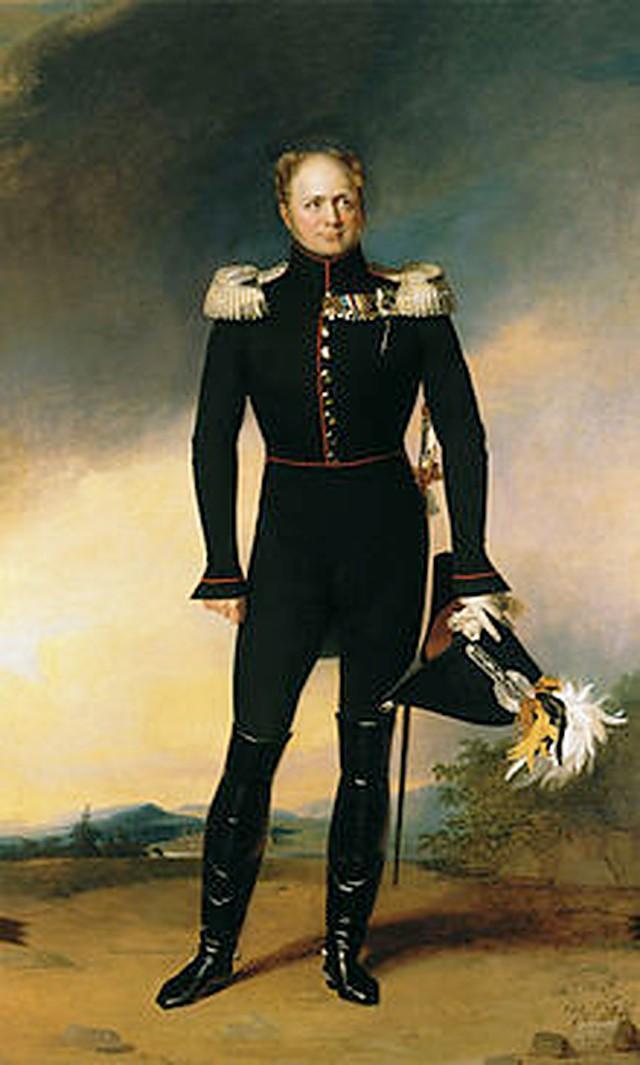

The Holy Alliance was a treaty signed in 1815 by the tsar of Russia, the Emperor of Austria, and the King of Prussia. It was created by Alexander I of Russia, after the French Revolutionary Wars and the Napoleonic Wars with an aim to promote peace. It is important to note that the purpose and the goals of Alexander I in creating this treaty have been contested and do not readily appear apparent. While the ostensible purpose of the treaty was to promote Christian beliefs across participating nations, many (including John Stuart Mill) considered the treaty as oppressive to liberal ideals. In his autobiography, John Stuart Mill calls the treaty “the conspiracy against liberty” (89). This period of what Mill calls “rapidly rising liberalism” (89) was important in shaping and influencing Mill’s educational experience. During this time, Mill was working for the Review with his father. As such, his father and many other writers focused on the ongoing political upheaval while arguing for the values of the Bentham school in philosophy and politics. Thus, the Holy Alliance and other political events that came to symbolize the government’s repression of liberality, played an important role in shaping Mill’s Benthamic education.
Sources:
“Holy Alliance -- Britannica Academic.” Accessed February 13, 2021. https://academic-eb-com.proxy.uchicago.edu/levels/collegiate/article/Holy-Alliance/40842.
Zorin, A. L. (Andrei L.), and Daniel L Schlafly. “‘Star of the East’: The Holy Alliance and European Mysticism.” Kritika: Explorations in Russian and Eurasian History 4, no. 2 (2003): 313–42. https://doi.org/10.1353/kri.2003.0031.
Mill, John. Autobiography. Edited by John M. Robson. London: Penguin Books, 1989.