
Introduction
There seems to be something about classic gothic fiction of the horror variety that creates a lasting impact on viewers and constructs characters that withstand the test of time. Dr. Jekyll and Mr. Hyde for example, are two such characters that are continuously reimagined every time their story is retold. This showcases the impact Robert Louis Stevenson had when he came up with the dynamic duo in 1886 in his novella Strange Case of Dr Jekyll and Mr Hyde. Ever since then, people have created their own interpretations of the characters, especially the embodiment of human impulse, wickedness, and nefarious pleasures: Mr. Hyde.
Over time, throughout the media, Hyde has been depicted as the embodiment of evil, which results in his character seemingly culminating in all the negative traits and attributes considered ‘evil’ by the specific author or time period of said depiction of Hyde. For example, Patricia Comitini claims in her article “The Strange Case of Addiction in Robert Louis Stevenson’s ‘Strange Case of Dr. Jekyll and Mr. Hyde,’” that within Victorian society, “Hyde represents what traditional middle and professional classes fear...the working class’s unregulated access to alcohol and opium-derived drugs; social exposure that keeps hidden the pleasure Victorian propriety cannot admit; and contagion in the British social body in the form of an incurable disease” (Comitini 2). Hyde represents what we fear: addiction, violence, solitude, loss of control, and in some cases, ourselves.
This gallery explores the different depictions of Hyde in theatre, film, television, and literature over time, starting shortly after the publication of the original in the 19th century, spanning more than 100 years to the 21st. It’s easy to see the differences in characterization of Hyde, but there is also something to be said about the degree of difference between depictions of Hyde and Jekyll. Stevenson himself wrote, “even as good shone upon the countenance of the one, evil was written broadly and plainly on the face of the other,” depicting one as good and one as evil. Yet the argument is still made that Jekyll and Hyde are more similar to opposite sides of the same coin; take a look through the images and decide for yourself.
Work Cited
COMITINI, PATRICIA. “The Strange Case of Addiction in Robert Louis Stevenson’s ‘Strange Case of Dr. Jekyll and Mr. Hyde.’” Victorian Review, vol. 38, no. 1, Victorian Studies Association of Western Canada, 2012, pp. 113–31, http://www.jstor.org/stable/23646857.
Images in the Series
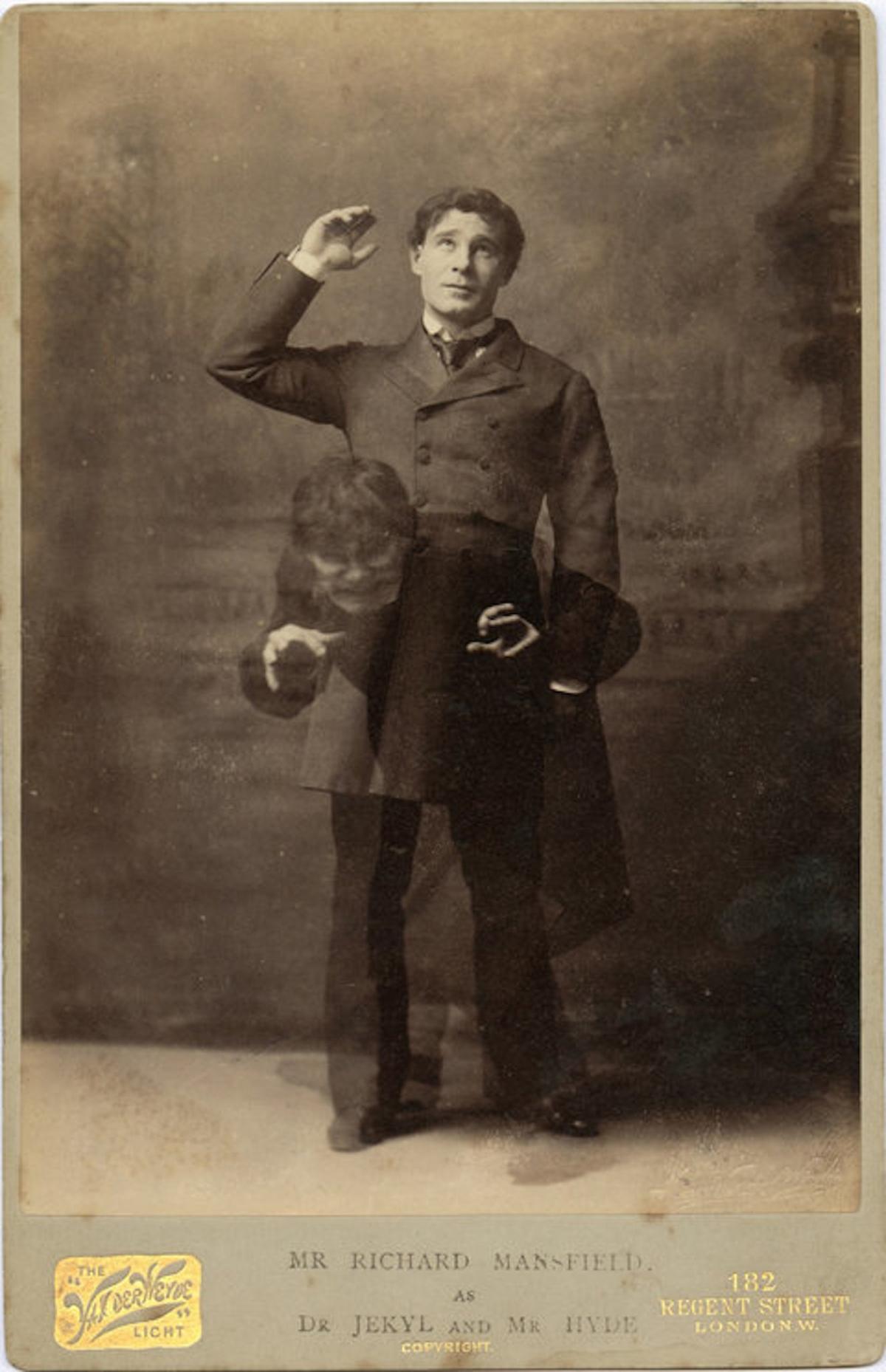
Fig. 1. Van der Weyde, Henry. Actor Richard Mansfield in a stage adaptation of Dr Jekyll and Mr Hyde. 1887. British Library, https://www.bl.uk/collection-items/mansfield-as-dr-jekyll-and-mr-hyde
This image is a double exposure picture of Richard Mansfield playing both Jekyll and Hyde in an 1887 production of Stevenson’s Strange Case of Dr Jekyll and Mr Hyde. This image, along with several others of Mansfield’s performances, was included in a James Mansfield calendar dedicated to his work around 1899. In this photograph, it’s amazing to see the transformation Mansfield went through, solely using his own body and mannerisms to portray both Henry Jekyll and Edward Hyde. Just like in Stevenson’s novella, Hyde appears shorter and younger than Jekyll, with a devilish face and claw-like hands. His expression is haunting and strikes fear into the viewer, just as was described in the text. Jekyll, conversely, fits his profile of “a large, well-made, smooth-faced man of fifty, with something of a slyish cast perhaps, but every mark of capacity and kindness” (Stevenson). Overlapping the two in this image starkly highlights their differences, and if not told, it would be difficult to surmise the same actor played both roles. Mansfield’s transformation was so shocking, in fact, that the production had to be put on hold because the audience feared, due to his ability to so adeptly transform, that Mansfield could possibly be behind the Jack the Ripper murders of the late 1880’s.
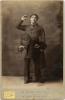
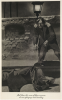
Fig. 2. Hulme Beaman, Sydney George, and Stevenson, Robert Louis. Strange Case of Dr Jekyll and Mr Hyde. 1930. British Library, https://www.bl.uk/collection-items/illustrations-to-strange-case-of-dr-jekyll-and-mr-hyde-1930
This is an illustration of Edward Hyde after the murder of Danvers Carew illustrated in the 1930’s edition of Stevenson’s novella by S. G. Hulme Beaman, an author and illustrator best known for his illustrations in children’s books. In this image, Hyde’s embodiment of evil is obvious, and everything about the image is haunting. Hyde’s stance, for starters, is seemingly inhuman as both his legs are turned inward, his back is hunched, and his arms are bent together as his clawed hands seemingly grasp at the air. This alludes to his unnatural origins as the product of an experiment and the embodiment of evil, making readers uncomfortable looking at him. His facial expression however, is truly the most eerie thing about the illustration, as his eyes are open wide, unblinking, and his murderous smile seems to be stretching his face as he drinks in the crime he’s committed, seemingly pleased. Viewing this image, it is now much more obvious why everyone who passed Hyde in the street was so afraid of him. Though he has no specific goulish features, there is something in his mannerisms and expression that makes others fear him. As Utterson said in the second chapter, “...if ever I read Satan’s signature upon a face, it Is on that of your new friend [Mr. Hyde]” (Stevenson).
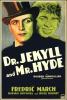
Fig. 3. PARAMOUNT, Allstar Picture Library. Fredric March Film Poster - Dr Jekyll and Mr Hyde. 1931. British Library, https://www.bl.uk/collection-items/poster-depicting-jekyll-and-hyde-from-the-film-adaptation-starring-fredric-march
This image is from the 1931 film adaptation of Strange Case of Dr Jekyll and Mr Hyde, Dr. Jekyll and Mr. Hyde. In this image, Hyde is portrayed much more monster-like than any of the other depictions, and is pictured with a large nose, big lips, bushy eyebrows, big teeth, and an abundance of hair. In the movie poster he even appears green to further create a comparison between Hyde and Jekyll, half of whose face is brightly lit, while the other half is lit with the same green as Hyde. This seemingly signifies the duality of the character of Jekyll, while the character of Hyde is completely enveloped with evil. This depiction, in addition to clips from the 1931 film, seem to portray evil as more animalistic than previous versions, and make Hyde more of a beast man than an alter ego. We may even go so far as to say that Hyde’s features are racialized, reflecting the prejudice and xenophobia prevalent in England in the 20th century.
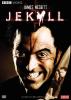
Fig. 4. Moffat, Steven. Jekyll TV poster starring James Nesbitt on BBC Video. 2007. IMDb, https://www.imdb.com/title/tt0497298/
This image is a promotional poster for BBC Video’s TV Series Jekyll, a 2007 adaptation of Stevenson’s classic novella. In the show, James Nesbitt plays both the Jekyll and Hyde characters: Tom Jackman and his alter ego Hyde. Both characters look similar and appear mostly the same physically, yet Tom’s disheveled state is always corrected when he transforms into Hyde, and Hyde is much more animated, making his features larger and much more exaggerated, oftentimes menacing, and animated when he transforms. Though Hyde is supposed to be Jackman’s evil side, he often comes in handy, and his rage and supernatural strength aids Jackman in many of his endeavors, as he, like Jekyll, uses Hyde as a tool for his own ends. Fear of his supernatural abilities and loss of oneself seems to be more the root of Hyde’s evil than his actual appearance, as in many cases he appears more handsome as Hyde, and he even acts more flirtatious and charismatic after his transformation. Hyde exhibits rage and lack of self control, and sometimes even comes across as the cinematic playboy type. This shows a shift away from the idea that appearances are telling, and puts an emphasis on the more modern idea that often, appearances can be deceiving. This also shies away from the good versus evil debate, and puts much more of an emphasis on the dualistic nature of Jekyll and Hyde, maintaining the idea that Hyde is a part of Jekyll, and that one cannot exist without the other.