
Egypt is significant to Jane Eyre because it is mentioned upon Jane's discovery of Rochester already being married to Bertha Mason, who had been living at Thornfield all along. To express her grief, Jane despairs, "My hopes were all dead-struck with a subtle doom, such as in one night, fell on all the first-born in the land of Egypt." (265). Jane reflects her situation to the environment of Egypt during the Passover, when Egyptian children were slain, to express her doomful fate. The mention of Egypt draws parallels to the sudden destruction of Jane's hopes she held for a future with Rochester and the grief in Egypt when the tenth plague was brought down, bringing sudden death with it. The use of this literary allusion can be observed in the Book of Exodus, specifically Exodus 12: 29-30. The information on this allusion is explained in a site dedicated to biblical allusions, Biblicalallusions. org: "The Tenth Plague - Exodus - Jane Eyre.
This location illustrates Gothic convention because Jane is connecting the destruction of her hopes to a devastating event filled with death and darkness. The allusion helps Jane to express her loss just as those in Egypt at the, magnifying how grim her situation and future were beginning to look. Drawing parallels to a the tragic scene in Egypt strengthens the Gothic atmosphere as Jane connects her suffering to a story of destruction and tragedy.
Mapping this location on COVES reveals how the novel's real geography grounds its Gothic atmosphere. While Jane is physically in England, she is still able to connect herself to the history in biblical Egypt. Charlotte Bronte's use of a religious story of sudden destruction helps emphasize those emotions of destruction within Jane, all contributing to the Gothic atmosphere.
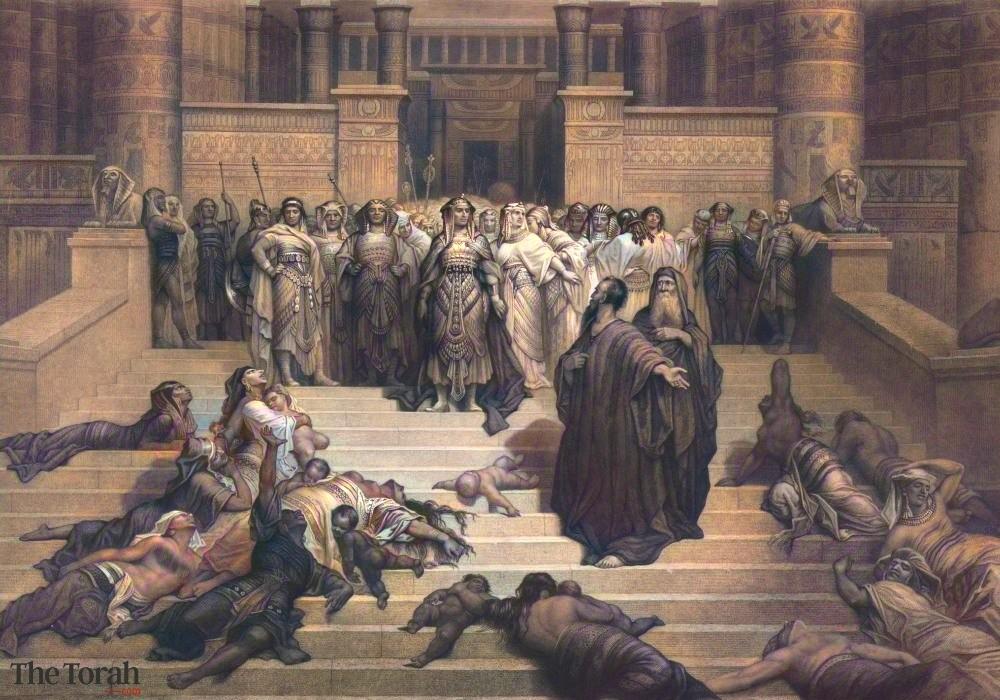
https://www.thetorah.com/article/laws-of-the-firstborn-how-they-were-connected-to-the-tenth-plague