
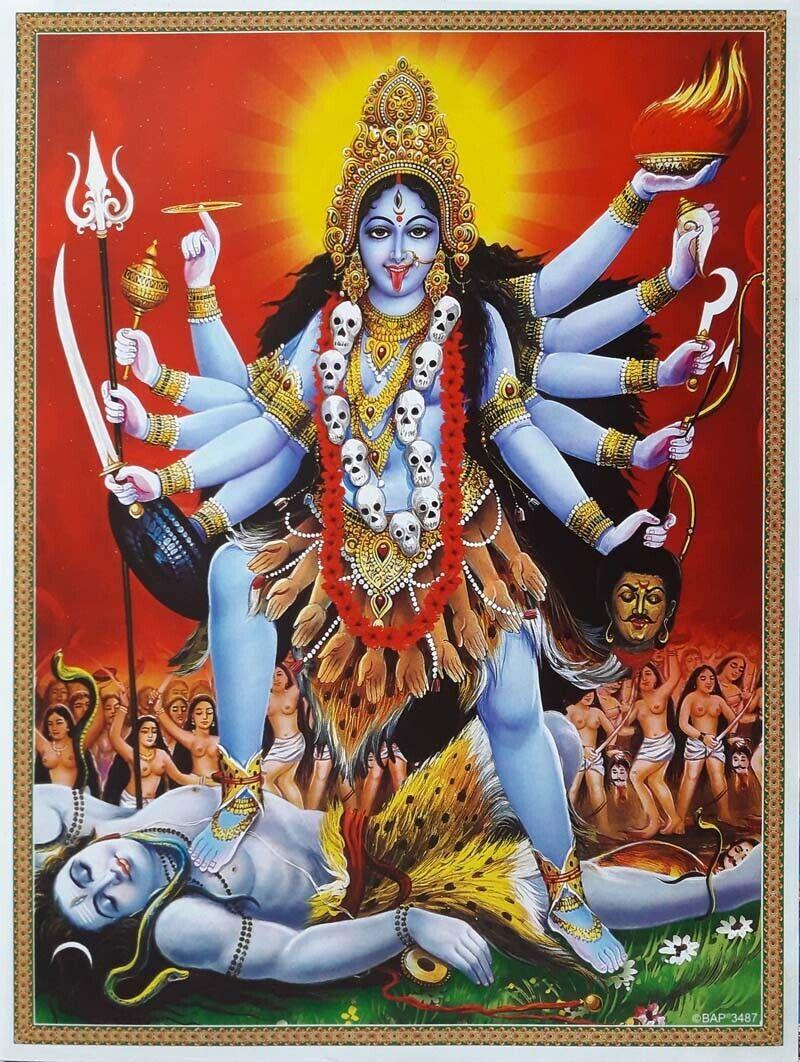
Kali is a Hindu goddess whose name derives from Sanskrit “time, death and black.” She is traditionally portrayed with black or blue skin, a lolling tongue and graphic decapitated heads in her hands. Kali exemplifies conflicting traits, as some depictions represent the goddess as a gentle loving mother, the picture of divine femininity, while others represent Kali as savage and deadly, a slayer of demons. These clashing depictions reveal some of the ancient gender dynamics, as Kali maintains a negative connotation of death while also portraying love and sexuality. This could be connected to the suppression of women as independent or sexually feminine outside of a male dominated hierarchy. The goddess has a particular popularity within the Bengal region, as the Bengalese celebrate Kali during kali puja, a festival where participants offer the goddess red hibiscus flowers and sweets during nightly rituals. Additionally, Kali’s popularity explains the prevalence of dedicated temples in the Bengal region, and the origins of Calcutta’s city name- originally Kalicuta named after the goddess. Her popularity in the Bengal area contextualizes the mentions of worshipping Kali in Sen’s writing.
In particular, Sen evokes Kali when the ladies confront her for studying with her brothers, as she “became Kali, the terrible goddess” and stands up for herself and her education. The connection between “the terrible goddess” and female independence can be made here, as Sen is invoking the savagery of liberated Kali in order to pursue education. Societal connotation would cast Kali’s liberation as a terrible thing, which could explain some of the negative traits she is associated with; savagery, death, and blackness. Furthermore, Sen describes Kali as her family’s deity and her essential place in the center of the village. Sen notes Kali as a protectoress, which aligns with the fierce and independent traits attributed to the goddess.
Sources:
Doniger, Wendy. "Kali". Encyclopedia Britannica, 26 Dec. 2019, https://www.britannica.com/topic/Kali.
C, Arpa. “Kali Puja 2020 - Read about the History, Significance, and Other Details.” Republic World, Republic World, 13 Nov. 2020, www.republicworld.com/lifestyle/festivals/kali-puja-2020-read-about-the…;
Roychowdhury, Adrija. “Decoding Why Bengal Celebrates Kali on Diwali.” The Indian Express, 7 Nov. 2018, indianexpress.com/article/research/diwali-special-decoding-the-many-forms-of-goddess-kali-in-india-5436248/.