
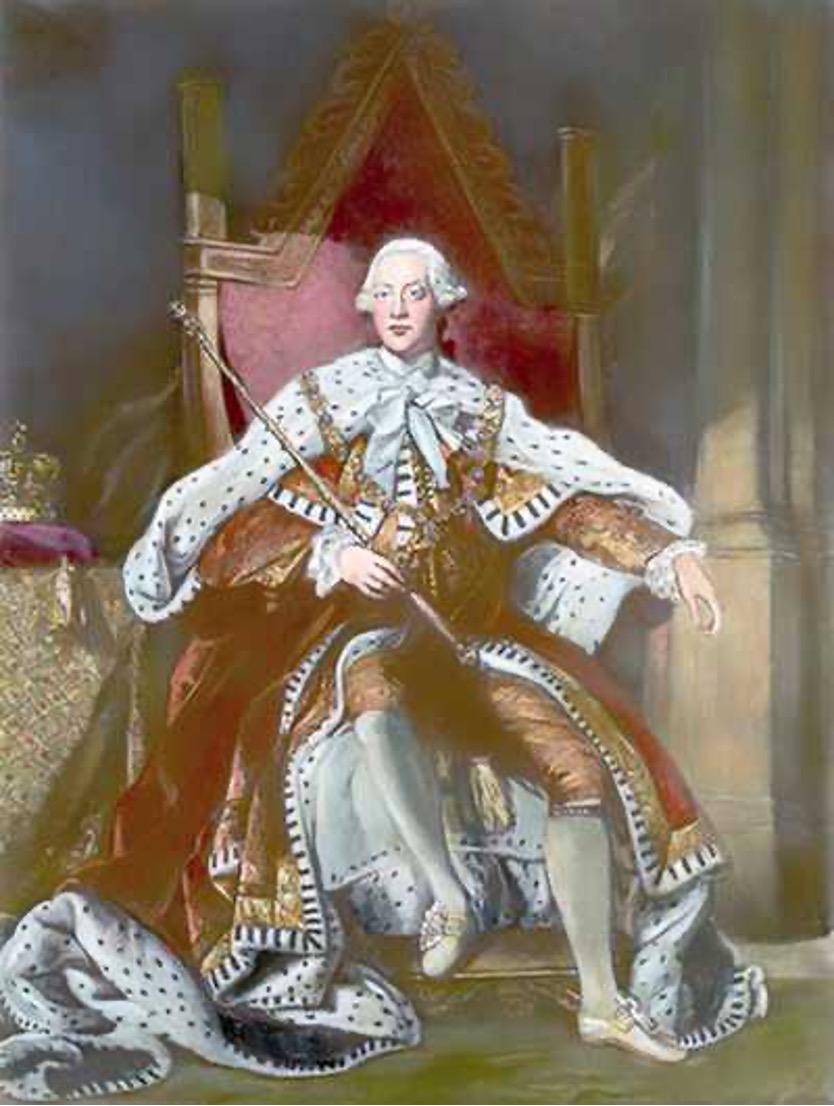
King George III was the King of England from 1760 until his death in 1820. Part of his reign was known as the Regency Period, as his son, future King George IV, took over a regent for his father. George III was known as a tyrant king, but later known for his madness in the early 1800's. In 2003 through DNA testing, the cause for his fits of madness was diagnosed to be a blood disorder called porphyria, also known as lead poisioning. His symptoms included, "...severe abdominal pain, extreme perspiration, dark red urine, and seizure-like fits." Later studies, however, believed he suffered from only "acute mania", which is a bipolar disorder. He was constantly monitered by his staff, similar to how Prince Dolor was monitered constantly within his tower walls.
By the late 1700's his fits had become worse, leading to him being declared "insane" by 1811, and placed under Queen Charlotte's ward. The Kingship was handed over to his son, George IV, as Prince Regent. Treatments for his illness included straightjackets, restraints, and powders that contained arsenics--which made his symptoms even worse. George III died in 1820, one of the longest reining kings. He was blind at the time of his death, and suffering dementia. His story reflects certain aspects of Prince Dolors, despite his kingship being maintained during his leave of absence and his sufferings with mental illness. While not physically disabled until later in life, becoming blind, he was still ushered into a secluded role within his kingdom because of his illness.
“King George III.” PBS, Public Broadcasting Service, www.pbs.org/wgbh/americanexperience/features/adams-king-george-III/. Accessed 5 Apr. 2025.
"King George III: British Ruler During the American Revolution." ThoughtCo, https://www.thoughtco.com/king-george-iii-biography-4178933