
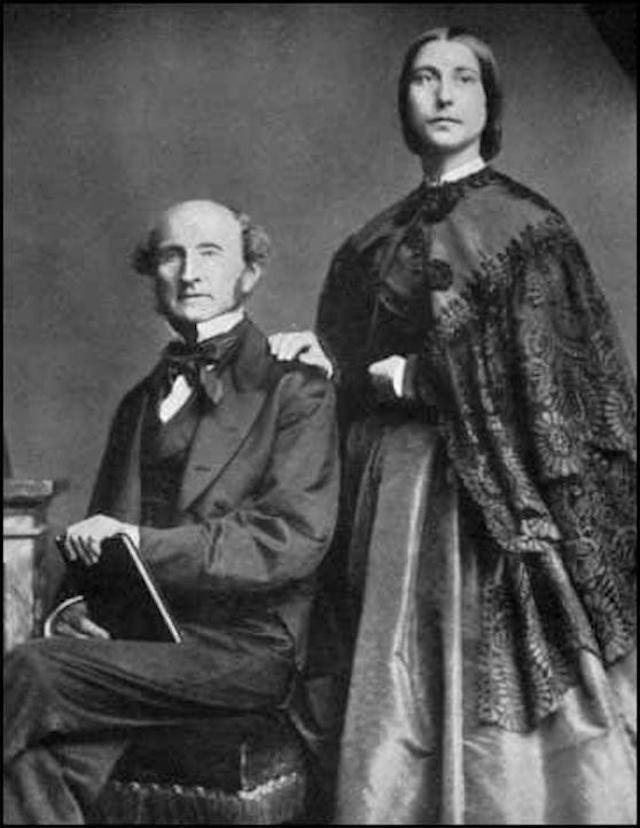
On Liberty is an extended essay written by J.S. Mill, and, according to his own account, his wife, Harriet Taylor. Taylor died just as they were working on “its final revision,” and the text was dedicated to her with recognition of their co-authorship and a touching panegyric where he praised her intellect and wisdom, saying “were I but capable of interpreting to the world one-half the great thoughts and noble feelings which are buried in her grave, I should be the medium of a greater benefit to it than is ever likely to arise from anything that I can write, unprompted and unassisted by her all but unrivalled wisdom.”
On Liberty was published in 1859, and remains, along with Logic, the most enduring of Mill’s work. He himself predicted this longevity. In his Autobiography Mill said that “The Liberty is likely to survive longer than anything else that I have written (with the possible exception of the Logic.)” The text discusses, among other things, the nature of individual liberty in a democracy as under a monarchy and highlights its importance. Mill posits that even in a democratic system, individual liberty is sacrificed because of majority rule, that which he calls “social tyranny.” He deduces that individual liberty should only be sacrificed when the exercise of it inflicts direct harm on another person. He also describes the role of government and of social stipulations in upholding individuality while also maintaining social order.
Sources
Penguin Edition of Autobiography by J.S. Mill: Own summary as well as quotes drawn from the text, quotes from 182, 183, 188, 189 and the footnote of page 182
https://spartacus-educational.com/Wtaylor.htm
https://www.libertarianism.org/columns/introduction-john-stuart-mills-liberty
https://www.gutenberg.org/files/34901/34901-h/34901-h.htm
https://www.utilitarianism.com/millauto/seven.html