
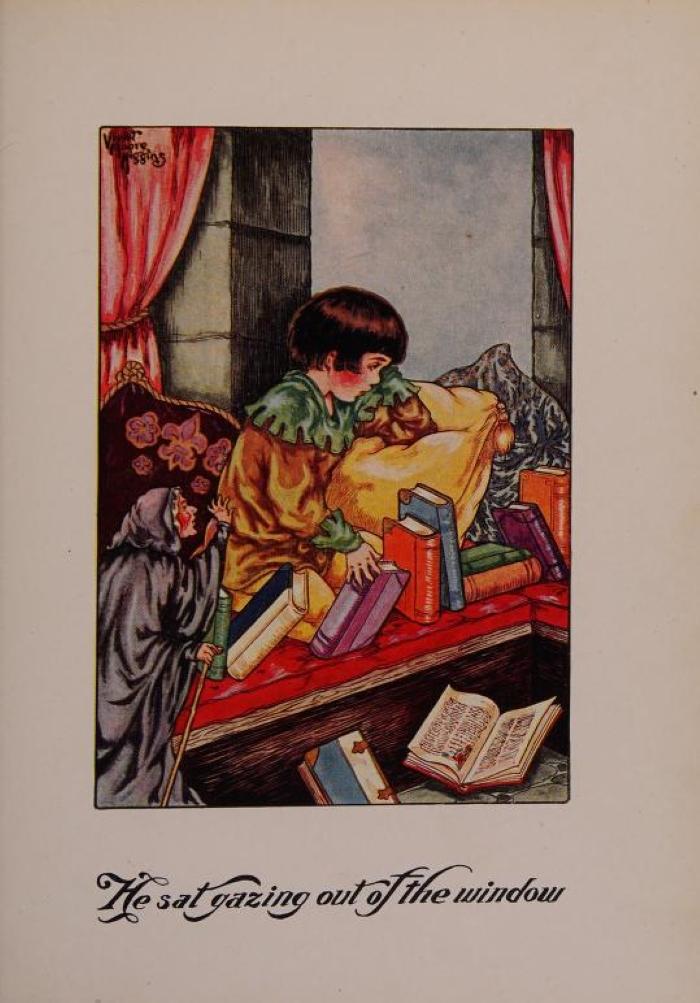
While books are important to Prince Dolor’s development, this form of entertainment and imaginative play cannot be the only thing to sustain the prince. As the text says, “He sat one day surrounded [his books], having built them up round him like a little castle wall. He had been reading them half the day, but feeling all the while that to read about things which you never can see is like hearing about a beautiful dinner while you are starving” (Craik). Within this context, he looks out the window and longs for experiences outside of his tower, prompting his godmother to appear for the first time; she then provides Dolor the opportunity to have more outside experiences via the travelling cloak. While books can help Dolor develop as a person, he cannot rely solely on imaginative forms of play to grow. Books mimic experiences and help expose young minds to new ideas, but they cannot completely replace actually witnessing new sights and breathing new air. As Dolor grows older, he feels more and more limited by his material circumstances and the methods of play around him lose their appeal. In the text, he forms the books into a “little castle wall” (Craik), indicating that he uses them for their form rather than their content. He transforms the books from imaginative entertainment into physical entertainment, an acknowledgement that he cannot sustain himself with pure intellectual play; this eagerness to participate in physical activity is mirrored in his longing for the outside world and looking through the window, which coincides with his frustration with reading stories. Since this scene connects with the one in which Dolor receives the travelling cloak, this further reinforces the connection between books and the cloak as the books offer both imaginative and physical entertainment just as the travelling cloak (along with the glasses and ear devices) allow Dolor to both experience the physical world in closer proximity while maintaining a distance from it. Combining physical and imaginative play in one vessel demonstrates the importance of both kinds of play to a child's development.
References:
Craik, Dinah Maria Mulock. The Little Lame Prince and His Travelling Cloak. 1875.
Craik, Dinah Maria Mulock. The Little Lame Prince and His Travelling Cloak. 1875. Albert Whitman and Company, 1927. Internet Archive, https://archive.org/details/littlelameprince0000miss_i1b6.