
Introduction
Robert Louis Stevenson's Jekyll and Hyde published in 1886 is a classic story about Dr. Henry Jekyll and his struggle with self-identity. His counterpart, alter ego, or "other self," is Mr. Edward Hyde. Throughout the novel, Jekyll and Hyde have the illusion of "never being seen in the same room together," which leads to this mystery of "Who is Edward Hyde?" Through many film adaptations throughout the 20th century, Goth-culture lovers have enjoyed watching this incredibly dynamic one-man-duo through the minds of many directors and actors.
Ed Cohen, Professor of Women's and Gender Studies at Rutgers University, uses Jekyll and Hyde as a foundation to his argument of the vast change in the normative masculinity of the Victorian Era. He states in his article published in 2004 titled Hyding the Subject?: The Antinomies of Masculinity in The Strange Case of Dr. Jekyll and Mr. Hyde, "Indeed, it hardly comes as a surprise that from the 1880s on, fictional depictions of English masculinity often narrativize the difficulties of male embodiment as a splitting within the male subject precisely in order to assert new modes of self-representation" (Cohen, 2004). The multiple political, economic, and societal changes around this time, especially the Western influence from the brewing of World War I, as well as Stephenson's influence on narratives, especially those published two years after his novel, about the historical "Jack the Ripper" murders of 1888, support the idea of the "modernist novel": "a phrase used to periodize a number of formal and thematic transformations that reshaped the narratively impelled characterizations of mid-century 'realism'" (Cohen, 2004). Many modernist authors narrate the subjectivity of masculinity in a world where things were only seen as black or white, creating a new image of middle-class masculinity.
This gallery explores the visual creativity of artists and filmmakers alike, including a still from Paramount's 1920 recreation of the novel to film, as well as an illustration from S G Hulme-Beaman's adaptation of the novel from 1930.
Works Cited
Cohen, E. (2004, August 1). Hyding the Subject?: The Antinomies of Masculinity in The Strange Case of Dr. Jekyll and Mr. Hyde. Article. Retrieved November 6, 2021, from https://read.dukeupress.edu/novel/article-abstract/37/1-2/181/84448/Hyd….
Images in the Series
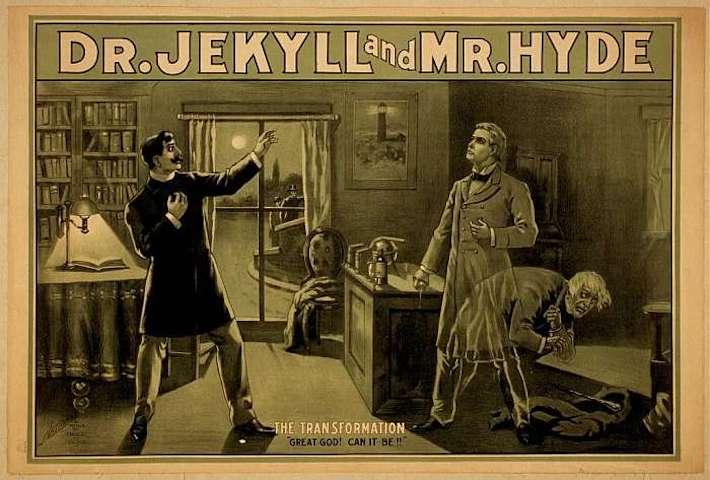
Fig. 1. Library of Congress Image Library. "The Transformation." 1880s. Victorian Web, https://victorianweb.org/genre/childlit/images/33.html.
This poster was an advertisement for an early adaptation of Stevenson's The Strange Case of Dr. Jekyll and Mr. Hyde in Chicago. In this image, Hyde is cowering away from Jekyll as their lower bodies are morphed in a ghostly conjunction. The terrified look on the man's face on the left and the clutching of his chest emphasize how horrid Hyde is depicted. In the first chapter of the novel, he is described by a passerby: "It wasn’t like a man; it was like some damned Juggernaut" (Stevenson, 1886). The zombie-like eyes depicted on Hyde contrasts with the dark, deep-sunken eyes of the almost proud-standing Jekyll. The differences seen between Jekyll, Hyde, and the third party tell a shortened version of the conflict in the story - Jekyll must keep this evil alter ego a secret from everyone, not only because of his bad deeds but also because of his appearance that he is embarrassed by as Hyde. This "masking" is a common theme in societies as well. More often before this time, it was women who were hiding who they wished to be behind reading, writing, art, etc., but especially adapted into visual art, the intensity of this symbolism through a male character became wildly popular.
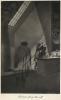
Fig. 2. Hulme-Beaman, S G. Strange Case of Dr Jekyll and Mr Hyde. 1930. British Library. Web, https://www.bl.uk/collection-items/illustrations-to-strange-case-of-dr-….
This illustration is by S G Hulme-Beaman who was an illustrator for children's books. Depicted is Jekyll in his office, looking fearfully at his alter ego as he stands in the light from the skylight above him. Just as in the first image, Hyde is a ghostly, transparent figure. Though his face is not shown in the image, his posture and disheveled hair clue the viewer into recognizing him. On the walls in the shadows, there are other distorted faces that could either be masks or just illusions of faces. In the chapter "Henry Jekyll's Full Statement of the Case," Jekyll states "that man is not truly one, but truly two. I say two, because the state of my own knowledge does not pass beyond that point" (Stevenson, 1886). By this notion, man could be more than two, as in: many people have different presentations of themselves. There is the "me" when at work, with friends, with family, etc., which sounds obvious in modern-day, but in the Victorian Era, everyone must be proper - all the time. Though "Jekyll" is his most common presentation Hyde is his "evil side." There could, however, be more presentations that are not as clearly defined in the story: Jekyll with his friends is no doubt different than Jekyll with his patients, for example. These faces also support the idea of "masking." One's true identity is not always on display.
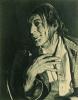
Fig. 3. Paramount Pictures. Dr. Jekyll and Mr. Hyde (1920). 1920. Wikimedia. Web, https://commons.wikimedia.org/wiki/File:Dr._Jekyll_and_Mr._Hyde_(1920)_….
_-_Hyde.jpg)
This image is a still from the 1920 dramatization starring John Barrymore as Jekyll. In this image, Hyde's head is not only mishappen, but covered by a mop of thin, greasy-looking hair down to his shoulders. Men at this time usually kept their hair shorter and more well-groomed. His smile is unsettling, showing large protruding teeth. His arm is large and popping with veins, and his fingers are gnarled and long. Overall, his appearance is grotesque, following his description in the story. Though vile in nature, the smile he shows makes him seem more human. It shows he must be capable of showing feeling or at least possesses the ability to process feelings from others and project them himself. As dramatic as the effects and makeup are in making Hyde look like a villain, there is a modern day sexualization of a similar look - disheveled men with burly arms and protruding veins, almost like the lumberjack look. This image of masculinity started becoming more and more prevalent in films and novels closer to and after World War I (and even now) where men were seen as fighters and protectors, and therefore had to change their image from clean and proper to rough and rugged.
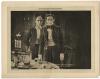
Fig. 4. Paramount Artcraft. Lobby Card for Dr. Jekyll and Mr. Hyde. 1920. Wikimedia. Web, https://commons.wikimedia.org/wiki/File:Lobby_card_for_Dr._Jekyll_and_M….

This image is another still from the original adaptation. Jekyll is looking to the camera tensely as Carew is behind him asking, "In devoting yourself to others, Jekyll, aren't you neglecting your own development[?]". I noticed this line was not in the original text, but it has a powerful message that relates to the theme of this exhibition. Though depicted young in visual art, it is stated that Jekyll is middle aged, but estimated that he was about fifty years old. Having few acquaintances in the novel, it is safe to assume Jekyll never had much socialization - medical school to transitioning into practicing medicine leaves minimal time to socialize or even have friends, for that matter. Jekyll did not have a wife, partner, or roommate. Undoubtedly, the most interaction he had on a daily basis was with his patients. Becoming a doctor takes at least a small amount of empathy. As an empath and healthcare worker, I know firsthand how draining it can be. It is possible to put all energy into the work and never leave time for self-care, and sometimes even feel like part of me is gone end of the day. For Jekyll, Hyde could be his escape from normality; a new person with a different life, exploring differences in behavior and appearance, which once again supports the notion that masculinity was and is a constantly changing embodiment.