

Character Commentary -
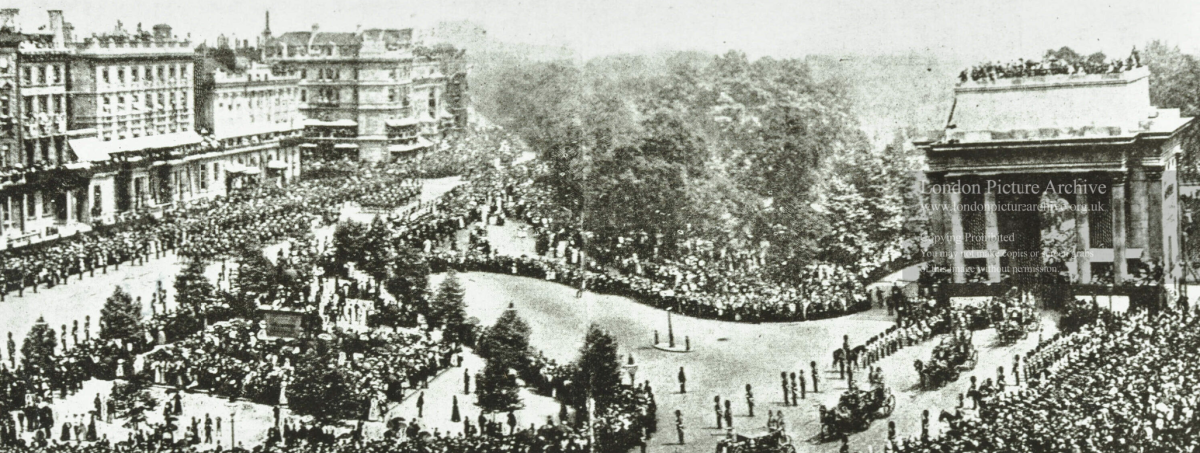
A beautiful picture of a grand wedding of the minister’s son in London. I remember how many had gathered in this city square in hopes of glimpsing the auspicious moments of the wedding. I always valued marriage highly, as it held a certain kind of promise, a place of security even. You see, marriage was not just a union of two people binding by the bible, rather an insurance for a women’s future. I wanted to recreate such a glorious event for my beautiful daughter Vivie, who deserves all the attention in the world. However, we share contrasting beliefs on this matter, Vivie and I, she considered herself as a modern woman who wanted to focus on her own goals and aspirations rather than accepting any marriage proposals, I decided to bring for her. I highly rated the marriage, as I considered it as a place of shelter and comfort. Especially for women, marriage was like personal safeguard it meant that there was someone to provide you for, someone to look to during times of trouble, someone to maintain a peaceful stability with. Mind not, I have seen my fair share of marriages destroy women's lives, yet these cases were extremely rare, and I always thought that the positives outweigh the negatives. It was not only seen as a way to stability but also guaranteed one's emotional well-being, with your loved-one your life would be as harmonious as ever. Moreover, marriage was also seen as a stamp of societal acceptance, as many events took place with one’s better half's.
Editorial Commentary -
Upon looking at Mrs. Warren's book there another picture displaying what seem to be a grand event in the heart of the city. Reading about it from the Mrs. Warren entry it can be denoted as a wedding from modern-day England. Mrs. Warren describes how she plans on recreating such an event for her daughter. Mrs. Warren's portrayal of the importance of marriage in the during her time shows how it can often be a complex topic, and the role that marriage plays in the lives of women during that time. She felt that marriage brought a sense of stability into women’s lives, providing them with the necessary assurance they would need to live their lives. Marriage was important in that era of society not just as a love union but also as a vital source of social and economic security, especially for women. A woman's financial stability, social status, and future opportunities were frequently decided by it. Marriage, “involves a public commitment to enter into a potentially lifelong, caring relationship with one’s partner.” (DeMaris). Mrs. Warren's recognition of marriage's consequences underscores the disparity in possibilities and options for women in the 1800s. Even though she has seen many failures in marriages, the benefits always seem to outweigh any other choices. It emphasizes the cultural pressure to choose economic stability and social life ahead of one’s personal goals or inspirations. Similarly, today, marriage is seen as love bond of two individuals which positively benefits both parties where people share their goals with one another supporting each other through difficult times. In essence, Mrs. Warren’s entries signify how marriage is considered of great importance as it brings numerous benefits for couples.
Sources:
“Royal Wedding procession, Piccadilly Green Park.” London Picture Archive, 1893. https://www.londonpicturearchive.org.uk/view-item?i=286987&WINID=169708…. Accessed October 10, 2023.
DeMaris Alfred. “Marriage Advantage in Subjective Well-Being: Causal Effect or Unmeasured Heterogeneity?” 7 May 2017.https://www.ncbi.nlm.nih.gov/pmc/articles/PMC7205226/. Accessed October 11, 2023.