
In his Autobiography, John Stuart Mill recalls reading “a considerable part of Ovid’s Metamorphoses” in Latin, between the ages of eight and twelve. The Latin verse is fifteen books of connected pseudo-sequential but separate narrative poems by Ovid, an equestrian (high-middle or low-upper) class burgeoning-politician-turned-poet, highly educated and decently well-travelled, who composed in his lifetime some 33,000 lines of poetry. From his own writings, others’, and other historical records, Ovid maintained a well-connected and well-known figure in Roman society, until his banishment as a quinquagenarian for causes yet uncertain. The Metamorphoses was written, and yet incomplete, in the years immediately preceding his banishment. From both Greek and native Italian sources, the poems narrate the transformations, often of man into beast or plant, and, unsurprisingly perhaps, given their narrative source, are run through with all sorts of condemnable moral behavior, from rape to cannibalism. The Latin is tricky and distinct to its author, whose enchantment with his own wit often shines through the narrative. As early elementary reading, then, both form and content of the verses demonstrate a precocoius and worldly maturity in their reader. In his Autobiography, within the list of reading including the Metamorphoses , Mill does not hesitate to admit if "by these I profited little;" it invites the reader to question what young Mill "profited" from the Metamorphoses and its formulation of the world.
Sources
Ovid, and A. G. Lee. Metamorphoses I. Bristol: Bristol Classical Press. Print.
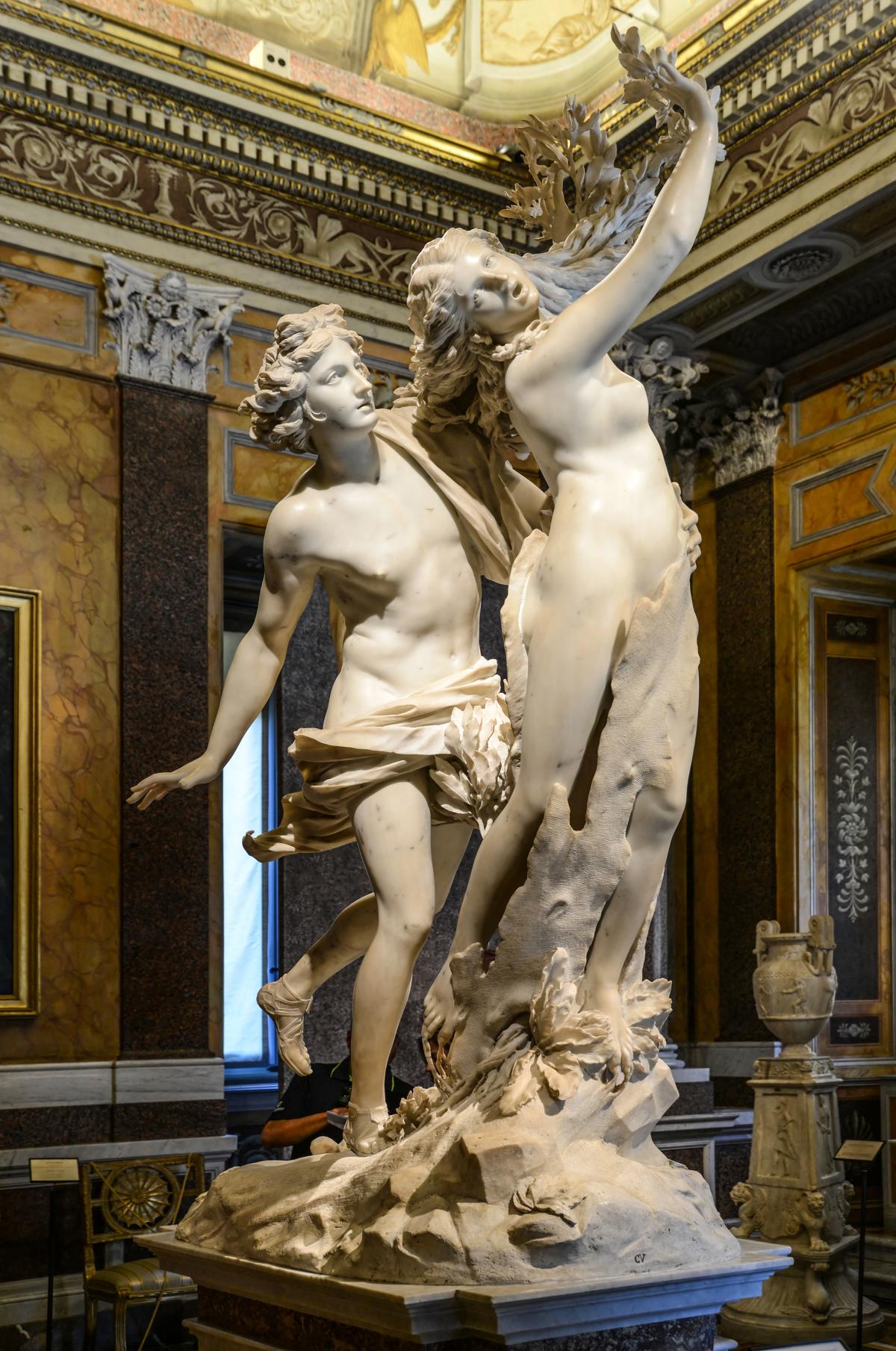
Image Source
“Apollo and Daphne.” Obelisk Art History. https://arthistoryproject.com/artists/gian-lorenzo-bernini/apollo-and-daphne/