
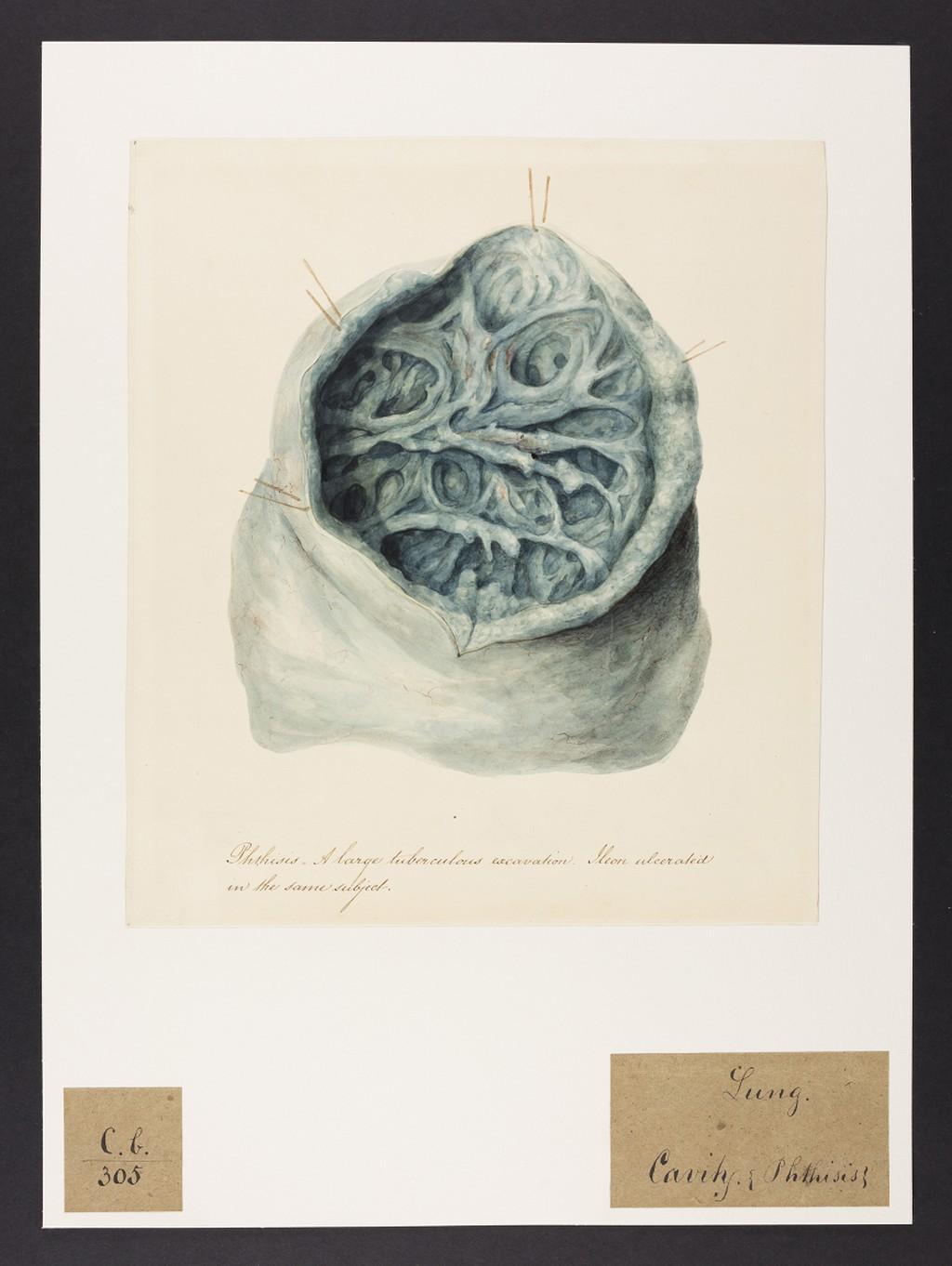
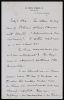
Phthisis, or pthisis, as Sen gives it, is a now-rare term describing a variety of consumptive diseases, similar to tuberculosis. 19th century doctors were eager to distinguish between the two — phthisis and tuberculosis — but the broad definition ascribed at the time to the former leads to practical indistinguishability. The symptoms of the disease, described in 1878, are “that assemblage and progression of symptoms, die to suppurative of ulcerative destruction, of more or less circumscribed non-malignant deposits in the lung” (Clark 194). Dr. Coats gives a perhaps less tortured definition in 1881: “an emaciating disease involving destruction of the lung-tissue,” specifically, the “formation of cavities in the lung.” (Gairdner, 10)
The disease is essentially an emaciation of the whole body following pulmonary symptoms, and thus contains a wide variety of specific symptoms.
As part of her medical examination, Sen is asked to explain the difference between pneumonia and phthisis: the chief difference between these two pulmonary diseases is that the former is the result of infection, and the latter of accreted inhaled particles.
The relevance of the disease, in all its forms, to Sen’s medical training is clear: cholera excluded, phthisis is cited as the fifth most common cause of death among the European Army in Bengal in the decade between 1860-1870 (after Hepatitis, Fever, Dysentery, Heat Apoplexy, and ahead of “Injuries and Deaths from violence out of hospital”) (Bryden 4).
Surgeon-Major Bryden, who records these statistics, describes “phthisis pulmonalis” as a disease “to which the older soldier is more peculiarly subject,” in contrast with the “purely climactic diseases — heat fevers, heat apoplexy, and acute dysentery,” though he later goes on to note that “it is thought that this climate is especially adapted to its development” (Bryden 5, 52).
Sources
Bryden, Lumsdaine James. “Sickness and Mortality in the European Army of the Bengal Presidency from 1860 to 1869: An Aggregate of the Statistics of the Ten-Year Period.” RCP Library, Superintendent of Government Printing, 1874. Wiley Digital Archives: The Royal College of Physicians. http://WDAgo.com/s/5eb6020d.
Clark, Andrew. “Phthisis and Its Varieties.” RCP Library, 1878. Wiley Digital Archives: The Royal College of Physicians. http://WDAgo.com/s/61fede7d
Gairdner, Tennant William, et al. “Discussion on the Pathology of Phthisis Pulmonalis.” Glasgow Pathological and Clinical Society. RCP Library, Alex. Macdougall, 1881. Wiley Digital Archives: The Royal College of Physicians. Http://WDAgo.com/s/bc6b1587
"pneumonia, n." OED Online, Oxford University Press, December 2020, www.oed.com/view/Entry/146345
Image Sources
Pye-Smith, Henry Philip. “Notes on Case of Phthisis 2 Jul. 1894.” Autograph Letter Sequence, 2 July 1894. Wiley Digital Archives: The Royal College of Physicians. http://WDAgo.com/s/35f1593f
Phthisis. JSTOR, jstor.org/stable/10.2307/community.28291071.