

Character Commentary:
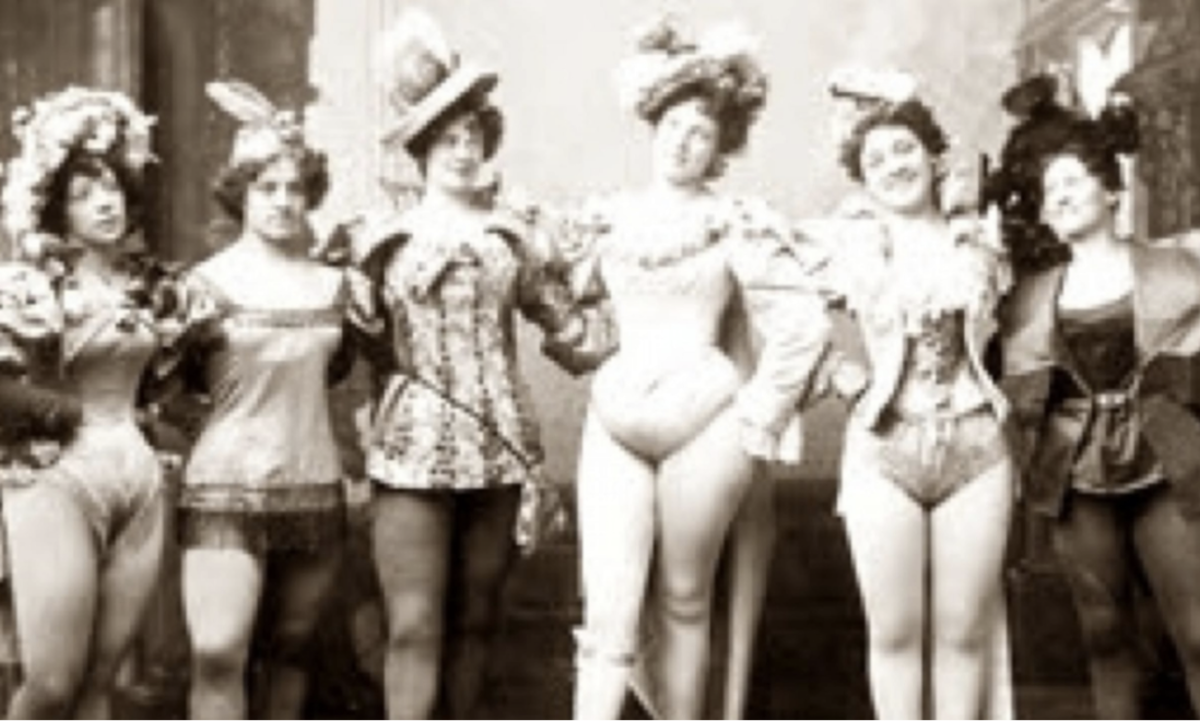
Pasting this print in my journal brings me such delight, gazing upon an image of my companions and I, enjoying our time as single, free women. Once caged birds, we are now unbound to constraints, able to let our wings soar. Our once long, heavy dresses now cut down to reveal our legs, the weight no longer crippling our abilities. Our bonnets lie atop our heads as smaller decorations, as not to handicap our vision. Although shown in black and white, this photo showcases my newly dyed hair, shining with highlights the color of the sun, unlike the dull hair of conservative women. Our faces have all been painted with rosy cheeks, light under eyes, striking eyelashes, and bright lips. They refer to us as untamed beasts, but rather an untamed beast than a timid, caged rat. The traditional ladies of the town mock us. They mistake our braveness for savagery, our uniqueness for a curse, our energy for chaos, our freedom for tyranny, and our motivation for impulse. They believe us selfish for not aiming to please man. If I am selfish for pursuing my happiness first and foremost, then label me as egotistical. My friends and I share a desire for fun. We love to stroll through the town in the evenings, partying, dancing, smoking, drinking, and letting loose the damage of years of one sided teachings. Teachings of inferiority, gender roles, and one way living. My friends and I are beautiful women, not because we have men pursuing us, but because we pursue our truest selves and our truest happiness.
Editorial Commentary:
Many women during the Victorian Era were considered radical feminists, meaning they went to extreme lengths to advocate for their rights. Regarding the second page of this commonplace book, the author seems to take large steps in defiance of traditional gender roles. She pursues her own free will and serves her own happiness rather than serving men on a pedestal. In a Letter from a Female Radical Reformer, the author uses extensive sarcasm and wit to demean the way that men view women. She states, “as if women had not a will of their own! I know, for my own part, I had one long before I could mend a stocking” ("Letter from a Female Radical Reformer"). This radical feminist acknowledges that she has a will of her own and actively follows it rather than “stay[ing] at home and nursing” children. Additionally, female activists would use their fashion and makeup choices to rebel against conformity. Rather than wearing long, covering dresses, they would show more skin than the average Victorian woman, cutting down their dresses and headpieces. Women would also wear expressive makeup in place of traditional light, “feminine” makeup. Feminists such as “Elizabeth Cady Stanton… believed that women’s bodies should be as free as their minds… [and] employed the dress to promote their political agenda” (Rabinovitch-Fox). Feminism and fashion have an intertwined relationship throughout history. Women would wear “short skirts” that “revealed women’s calves and ankles” in order to threaten gender hierarchies and gain attention from onlookers. This carefree spirit and way of dress are what catalyzed the movement towards liberation of women during the 19th century.
Works Cited
Brinks, Melissa. Life of a Wild West Saloon Girl. 3 Sept. 2021. Ranker, https://imgix.ranker.com/list_img_v2/12139/2732139/original/life-of-a-w…. Accessed 11 Oct. 2023.
“Letter from a Female Radical Reformer.” Christian Observer, vol. 18, no. 8, Aug. 1819, pp. 517–18. EBSCOhost, search.ebscohost.com/login.aspx?direct=true&AuthType=ip,shib&db=h9h&AN=35917443&site=eds-live.
Rabinovitch-Fox, Einav. "Dressed for Freedom : The Fashionable Politics of American Feminism." University of Illinois Press, 2021. EBSCOhost, search.ebscohost.com/login.aspx?direct=true&AuthType=ip,shib&db=nlebk&AN=2966467&site=eds-live.