
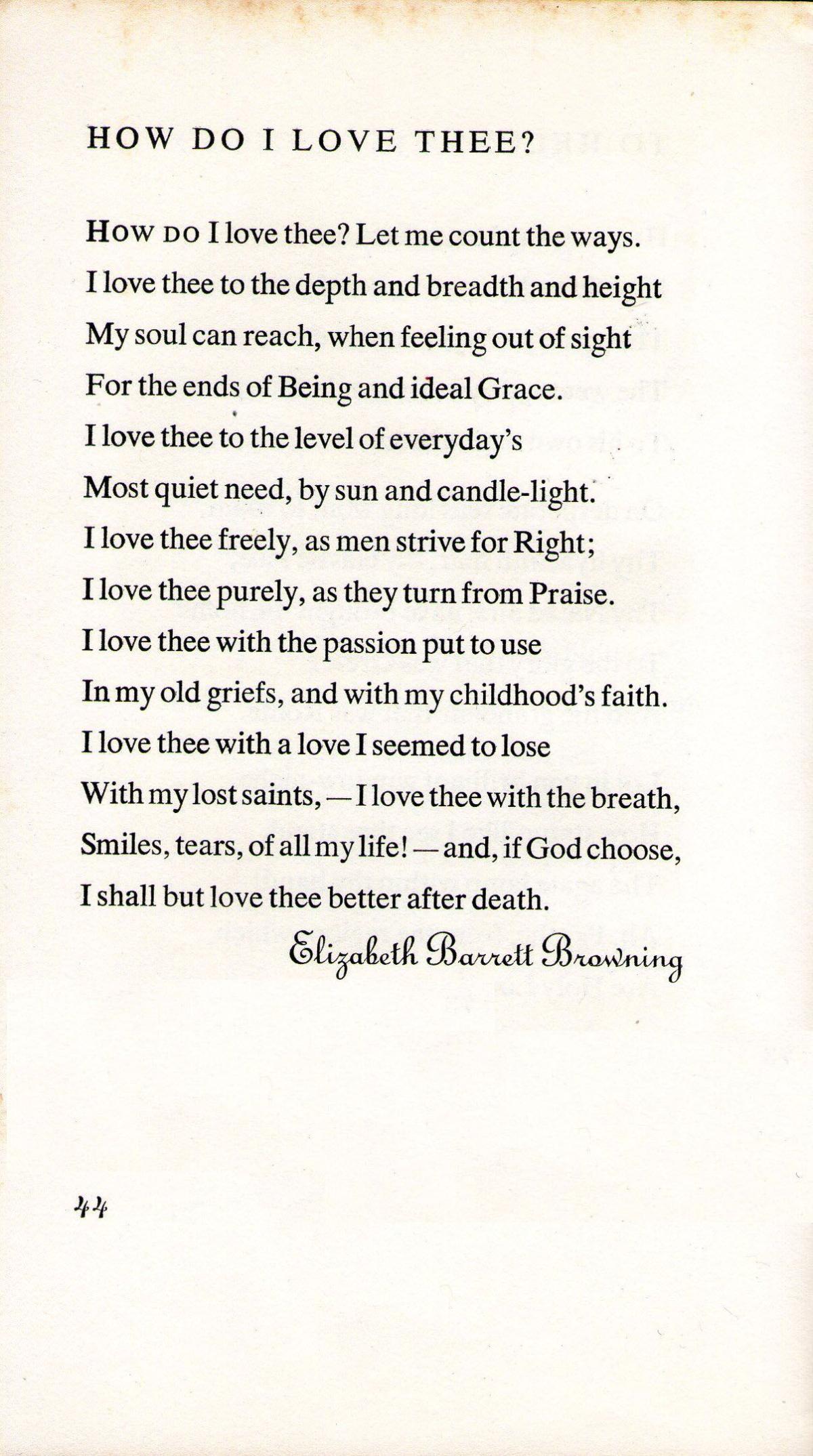
I have always admired the beautiful words of Elizabeth Barrett Browning. I hope that my own words will someday impact someone’s life the way hers have mine. When I was struggling and thought I would never find happiness, this poem reminded me that this type of love is real and a possibility for me. I’ve always wanted to love and be loved but thought, who would ever choose me, plain, ole Gerty? I expected Phyllis and Lucy to get married and move away, leaving Fanny and I unmarried and alone but to my surprise, Lord Watergate came into my life. I hadn't known him for long but I had never met a man so clever, generous, and kind. Ever since the day I met him, I could not get him off my mind. I had always put everyone’s needs first but now someone wanted to take care of me, to protect and love me. I was so afraid of being happy that I turned this wonderful man away. I wanted love so deeply, for so long, that I was terrified to accept his in the fear of losing it. Lord Watergate, however, was quite persistent and did not take no for an answer. As unexpected as it was, I have achieved the kind of love in this delightful poem, pure and all consuming. Instead of a message of hope, this poem now represents my worth and capability to be happy. Sometimes, I read this to young James before he goes to sleep. These words not only apply to my immense love for my husband but my fondness for my beautiful son.
Editorial Commentary: “How do I love thee?,” published in 1850, is one of the most well-known poems from the Victorian era. Elizabeth Barrett Browning was a successful feminist poet during this time period, a detail that likely contributed to Gertrude’s appreciation for her work. As a poet herself, it is understandable that Gertrude would save this piece for emotional purposes and as inspiration for her own literature. Her descriptions of marriage in her commentary are indicative of the expectation for women to get married very young during this time period. The way Gertrude describes her affection for her husband, Lord Watergate, and son, James, as well as her voiced desire to be taken care of are characteristic of the “Angel in the House” figure, characterized in Victorian literature. This label describes a woman who was pure and devoted to her husband and her domestic duties. Although Gertrude could be characterized using traits from both a traditional and modern woman; overall, I would classify her as a “New Woman,” a progessive figure in society. Gertrude’s independence and work ethic defied the societal norms of Victorian Britain. Although hard-working and strong, she managed to achieve the ideal future for a Victorian woman, marriage and motherhood. This indicates that the “New Woman” was not limited by the stereotypes portrayed in popular literature such as swearing and smoking, and that these women could still have nurturing characteristics and the desire to be wives and mothers. Another notable apsect to consider is Lord Watergate’s refusal to take no for an answer to his proposal. This gesture might seem romantic in Gertrude’s case but to others, controlling and forceful, both common traits of Victorian men.
Citations:
Browning, E. B. (2019, February 13). “How Do I Love Thee? (Sonnet 43).” Retrieved November 16, 2020, from https://nationalpoetryday.co.uk/poem/how-do-i-love-thee-sonnet-43/
Levy, Amy. The Romance of a Shop, 1888. COVE, 2020.