
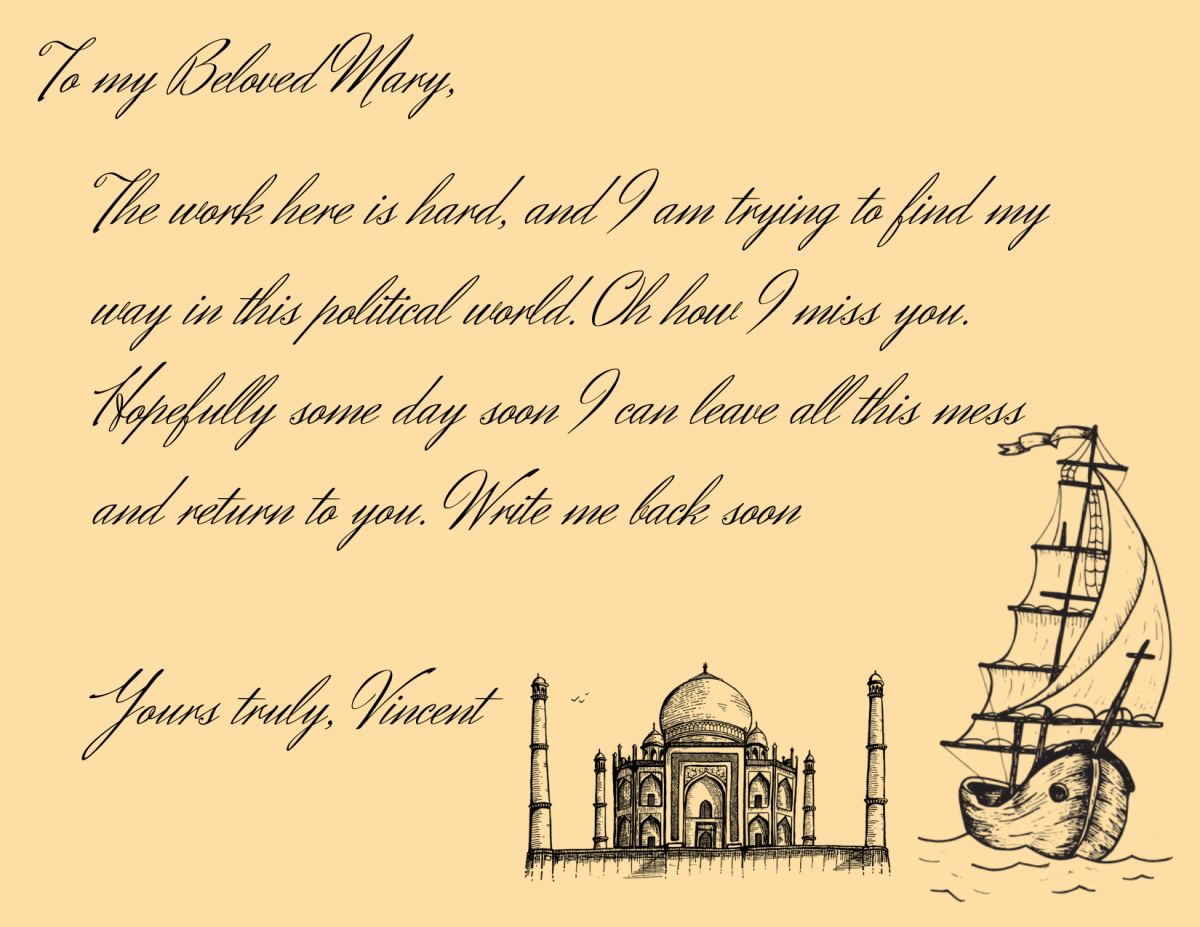

Mary’s Commentary: I held onto this Postcard after forgetting I had kept this on my dressing table. After burning Vincent’s letters I tried to forget about his influence and value in my life. As I was rearranging my room for a fresh new start I found this postcard. It was the first one he ever sent me. I only kept it because it reminded me of a better time. Before Alison passed, Before Vincent returned with his fiance, and before my life was flipped upside down. It was a reminder of my struggle and achievements. It was a reminder of those feelings I once had for a man who is regretting every decision he made after he left London. It is a reminder to me that love like that is just as achievable now as it was then. I am not going to let my current situation prevent me from finding love in the future. I will continue to work hard as a journalist and maybe somewhere along those lines of me improving my career, I will find a man who appreciates my financial independence and can understand where a Modern Woman like me is coming from and my ideas about society. Maybe this man can help me discover the true meaning of love and connection and finally have that relationship I have been craving. Yes, I still have a love for Vincent, but it is more the love of what he represented. A perfect life, an ideal life, a happy life. I still believe I can find that somewhere. I pray I can find that somewhere.
Editors Commentary: This is a great example of a Victorian Age postcard. The hue of the paper is unique to parchment paper manufactured in India and the writing is done from a feather pen. The postcard is designed to be simple, elegant, but also cost-effective. The note itself is important in understanding the love Vincent had for Mary and the commitment he showed her before marrying the other woman. In Mary’s commentary, however, we get the inner feeling of a Modern Woman and her feelings about marriage. Mary was willing to find love and her ideal husband and finally move on from Vincent’s love. She reflected on what he meant in her life but realized he was more put in her life as a lesson. Mary’s commentary also shows us that she has progressive marriage ideals and she wants a husband who recognizes her desire to work and have her own career. This ideal was not shared by everyone at the time. Some still believed in the idea that the best place for the woman was the home and that she is better off raising children than going to work. Mary shows that she does not conform to this ideal and that she is in fact not going to do so to find herself a husband. At a time where a lot of marriages were arranged to benefit the families with little consideration on the effects, it will have on the marriage itself, Mary stating she will find a man that she deems fit and acceptable is also a more bold and progressive thought for the time.
Citation: The postcard above was made by me on Canva as a replica of what post cards looked like during this time period.