

Display Explanation
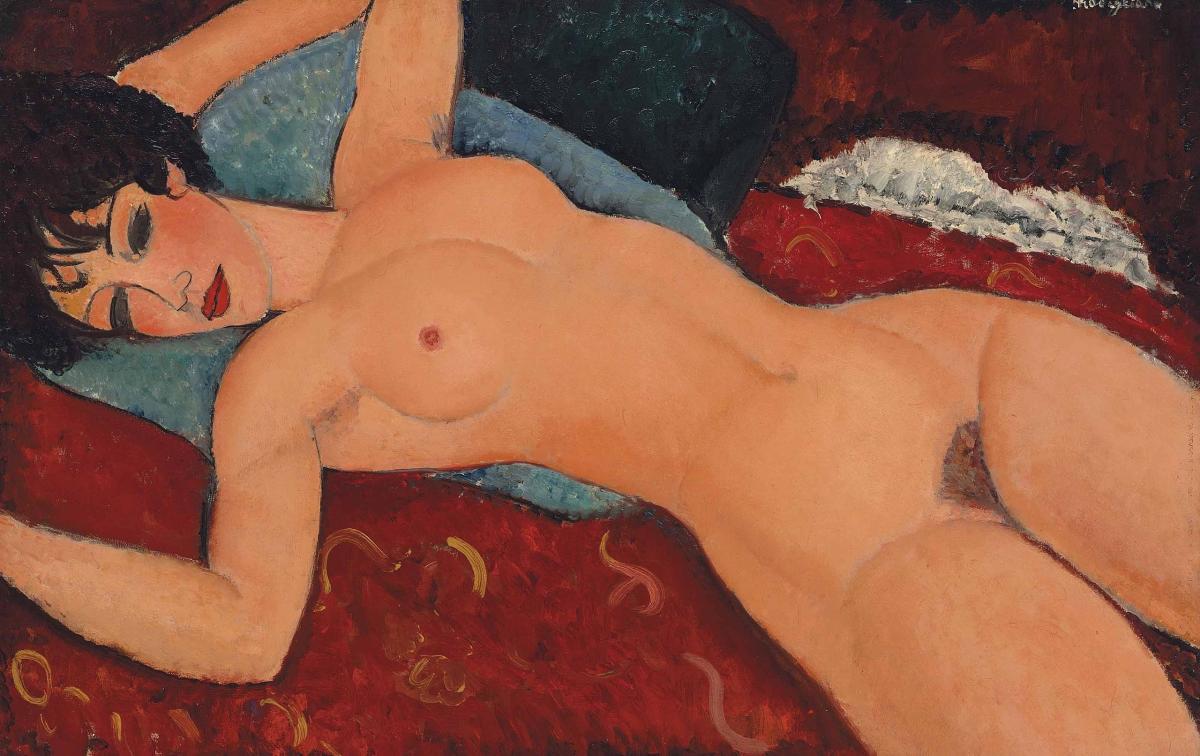
For my installation of the three images -– Red Nude (1917) by Amedeo Modigliani, Two Venetians (1893) by Eugen von Blaas, and Sitting Girl (1917) by Egon Schiele — I wanted to do something a little different. While many would expect the images to be displayed in a museum, I would want them displayed in a woman-owned business like a restaurant or something of that sort. I want them placed in the order of Red Nude, followed by Two Venetians, and finally, the Sitting Girl all paced on different walls. I would rather the paintings be large and all sized the same to depict the importance of each equally and to grasp the attention of the viewers. I want them to be hung on the walls because as one enters a business, the first thing one does is look around, and I want the images to be the first thing people see. In addition, having a light that beams down or above on the images would be put in place to further focus on these pictures. I chose that location and specific display to encapsulate the reality of women throughout history. As mentioned above, the exact type of business can vary – it could even be a women-owned art museum – but it being women-owned is very vital to the overall message. Being displayed in a regular museum would not quite suffice because the essence and purpose of a museum are to display all art across all mediums, but I would rather these specific images be placed in a setting that primarily focuses on them.
Installation Note
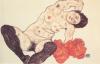
The explanation behind the setting, the display, and the images themselves is to ultimately tell a story. Throughout history, the role of women was to be domestic under the patriarchy. Along with this way of operating came the male gaze and the publication of women’s nudity. Some artists' goal was to create an idealistic woman, like Red Nude -- a painting that displays a nude woman lying with her eyes closed with a face of makeup and a perfect frame. Other artists, on the other hand, create realistic women in their natural setting, like in Sitting Girl, which captures a rather voluptuous woman with body hair lying down. In both cases, the vulnerability of women is being put on display, which is why I chose to include Two Venetians, an image that displays two well-dressed and beautiful women conversing naturally. The three paintings must be put on display together because essentially, I am trying to create the progression of the reality and representation of women; from an idealistic perspective through the man's eyes, to the actual view of a natural woman, and finally, the outcome–that being the women-owned business. Having the three put on display so at large ultimately takes the viewers through the history of women. While many would think, “why have nude photos of women put on display in such matters?” it introduces an oppositional gaze in a way, almost in an ownership type of manner. Women have been viewed from many different perspectives, all of which are vital, but the purpose at large is to ultimately show how far the role of women has come.
Citation
Eugen von Blaas, Eugen. Two Venetians. 1893.
https://commons.wikimedia.org/wiki/File:Eugen_von_Blaas_-_Two_Venetian_Women.jpg

Accessed Feb. 9, 2022.
Modigliani, Amedeo. Red Nude. 1917.
https://en.wikipedia.org/wiki/Nude_(art)#/media/File:Modigliani_-_Nu_couché.jpg
#/media/File:Modigliani_-_Nu_couch%C3%A9.jpg)
Acessed Feb. 9, 2022.
Schiele, Egon. Sitting Girl. Thyssen-Bornemisza Museum. 1917.

Accessed Feb. 9, 2022.