
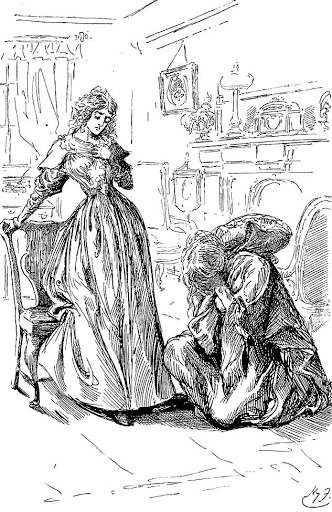
The term "prostitution" today does not align with what was considered prostitution in London 19th century; It had a wider range of meaning including "to refer to women who were living with men outside marriage, or women who had had illegitimate children, or women who perhaps had relations with men, but for pleasure rather than money" (Flanders). The character Nancy made me investigate further on investigating prostitution in London due to her description of “free and agreeable . . . manners” alluding that she is a prostitute. However, the loose terminology does not confirm whether she had other clients or it was simply showing disapproval to her living with her long-term partner, Sikes. In chapter 39 of Oliver Twist, we witness the disapproval Miss Maylie's servants show to the arrival of Nancy merely based on her lower-status appearance.
Flanders, J. (2014, May 5). Prostitution. Retrieved February 19, 2021, from https://www.bl.uk/romantics-and-victorians/articles/prostitution
Furniss, H. (2015, March 5). Rose and Nancy [Digital image]. Retrieved February 19, 2021, from http://www.victorianweb.org/art/illustration/furniss/ot25.html