
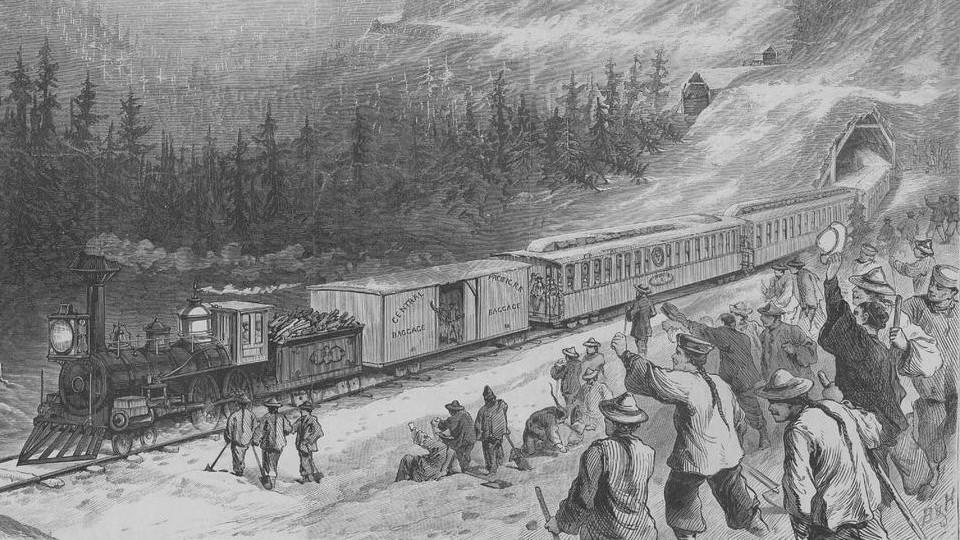
While the 1833 abolition of slavery in Britain freed slaves in the colonies, the empire still needed additional labor to bolster economic growth. Thus, the term “coolie”- from the Tamil word for wages- was originated to describe indentured servants who lived in similar conditions to former slaves, with extremely long hours and grueling labor. The term also became a racialized slur which referred to Chinese or Indian indentured servants or laborers. The class of coolies was also deeply entrenched in immigration and British colonization, as coolies were recruited by the British to labor in other colonies like the West Indies and East Africa. However, coolies still remained in India to labor in various difficult low wage positions. Railway coolies in particular referred to laborers who were porters handling baggage at railway or transportation stations.
In Sen’s text, railway coolies are present when Sen and her new husband are traveling by train for the pilgrimage. The wives of the railway coolies visit Sen to discuss the shops and market in the Raja’s village, and Sen purchases bundles of wood from the coolies to make a fire. However, the interactions with the coolies and their wives reveal more of the class dynamics within Indian culture. Sen is born within a high class family, but experiences dramatic changes in status when she becomes a widow and then in her successful medical career. Even though it was the British bureaucracy who coined the term "coolies", it is seen as a normal part of class hierarchy. This reinforces how integrated Westernization efforts became during Indian colonization. The term “coolies” for railway porters was still commonly used until 2016 when the Indian government renamed them. The British bureaucracy sought to reinforce class hierarchy and racialize the lower classes to be undesirable even as they relied on their labor for economic purposes.
Sources:
Gandhi, Lakshmi. “A History Of Indentured Labor Gives 'Coolie' Its Sting.” NPR, NPR, 25 Nov. 2013, www.npr.org/sections/codeswitch/2013/11/25/247166284/a-history-of-inden…;
Lee, Si-eun. WHKMLA : History of Indian and Chinese Coolies and Their Descendants, Oct. 2008, www.zum.de/whkmla/sp/0910/lse/lse2.html#bib.
Rodrigues, Jason. “Indian Railway 'Coolies' to Be Renamed in Bid to Improve Their Status.” The Guardian, Guardian News and Media, 2 Mar. 2016, www.theguardian.com/world/2016/mar/02/indian-railway-coolies-renamed-im….