
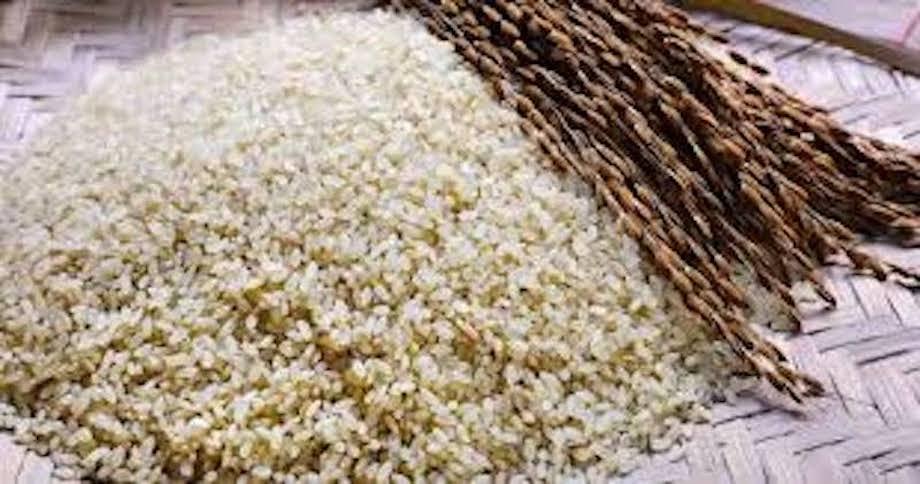

Grains of rice are the seeds of a cereal-grass that can be cooked for food. Noted for its versatility, rice is a staple of Bengali cuisine; in West Bengal, it is the leading crop in almost every region. In the last third of the nineteenth century, several hundred varieties of rice were cultivated in Bangladesh/India. These could be sorted under the main categories of rowa, amon, and owsh. Rowa was typically produced in small fields surrounded by a bank that was between four inches and a foot tall. It was harvested between November and January and was the most valuable category of rice. Amon was also harvested between November and January, but was cultivated in a much different fashion. Known as a swamp rice, it was grown deep underwater at depths of two to fourteen feet between the months of August and September. Owsh was harvested between the months of June and August.
In her work Because I am a Woman, Haimabati Sen frequently includes rice. It is present in moments of physical nourishment, ceremony, and demonstration of class. When Sen’s son is sick, the doctor recommends that he eat frothy rice. When she discovers orphan children waiting by the drain to eat some of the gruel from the rice that she throws away, she asks them why they don’t eat rice. They respond by saying “Where can we get rice? We eat lentils and rice or roti only twice in a month.” Sen’s childhood as the daughter of a landowner was very different. She doesn’t eat all of the rice that she possesses. She has access to enough that she can fry some black and dissolve it in water to make ink for studying.
Sources
Because I am a Woman by Haimabati Sen, page 18 213, 216
https://www.merriam-webster.com/dictionary/rice
https://www.jstor.org/stable/4114896?seq=1#metadata_info_tab_contents