A timeline of events significant to both early and late Romantic writers.
Timeline
Table of Events
| Date | Event | Created by |
|---|---|---|
| 2 Feb 1745 to 7 Sep 1833 | Hannah MoreHannah More was born on February 2, 1745, in Gloucestershire, England. She was not only an English religious writer and philanthropist, but she was also an educator. Her most famous works include Thoughts on the Importance of the Manners of the Great to General Society and The Sorrows of Yamba. More was also a playwright who wrote about moral and religious subjects. In the 1770s, she made frequent visits to London, where she met William Wilberforce, an abolitionist philanthropist. Here stemmed her interest in the Evangelicals. During the French Revolution, her voice calling to change traditional values had a powerful impact and approval. More was able to recognize that society was not only static but acknowledge that their civilization was dependent on the large population of the poor. Later on in the 1790s, Hannah More wrote Cheap Repository Tracts which discussed moral, political and religious issues that should be shared with the poor. She was also able to establish clubs for women and schools for children despite the heavy amount of abuse and opposition by country neighbors who, in turn, believed that if the poor were to be educated, they would stray away from the clergy and their farming duties. “Hannah More.” Encyclopædia Britannica, Encyclopædia Britannica, Inc., 29 Jan. 2021, www.britannica.com/biography/Hannah-More.
|
Sophia Trejo |
| 1764 | The Beginning of the Gothic Romantic Era - The Castle of OtrantoThe publication of The Castle of Otranto by Horace Walpole is conidered the start of Gothic Romantic literature. The novel combined horror with medieval romances and was the first to do so, thus becoming the first Gothic novel as a whole. It cultivated literature traits for the gothic genre such as terror, castles, and ancestral curses. The Castle of Otranto pioneered Gothic literature by doing so, and has been remarked as the beginning of the Gothic era of art as a whole due to its themes of horror, terror, use of magic and ancient prophesies, as well as gory scenes. The book is believed to be an English retelling based on an Italian tale from the Dark Ages. The plot follows Manfred, the ruler of Otranto, whose son Conrad is about to marry Isabella of Vincenza. However, on the day of the wedding, his son is mysteriously crushed to death by a giant helmet that fell from the sky, and so Manfred decides to devise a plan to divorce/kill his wife Hippolita and marry Isabella himself. However, when Isabella escapes his grasps, she traverses the castle of Otranto, where she is met with ancient prophesies, ghosts, and more works of terror. The novel also gave birth to the combinations of some traits in gothic literature, such as a virginial maiden being saved by a hero (Matilda and Theodore, respectively), a tyrannical villain (Manfred), and dark aesthetic settings (the castle itself). |
Michael Robles |
| 1773 | Barbauld's "On the Pleasure Derived from Objects of Terror"This short essay called "On the Pleasure Derived from Objects of Terror'' was written by Anna Laetitia Aikin (later to become Barbauld after marrying Rochemont Barbauld) and her brother John Aikin. The essay focuses on gothic literature and the sublime of horror. The central question of this essay is why terror/horror is so appealing to people, causing them to seek out scary literature. The essay begins in the first paragraph by explaining that horror serves the moral purpose of creating sympathy for the characters. They argue that pain the reader feels for the characters is alleviated by the virtue of sympathy and what remains is pleasure. This pleasure, the essay states, leads people to want to read horror stories again and again, rather than leading to disgust and repulsion. However, the issue the essay raises is that people are finding gothic literature pleasurable when it is not for moral reasons such as this. Overall, the essay explores why individuals like to be scared by literature when it serves no moral purpose. The essay mentions a list of past horror, talking about Greek, Roman and other tragedians, as well as old gothic romance and eastern tales. Two examples that are used are “Macbeth” and “Hamlet.” The Aikins use these examples to postulate that readers, once introduced to horror, must finish a scary story to be relieved by a resolution and satisfaction. “We rather choose to suffer the smart pang of a violent emotion than the uneasy craving of an unsatisfied desire”. This initial explanation for the appeal of horror somewhat satisfies the speaker in the essay, who describes how children are enrapt by scary stories, and mentions that he is often forced through boring or scary novels because of this feeling of needing a resolution. However, this initial idea doesn’t completely solve the question of why gothic literature is so popular because people continue to seek out horror even though they know it will be scary and keep them on the edge of their seats. So, the essay offers another, final explanation. The essay’s conclusion says that the supernatural,unexpected, scary, unrealistic, etc that the gothic is made up of- make the mind alert, stimulating the imagination to new possibilities. Horror opens up new worlds in the imagination, which is pleasant to all those that read scary stories.
“A strange and unexpected event awakens the mind, and keeps it on the stretch; and where the agency of invisible beings is introduced, of "forms unseen, and mightier far than we," our imagination, darting forth, explores with rapture the new world which is laid open to its view, and rejoices in the expansion of its powers. Passion and fancy cooperating elevate the soul to its highest pitch; and the pain of terror is lost in amazement.”
At the end of the essay, they provide the example of Sir Betrand to show how horror does this.
|
Megan Luebberman |
| 5 May 1789 to 10 Nov 1799 | French Revolution
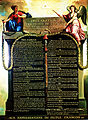
On 5 May 1789, the Estates-General, representing the nobility, the clergy, and the common people, held a meeting at the request of the King to address France’s financial difficulties. At this meeting, the Third Estate (the commoners) protested the merely symbolic double representation that they had been granted by the King. This protest resulted in a fracture among the three estates and precipitated the French Revolution. On 17 June, members of the Third Estate designated themselves the National Assembly and claimed to represent the people of the nation, thus preparing the way for the foundation of the republic. Several pivotal events followed in quick succession: the storming of the Bastille (14 July), the approval of the Declaration of the Rights of Man and of the Citizen (26 August), and the march on Versailles that led to the enforced relocation of the royal family to Paris (5-6 October). These revolutionary acts fired the imagination of many regarding the political future of France, and, indeed, all of Europe. The republican period of the revolution continued in various phases until 9-10 November 1799 when Napoleon Bonaparte supplanted the government. ArticlesDiane Piccitto, "On 1793 and the Aftermath of the French Revolution" |
David Rettenmaier |
| 1790 to 1830 | Clapham SectIn the 19th century, the Clapham Sect (or Clapham Saints) were social reformers from the Church of England. Their name came from a village South of London, Clapham. The members were Evangelical Anglicans that shared views, both political and social, about slaves, reform of the penal system and the abolition of the slave trade. They concerned themselves with social justice as well as equality and fairness for everyone. Not to mention how they were incredibly motivated by their Christian faith. In 1807, the Slave Trade Act was set in place. This banned slave trading throughout the British Empire and after many years of campaigning, the Slavery Abolition Act was placed in 1833. The Clapham Sect also supported several missionary/ Bible societies, offered religious instruction to the poor and even financed Hannah More’s schools.
“Clapham Sect.” Encyclopædia Britannica, Encyclopædia Britannica, Inc., www.britannica.com/topic/Clapham-Sect. “William Wilberforce: Anti-Slavery Campaigner: Blue Plaques.” English Heritage, www.english-heritage.org.uk/visit/blue-plaques/clapham-sect/. |
Sophia Trejo |
| 5 Sep 1793 to 27 Jul 1794 | Reign of Terror
On 5 September 1793, the National Convention, France’s ruling body from 1793 to 1795, officially put into effect terror measures in order to subdue opposition to and punish insufficient support for the revolution and the new regime. From the autumn of 1793 until the summer of 1794, thousands of people across the country were imprisoned and executed (including the Queen) under the ruthless leadership of Maximilien Robespierre. The guillotine, particularly the one in Paris’s Place de la Révolution, served as the bloody emblem of the fear tactics that began to manifest themselves first in the formation of the Committee of Public Safety (6 April 1793) and subsequently in the implementation of the Law of Suspects (17 September 1793). The Terror ended on 27 July 1794 with the overthrow of Robespierre, who was guillotined the next day. ArticlesDiane Piccitto, "On 1793 and the Aftermath of the French Revolution" |
David Rettenmaier |
| 10 Sep 1797 | Death of Wollstonecraft
ArticlesAnne K. Mellor, "On the Publication of A Vindication of the Rights of Woman" |
David Rettenmaier |
| 1802 |
|
David Rettenmaier |
| Jun 1812 | Byron witnesses a waltz
ArticlesCheryl A. Wilson, “The Arrival of the Waltz in England, 1812″ |
David Rettenmaier |
| 1 Jul 1816 | Byron, "Darkness"
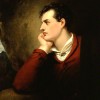
In July 1816, Lord Byron writes his poem, “Darkness,” a vision of chaotic disorder and universal extinction consequent upon the disappearance of the sun. Image: Thomas Philipps, Portrait of Lord Byron (1824). This image is in the public domain in the United States because its copyright has expired. Articles |
David Rettenmaier |
| 15 Oct 1822 to 30 Jul 1823 | The Liberal
Articles |
David Rettenmaier |
| 26 Mar 1824 | Don Juan, Cantos 15-16
Related ArticlesAngela Esterhammer, “1824: Improvisation, Speculation, and Identity-Construction” |
David Rettenmaier |
| 19 Apr 1824 | Death of Lord Byron
Related ArticlesAngela Esterhammer, “1824: Improvisation, Speculation, and Identity-Construction” |
David Rettenmaier |
| 1 Jul 1824 to 16 Jul 1824 | Byron's funeral rites
Related ArticlesAngela Esterhammer, “1824: Improvisation, Speculation, and Identity-Construction” |
David Rettenmaier |
| 5 Dec 1830 to 29 Dec 1894 | Christina RossettiRossetti was born on December 5th, 1830 in London. She was an influential poet, especially in fantasy and children's books. Her first published piece was a volume of Verses, published by her grandfather's private printing press in 1847. Rossetti was also a supporter of the new Pre-Raphaelite brotherhood, which her brother was a founding member of. In 1850, she contributed seven poems to the Pre-Raphaelite journal The Germ under the pseudonym Ellen Alleyne. Her most influential pieces were 1862 Goblin Market and Other Poems, 1866 The Prince's Progress and Other Poems, and 1872 Sing Song: A Nursery Rhyme Book. In 1859, Rossetti began volunteering at the St. Mary Magdalene Penitentiary which was mainly for 'fallen' women. Her experience here influenced her writing of Goblin Market and the morals that the narrative covers. Rossetti was also very committed to her religous faith, on two occassions she refused an engagement because the man was of Catholic faith and not Church of England. In 1871, she was diagnosed with Graves' Disease and devoted even more of her writings to her faith. In 1891, Rossetti developed cancer and died only three years later on December 29, 1894. “Christina Rossetti.” Encyclopædia Britannica, Encyclopædia Britannica, Inc., www.britannica.com/biography/Christina-Rossetti. By Dante Gabriel Rossetti - based on http://www.theotherpages.org/poems/faces/rossetti_c_03.jpg, Public Domain, https://commons.wikimedia.org/w/index.php?curid=230360 |
Emily Dodge |
| 1859 to 1870 | Christina Rossetti at St. Mary MagdaleneSt. Mary Magdalene, London Diocesan Pentitenary, was a shelter for 'fallen' women. These women were usually prostitutes, women who had sex out of wedlock, or young women who did not have familial support. The institution was devoted to redeeming and reforming these women, and to leading them onto socially acceptable paths. Rossetti volunteered here from 1859 to 1870 and inside the penitentary she was referred to as Sister Christina. Her time spent volunteering influenced her works such as Goblin Market and Cousin Kate. Both of these works have sexual themes and descriptions. These narratives are warnings for women about what happens when you stray down this path of 'social evil'. https://www.bl.uk/collection-items/advertisement-for-a-house-for-fallen… |
Emily Dodge |
| circa. 1862 | “Goblin Market” and its Interpretation- Christina Rossetti"Goblin Market", by Christina Rossetti, is poem that follows the lives of two young girls, Laura and Lizzie. The sisters are tempted by the goblin merchants to ear of their fruits in exchange for payment. Laura falls prey to the goblins' temptations and trades a piece of her "golden curl" to them. In exchange, she eats of their fruit, which brought extraordinary pleasure to her. However, she loses the ability to hear the goblins' cries and become sickly. Almost on the verge of death, Lizzie (who can still hear them) departs with a silver penny to pay for a cure from the goblins. However, they attempt to force feed the fruits to her but she resists and is covered with the juice and pulp. Lizzie is able to escape home where she meets with Laura. Laura embraces Lizzie and kisses the fruit off of Lizzie, but notices it to be repugnant and distasteful. She's healed and the sisters live happily together. Trivial messages of avoiding strangers or little girls needing to be careful barely scratch the depth of "Goblin Market" and its portrayal of the female hero. Many females in English literature are "constrained by the gender-roles into which a male-dominated society has placed them" (Phillips). Rossetti creates a female hero in Lizzie, as she maintains her purity yet dives into the murkiness of society. Lizzie demonstrates a self-sacrificial love that is symbolic of Christ's sacrifice for humanity. The connection to Christ is further built upon lines 471-72, which Lizzie states, "Eat me, drink me, love me; Laura make much of me" (Rossetti). There is also an emphasis on sisterly-love and Lizzie's actions demonstrating that love in action. Nevertheless, the female-hero seems to be still restricted as she acts passively against the goblins' ploys. Other interpretations of the poem lend itself to being an expression of feminence sexuality. Rossetti's sensual descriptions of the sisters and the goblins' forced actions imply that they were sexual encounters, particularly rape or prostitution (Flygare). Furthmore, the interactions between the two sisters imbue a homoerotic interpretation, which would not be a topic of discussion in the Victorian era. However, with the rise of female expression it would be easier to express it in literature and art. Another interpretation sees this as a portrayal of addiction, especially since opium was the most prominent one in the Victorian era (Tearle). Flygare, Julie. “Intertwining Themes in ‘Goblin Market.'” The Victorian Web, 20 Oct. 2003, http://www.victorianweb.org/authors/crossetti/flygare6.html. Phillips, W. Glasgow. “Theme in Christina Rossetti’s ‘Goblin Market.'” The Victorian Web, 1990, http://www.victorianweb.org/authors/crossetti/gm2.html. Tearle, Oliver. "A Short Analysis of Christina Rossetti's 'Goblin Market.'" Interesting Literature, 2017, https://interestingliterature.com/2017/06/a-short-analysis-of-christina-rossettis-goblin-market/ |
Noah Sales |
| 29 Dec 1894 | Christina Rossetti DeathIn 1891, Christina Rossetti developed cancer, and later died in London. After her death her brother William Michael edited her collected works in 1904 long after her death but her complete poems were not published until 1979. Even through towards the end of her life as she struggled with Graves disease she still contiued to write poetry until her death. |
London Smith |
| Apr 1913 | “A Few Don'ts by an Imagiste” and “In a Station of the Metro”In April 1913, Ezra Pound had two major pieces published in Poetry: A Magazine of Verse that would become major works in the canon of imagism. In his essay, “A Few Don'ts by an Imagiste,” Pound lays out a sort of manifesto on writing imagiste poetry by initially defining an image as “that which presents an intellectual and emotional complex in an instant of time.” An image is then something which evokes a certain response in the reader, intellectually as well as emotionally. Further down, he also defines an image and complex as creating a “sense of freedom from time limits and space limits,” presenting imagist poetry as almost sublime and emancipating from tradition. His advice can be laid out in two main parts. The first is to keep it simple and concrete. Pound strongly advises against abstract language, stating that the employment of prose will not hide the poet's attempt “to shirk all the difficulties of the unspeakably difficult art of good prose by chopping your composition into line lengths.” The second is to use free verse and freedom of rhyme as a “rhyme must have in it some slight element of surprise if it is to give pleasure.” With language and rhyme, Pound encourages poets to read other poetry and learn their techniques, but then advises against reproducing those techniques. The poet should be like a scientist, studying what others have done and making their own discoveries. In his famous poem, “In a Station of the Metro,” Pound encapsulates imagist poetry through a title and two lines: The apparition of these faces in the crowd: Petals on a wet, black bough. The most obvious component of this poem is its short and succinct length. This is where his advice shines: Pound does not use superfluous or abstract language, instead he is straightforward and concrete. Through these two lines, Pound ensures that every word has importance and meaning. The modernist movement strived to move away from tradition, and imagism had the same goal with the rhyme and rhythm. The focal point of the poetry is the concrete image presented, with some attention but not all on the meter and rhyme. In his essay, Pound expands on this by comparing writing imagist poetry to music, which is that the rhyme and rhythm should not determine the language. In the poem above, Pound does not restrict the poem by changing the wording to match a certain rhyme. Once again, we see how the image and the words used to provide that image are the focal point. Sources: “A Brief Guide to Imagism.” Poets, 4 Sept. 2017, https://poets.org/text/brief-guide-imagism. Pound, Ezra. “A Few Don’ts by an Imagiste.” Poetry Foundation, https://www.poetryfoundation.org/poetrymagazine/articles/58900/a-few-donts-by-an-imagiste. Pound, Ezra. “In a Station of the Metro.” Poetry Foundation, https://www.poetryfoundation.org/poetrymagazine/poems/12675/in-a-station-of-the-metro. Tearle, Oliver. “A Short Analysis of Ezra Pound’s ‘A Few Don’ts by an Imagiste’.” Interesting Literature, 2017, https://interestingliterature.com/2017/01/a-short-analysis-of-ezra-pounds-a-few-donts-by-an-imagiste/. |
Idalis Moscoso |
| 1914 | The Toe Dancer by William RobertsWilliam Roberts (1895-1980) was a British artist whose works were displayed in the Blast as pieces of Vorticism, even though Roberts preferred his works to be called cubanist. Roberts's works is classified as part of the modernist art movement, an example provided with “The Toe Dancer.” Similar to the modernist movement in literature, art too began to move away from traditional forms and depictions and shifted focus in imagery to that which was believed to best exemplify modern life.
Sources: Roberts, William. “The Toe Dancer.” English Cubist, http://www.englishcubist.co.uk/toedancer.html. “Vorticism.” Tate Gallery, https://www.tate.org.uk/art/art-terms/v/vorticism. |
Idalis Moscoso |
| 20 Jun 1914 to 1 Jul 1915 | Imagism and BlastFrom 1914 to 1915, Percy Wyndham Lewis with the help of Ezra Pound founded and published two editions of Blast, a modernist journal that showcased imagism and vorticism. Blast was a short-lived journal that promoted Vorticism, a subgenre of modernism. Vorticism fully captured the modernist movement to reject tradition, with an intention “to make the rich of the community shed their education skin, to destroy politeness, standardization and academic, that is civilized, vision, is the task we have set ourselves.” Vorticism became an artistic movement, and its literary counterpart became imagism. Blast published many imagism pieces, including Pounds’ essay called “Vortex” where he expands on vorticism and the role of poetry and the “primary pigment of poetry,” which is the image. Source: Blast, 20 June 1914, https://modjourn.org/issue/bdr430555/. |
Idalis Moscoso |