What might be available for a Romantics timeline?
Timeline
Table of Events
| Date | Event | Created by |
|---|---|---|
| 5 May 1789 to 10 Nov 1799 | French Revolution
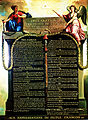
On 5 May 1789, the Estates-General, representing the nobility, the clergy, and the common people, held a meeting at the request of the King to address France’s financial difficulties. At this meeting, the Third Estate (the commoners) protested the merely symbolic double representation that they had been granted by the King. This protest resulted in a fracture among the three estates and precipitated the French Revolution. On 17 June, members of the Third Estate designated themselves the National Assembly and claimed to represent the people of the nation, thus preparing the way for the foundation of the republic. Several pivotal events followed in quick succession: the storming of the Bastille (14 July), the approval of the Declaration of the Rights of Man and of the Citizen (26 August), and the march on Versailles that led to the enforced relocation of the royal family to Paris (5-6 October). These revolutionary acts fired the imagination of many regarding the political future of France, and, indeed, all of Europe. The republican period of the revolution continued in various phases until 9-10 November 1799 when Napoleon Bonaparte supplanted the government. ArticlesDiane Piccitto, "On 1793 and the Aftermath of the French Revolution" |
David Rettenmaier |
| 5 Sep 1793 to 27 Jul 1794 | Reign of Terror
On 5 September 1793, the National Convention, France’s ruling body from 1793 to 1795, officially put into effect terror measures in order to subdue opposition to and punish insufficient support for the revolution and the new regime. From the autumn of 1793 until the summer of 1794, thousands of people across the country were imprisoned and executed (including the Queen) under the ruthless leadership of Maximilien Robespierre. The guillotine, particularly the one in Paris’s Place de la Révolution, served as the bloody emblem of the fear tactics that began to manifest themselves first in the formation of the Committee of Public Safety (6 April 1793) and subsequently in the implementation of the Law of Suspects (17 September 1793). The Terror ended on 27 July 1794 with the overthrow of Robespierre, who was guillotined the next day. ArticlesDiane Piccitto, "On 1793 and the Aftermath of the French Revolution" |
David Rettenmaier |
| 1802 |
|
David Rettenmaier |