Sherry, a type of wine produced in the Jerez region of southern Spain, was immensely popular throughout the Victorian period. However, the relationship between the English and sherry began several centuries before. In the Elizabethan era, English pirates carried sherry back to their home country after capturing Spanish ships or sacking Spanish cities, tying the drink to England’s triumph over a European rival and ascendancy on the international stage. References in Shakespeare’s plays further cemented its status as a quintessentially English drink. During the nineteenth century, British demand for sherry increased exponentially. Despite its Spanish origins, sherry was soon associated almost exclusively with the British. Perhaps due to its price, few Spaniards actually drank sherry, and many of the sherry houses were owned by British merchants. Additionally, the vast majority of sherry exported from Spain was consumed in Britain. British duties on foreign wines might have contributed to its popularity since these duties made sherry (along with other Spanish and Portuguese wines) more affordable than their French equivalents. So, while British elites continued to consume French wine, sherry became a favored drink of the middle class. Nevertheless, the duties placed sherry largely beyond the reach of the lower classes. However, throughout the century, cheaper, adulterated sherries- and concerns over their quality- abounded. By the 1850s, sherry, and imported wine in general, inspired debates over the merits of free trade.
Source1:
Ford, Richard. “Chapter XIV.” Gatherings from Spain. John Murray, 1846.
In this chapter of his Spanish travelbook Gatherings from Spain, Englishman Richard Ford provides a detailed account of sherry production in 1840s Andalusia. He describes how historical events influenced the popularity of sherry in Britain and also remarks on the fact that the wine was produced in Spain but consumed mainly in Britain. Overall, this source provides a mid-nineteenth century English perspective on the history, production, and popularity of sherry.
Source 2:
Harrison, Brian. “Mounting Temperance Pressure: 1860-1870.”Drink and the Victorians: The Temperance Question in England, 1815-1872. Faber and Faber Ltd, 1971.
This chapter details William Gladstone’s attempts to open the wine trade in the early 1860s. Ultimately, Britain agreed to lower duties on French wines if France lowered duties on specific goods manufactured in Britain. So, this agreement, which hurt the sherry industry, was popular among Britain’s manufacturing class.
Source 3:
“History of Sherry.” Sherry Wines, 14 Dec. 2021, https://www.sherry.wine/copa-jerez/history-of-sherry.
This source recounts the history of sherry from antiquity to the present. Its examination of the role Britain played in the sherry industry is particularly useful. English pirates, such as Francis Drake, first brought sherry to Elizabethan England where it became exceedingly popular. During the Victorian period, many British merchants invested in sherry companies in Spain.
Source 4:
"Receipt for Invalids." Illustrated London News, 1 Apr. 1843, p. 232. The Illustrated London News Historical Archive, 1842-2003, link-gale-com.proxy.uchicago.edu/apps/doc/HN3100006583/ILN?u=chic_rbw&sid=bookmark-ILN&xid=504e2925. Accessed 13 Feb. 2022.
This newspaper article provides a recipe for a medicinal drink and lists sherry as an ingredient. This shows that sherry was considered to have some health benefits, and the specifics of the recipe is similar to a drink described in Hard Times.
Source 5:
Simpson, James. “Too Little Regulation? the British Market for Sherry, 1840–90.” Taylor & Francis, 24 Jan. 2007, https://www.tandfonline.com/doi/full/10.1080/00076790500055988?scroll=t…;
This source provides an economic history of sherry in Victorian England. In particular, it details the government’s role in regulating the wine industry, explaining how early tariffs favored Spanish and Portuguese wines over French ones. It will be especially useful for understanding the state of the sherry industry in the 1850s when Hard Times was written. During this period, there were parliamentary debates over whether to lower duties on wine imports, and a vine disease resulted in poor grape harvests in Jerez, Spain. It also discusses perennial fears of adulteration, or the mixing of sherry with inferior alcohol.
Source 6:
"Wine-Duties." Illustrated London News, 27 Jan. 1855, p. 83. The Illustrated London News Historical Archive, 1842-2003, link-gale-com.proxy.uchicago.edu/apps/doc/HN3100038634/ILN?u=chic_rbw&sid=bookmark-ILN&xid=44a688bd. Accessed 13 Feb. 2022.
This newspaper article from 1855 mentions the reaction of sherry companies in Jerez, Spain to duties levied on their product by the British government. It suggests that these companies would prefer free trade with the British and indicates that Parliament was going to consider lowering duties on wine.
Images:
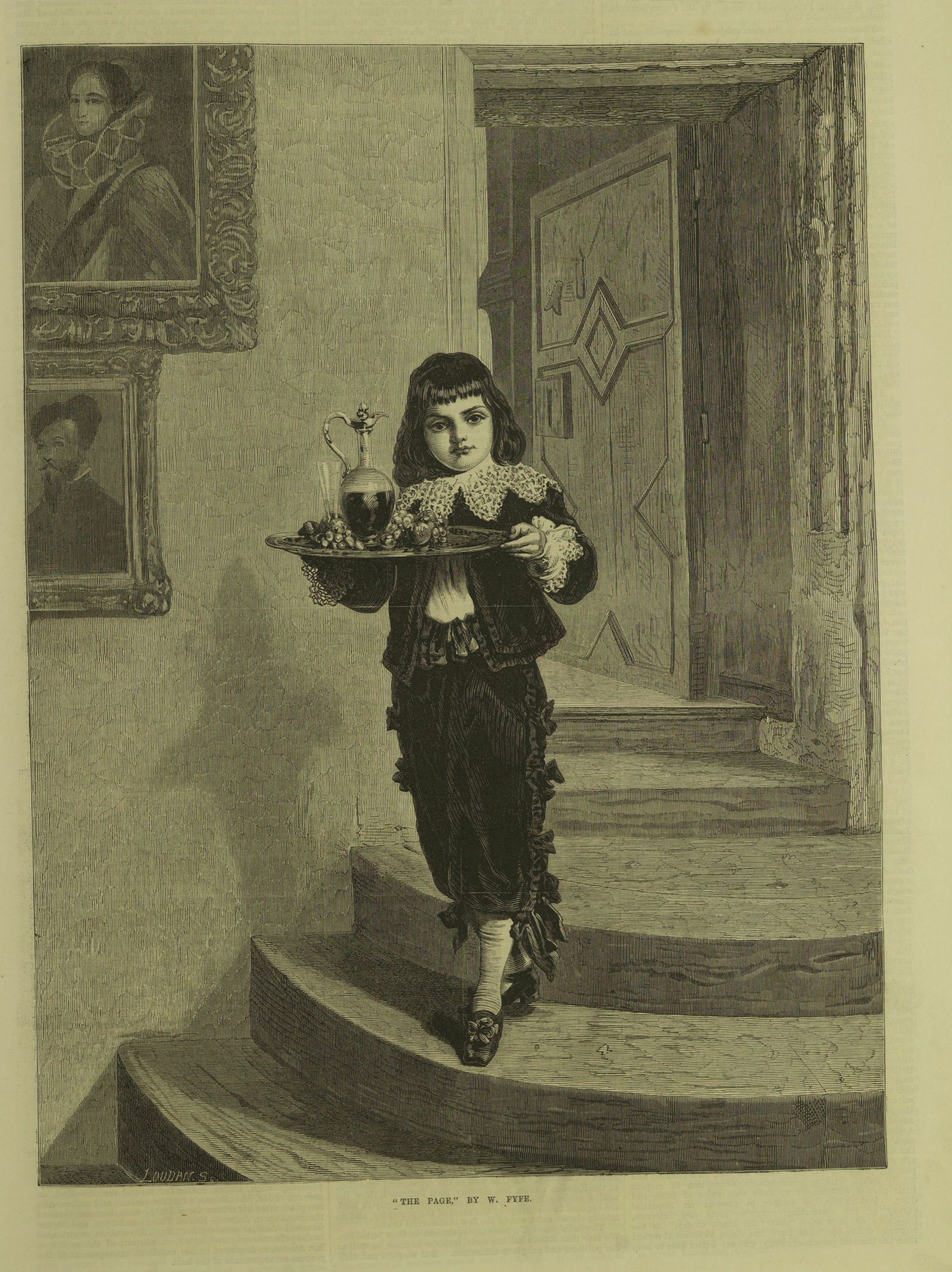
"Fine-Art Illustrations." Fine Art (Supplement). Illustrated London News, 4 June 1870, pp. 593+. The Illustrated London News Historical Archive, 1842-2003, link-gale-com.proxy.uchicago.edu/apps/doc/HN3100082144/ILN?u=chic_rbw&sid=bookmark-ILN&xid=3d08524c. Accessed 14 Feb. 2022.
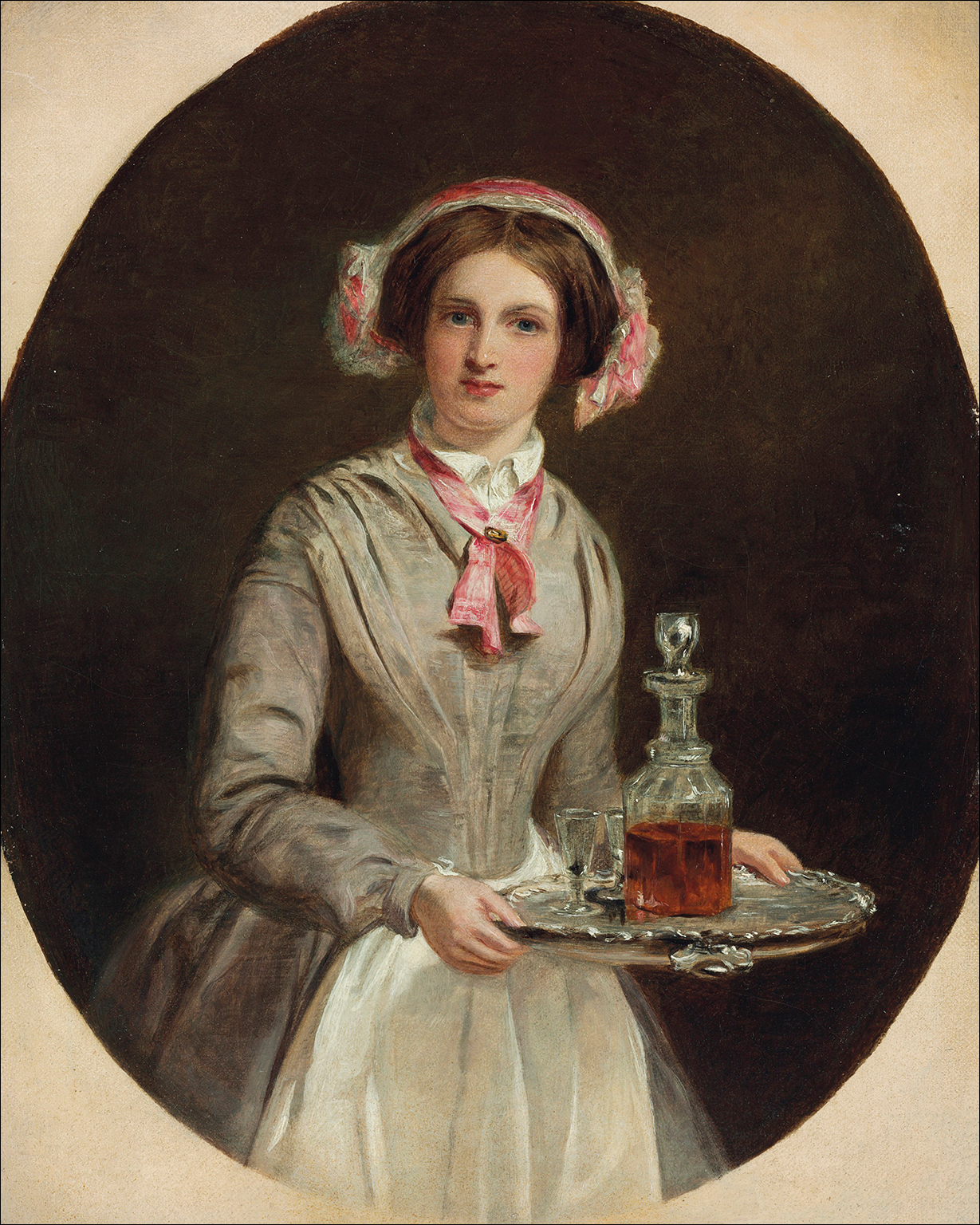
Frith, William Powell. Sherry, Sir? 1851, Mercer Art Gallery, Harrogate.
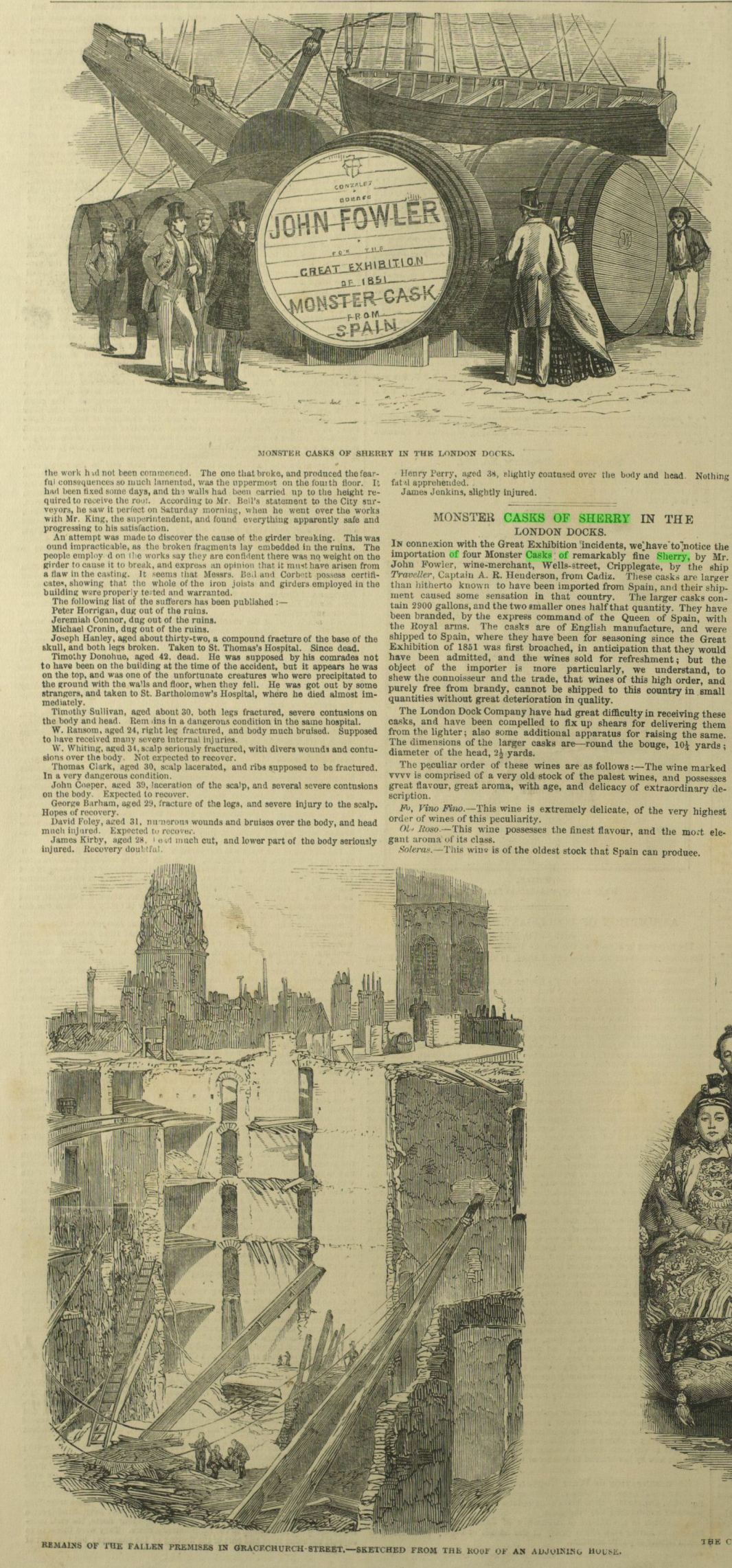
"Monster Casks of Sherry in the London Docks." Illustrated London News, 24 May 1851, p. 450. The Illustrated London News Historical Archive, 1842-2003, link-gale-com.proxy.uchicago.edu/apps/doc/HN3100441337/ILN?u=chic_rbw&sid=bookmark-ILN&xid=769a2bc7. Accessed 14 Feb. 2022.