
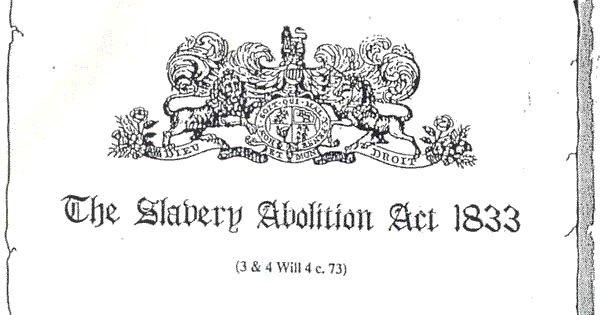
The events leading up to the creation of the Slavery Abolition Act of the British Empire.
Timeline
Table of Events
| Date | Event | Created by |
|---|---|---|
| The end of the month Summer 1833 to The start of the month Summer 1838 | The Slavery Abolition Act of 1833Slavery had been abolished in England in 1722, but that was only for the country itself. Over time, Britain became concerned with the cruelties and inhumanity of the slave trade, which led to the Slave Trade Act of 1807. This did not, unfortunately, stop slavery altogether for the British Empire. Around Christmastime in the year 1831, what started as a peaceful strike in Jamaica became something far more. A ten-day battle commenced between slaves and the British militia. Because of the lives that were lost in this battle, and the reasons behind it beginning in the first place, British Parliament became to the idea of completely abolishing slavery from the British Empire. Their discussions on the topic led to the Slaver Abolition Act being created in 1833. By the year 1834, slavery in almost all of the British Empire was officially abolished. There were rules to this act, however, that meant the former slaves were not entirely free as of yet. The Slavery Abolition Act immediately freed any slaves under the age of six and separated the rest of the slaves into three classes: 1) Those that were employed in Agriculture working on land that belonged to their owners, 2) Those that were employed in Agriculture working on land that did not belong to their owners, and 3) Those that did not fall under the first two classes. They replaced the term ‘slave’ with ‘apprentice’ and, based on what class a slave was considered to be in, they would serve their former owners as apprentices for 4-6 more years. Britain wanted to rid their empire of slavery, but they also could not allow the economy to collapse, which is the reason behind this delay. It allowed owners time to make the necessary changes to their operations while still having workers. Not an entirely clean slate for slaves, but it was a step in the right direction. In 1834, many people in Trinidad were upset about these 6 year ‘apprenticeships’ and demanded that all the ‘apprentices’ be granted full emancipation as soon as possible. A large group of people peacefully protested until all slaves (or ‘apprentices’) were granted full emancipation in 1838, two years ahead of schedule for most. A happy day for humanity! Source: https://courses.lumenlearning.com/atd-tcc-worldciv2/chapter/slavery-abo… |
Rachel Uibel |