



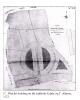
Notting Hill is a metropolitan London neighborhood filled with rich culture and history. Located in the wealthy western borough of Kensington and Chelsea, Notting Hill is just minutes away from the luxury of Kensington Palace and gardens. Understanding the history of the neighborhood can aid readers in better understanding Amy Levy’s The Romance of A Shop.
In the early 1800s, the area was mostly run down rural farmland and had yet to become residential. The area held pottery works and pig farms, and was therefore known as both “the potteries” and “the piggeries.” Due to its rural nature, the neighborhood was originally considered to be a part of Middlesex, but became a part of Greater London during the expansion of urban London in the 19th century (Hatton).
The area started to become residential in the 1840s, with the construction of the Ladbroke and Norland estates. James Weller Ladbroke worked with Thomas Allason to build streets and houses in the area. Ladbroke owned the majority of the land in the area, and had a goal to turn it into a fashionable London suburb. Thomas Allason’s plans for the suburb included the creation of private communal gardens (Wikipedia). These gardens existed in the middle of a square of connected homes, so they were communal between the owners but private from the general population. Such gardens exist to this day, and are considered a particularly enticing feature of the area that attracts wealthy residents.
Notting Hill became a popular neighborhood among London artists in the 1870s (Hatton). In Amy Levy’s The Romance of A Shop, Fanny Lorimer marries Edward Marsh and the two move to Notting Hill together, sometime in the 1880s. While Fanny was not a part of the family photography business, she had been surrounded by artists throughout her life. This upbringing may have impacted the pair’s decision. Additionally, Mr. Marsh’s newly acquired wealth from his trip to Australia allowed the couple to take residence in the growing residential area.
Although Notting Hill fell into a slum during World War II, it gained fresh popularity and life after the passing of the British Nationality Act of 1948. This Act put the citizenship of those living in Britain on an equal level with British colonial subjects (Gov.UK). This change was made in an attempt to discourage decolonization by making British subjects more equal, and Britain experienced a high volume of immigration during the time period as a result. In Notting Hill specifically, there was a large influx of Caribbean citizens who brought their rich culture to the area. They settled in the neighborhood because of a labor shortage in London, and their willingness to accept low paying jobs made them popular hires. However, racial tension between Caribbeans and Whites led to Britain's first race riots in August 1958. White rioters terrorized black homes and businesses over the course of eight days (Cove). The next year in 1959, the Notting Hill Carnival emerged as an unofficial response to the riots, and celebrates the rich culture of the Caribbean residents of the neighborhood. The carnival is a street festival led by members of the British Caribbean community, and is one of the largest street festivals in the world (Wikipedia).
Though Notting Hill has certainly experienced periods of hardship, its continual resurgences in popularity are a true testament to the neighborhood’s resilience. Amy Levy’s The Romance of a Shop showcases a small insight into the complex history of the London neighborhood.
"British Nationality Act 1948." Wikipedia, Wikimedia Foundation, 28 January 2024, https://en.wikipedia.org/wiki/British_Nationality_Act_1948.
Hatton, Scott. “Notting Hill in Bygone Days: In the Eighteenth Century.” The Underground Map, The Underground Map, 12 June 2021, www.theundergroundmap.com/wp/notting-hill-in-bygone-days-in-the-eightee…
"Historical Background Information on Nationality." GOV.UK, UK Government, Date of publication not provided, https://www.gov.uk/government/publications/historical-background-inform…;
“History of Notting Hill.” The Guide to Notting Hill, 22 Nov. 2013, www.thehill.co.uk/index.php/about-notting-hill/history-of-notting-hill/…;
Kriebel, Benjamin. “Notting Hill, London.” COVE, 10 Nov. 2021, editions.covecollective.org/place/notting-hill-london-0.
News, PropertyLoop. “A Comprehensive Guide to Notting Hill, London - History, Amenities, and Attractions.” A Comprehensive Guide to Notting Hill, London - History, Amenities, and Attractions, PropertyLoop, 19 May 2023, www.propertyloop.co.uk/area-guides/notting-hill-london.
“Notting Hill Carnival.” Wikipedia, Wikimedia Foundation, 24 Jan. 2024, en.wikipedia.org/wiki/Notting_Hill_Carnival.
“Notting Hill.” Wikipedia, Wikimedia Foundation, 20 Feb. 2024, en.wikipedia.org/wiki/Notting_Hill.
"The History Press." A Brief History of Notting Hill. The History Press, n.d. https://www.thehistorypress.co.uk/articles/a-brief-history-of-notting-h….