


The Tower Hamlets, as mentioned in the first chapter of Brick Lane by Monica Ali, is a borough, or district, of the Greater London area. Known for its rich cultural diversity, the district’s close proximity to the Thames provides the area with easy access for trade (Britannica). Throughout the 19th and 20th centuries, immigrants were often first greeted by the borough’s famous docks and wharves (Britannica). The Tower Hamlets’ significance in Brick Lane lies with its large population of Bengali people who first began settling in the area in the 1920s, for the novel centers around Bengali immigrant Nazneen as she settles into Tower Hamlets and builds a new life (Ali).
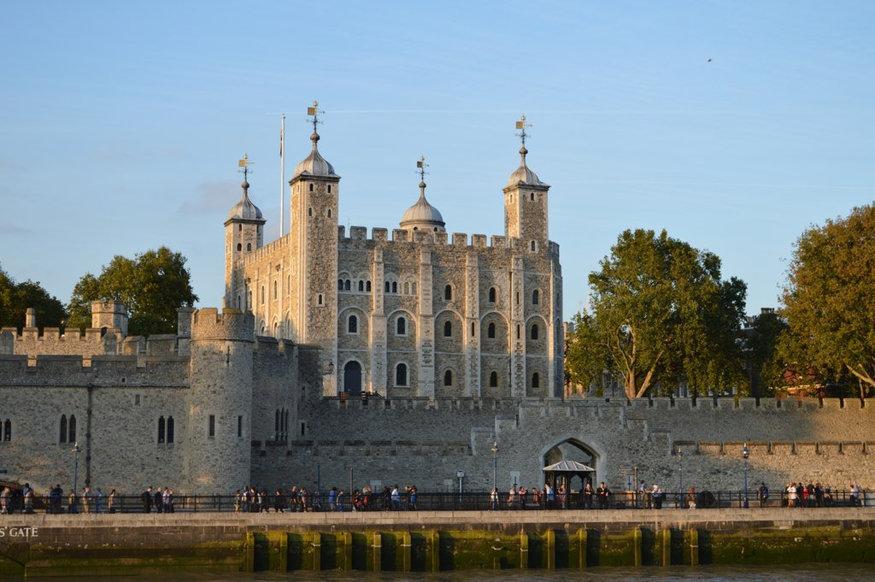
Located in the inner borough of London, the Tower Hamlets district extends eastward from the tower of London and includes most of the East End of Inner London (Britannica). The southern boundary lies at the River Thames and the northern boundary is Hackney (Britannica). It belongs to the historic county of Middlesex, now largely considered simply Greater London, and an amalgamation of the former metropolitan boroughs of Bethnal Green, Poplar, and Stepney established the district in 1965 (Britannica). Since then, it has become a poplace of diverse cultures and trade stemming from the regenerated London Docklands (Britannica).
For hundreds of years, the Thames has brought successive waves of immigrants to the docks of the Tower Hamlets. French Hugeuenots established silk weaving in Spitalfields after 1685; Irish laborers came to build London’s expanding wet docks beginning in the 1800s; then, from 1880 onward Jews fled the progroms of Eastern and central Europe to settle in the borough (Britannica). The Jewish community established clothing and footwear crafts on Middlesex Street, now commonly known as Petticoat Lane (Britannica). Bengalis began to settle in increasing numbers starting in the 1960s, originally being drawn there as boatmen (Whitechapel LDN). In the early 21st century, ethnic minorities accounted for nearly half of the borough’s population (Britannica).
Today, 35% of the population of Tower Hamlets is Bangladesh, and one in six Bangladeshi English residents live in this specific borough of London (Whitechapel LDN). Ali's Brick Lane focuses on the life of Nazneen, an immigrant sent from her village in Bangladesh to marry a stranger twenty years older than her (Ali). Her story reflects the lives of so many Bangladesh immigrants in Tower Hamlets, and it authentically describes the trials and tribulations of migrating to a new place, facing the prejudices common to the time period (1980s-2000s), and growing into the woman she was meant to be (Bangla Stories). The novel is reflective of the history of these Bengali immigrants of East End, particularly Tower Hamlets. While Bengalis have lived in London since the 1920s, the migration of Bangladesh workers to East London began in the 1950s because the government encouraged workers from Commonwealth countries, like British India, to immigrate to England to help rebuild the country after World War II (Whitechapel LDN). As Nazneen looks out her window, she sees a "sign screwed to the brickwork was in stiff English capitals and the curlicues beneath were Bengali," showing how the Bengali community has established its place in Tower Hamlets (Ali). Many Bangladeshis, who at this point identified as Pakistani, came to the East End to rebuild the docks and shipping industries (Whitechapel LDN). Low-cost housing and job opportunities at garment factories attracted many of these immigrants to Tower Hamlets (Whitechapel LDN). Most of these immigrants were working-class men, but Bangladesh’s declaration of independence in 1971 prompted a mass migration of civilians to either India or East London, where many had family connections (Whitechapel LDN). As Bangladeshis fled the casualty-heavy Bangladesh Liberation War, the community of Tower Hamlets began to grow, and Britain eventually enacted an immigration policy that only allowed adults to migrate if they had a job secured in the country (Whitechapel LDN). Due to this policy, family and friend connections often hired and sought work for one another, leading to dense populations in specific areas (Whitechapel LDN). As the community grew throughout the 1980s and 1990s, many began to advocate for their rights and create successful businesses that have made Tower Hamlets into the flourishing borough that it is today (Whitechapel LDN).
Works Cited:
Nash, Polly. “Bangladeshi Migration to East London.” Whitechapel LDN, 24 Mar. 2023, whitechapellondon.co.uk/bangladeshi-independence-migration-east-london/.