
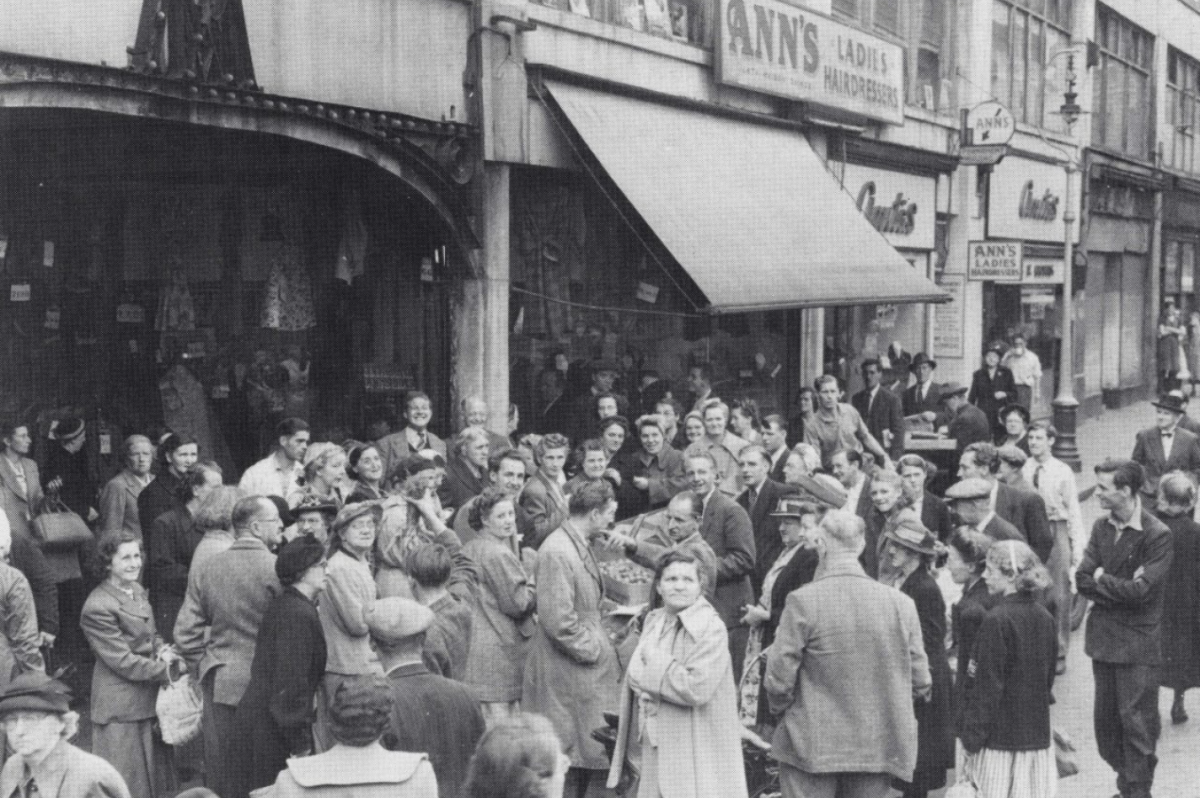
Next stop on our tour is the hustling, bustling center of life that is London's Brixton Market. It is a maze of busy alleys with stores, restaurants, and booths alike. For more than a century, it has served as the hub of Brixton's cultural and commercial life. Walking through the streets of the alley is like entering the rich tapestry of "Caribbean street food, vintage clothing, handmade jewellery, Indian kimonos and African fabrics" (Brixton Village). Walking through Brixton Market is like taking a tour of the world---you can experience the tastes of the East, the sounds of the West, and the sights of every pocket of culture in between. The market is a vibrant representation of the neighborhood's identity because of its rich history, which is made up of waves of immigration, social metamorphosis, and entrepreneurial chutzpah. The market first appeared as a collection of street sellers in the 1870s, keeping everyone in the neighborhood fed and employed. Even though it came from humble beginnings, it's evolved into a renowned cultural monument. Nearly a hundred years later, post-WW2, the already inventive Brixton Market added a new face to its cultural domain.
According to BBC's Yasmin Rufo, aboard the HMS Windrush in 1948, "there were 1,027 people on board the boat, and more than 800 of them gave their last country of residence as somewhere in the Caribbean" (Rufo). During the 20 years after that, "almost half a million people moved from Commonwealth countries to the UK, many of them coming from the West Indies and settling in Brixton" (Rufo). The market, which had always been a place of trade and cultural fusion, experienced insane changes in its population in the middle of the 20th century, with the masses of Caribbean immigrants who came to Britain in search of a better life. This migration wave brought fresh vibrancy and tastes to the market, adding fruits, spices, and culinary customs from the Caribbean to its unique mix. People from all walks of life gathered at the market, which turned into a hub for the mixing of cultures that resulted in a melting pot of customs, languages, and tastes.
Despite the major role Black culture---specifically Caribbean and West Indian culture---played in the development of Brixton market's identity as a location, the residents of the area have not always been kind to those who imbued Brixton with its magic. As 14-year restaraunteur Etta Burrell divulged to BBC, "The area has lost its soul, things aren't the same and no one is quite as friendly anymore. It doesn't feel as warm as it did back in the day" (Rufo). This chilly atmostphere is unfortunately not new to Brixton's Black locals and residents. James Berry recounts an upsetting incident from 1995---nearly 30 years ago---where he experienced a more dangerous version of unfriendliness. In his poem In-A Brixtan Markit, he writes "I walk in-a Brixtan Market/believin I a respectable man,/you know. An wha happn?/Policeman come straight up/an search mi bag!" (Berry). He starts the poem with a suspicion-filled halt to his day, but the poem ends with the violence at the hands of a prejudiced police officer (Berry). Even though the heart and soul of Brixton Market is the heritage and traditions Caribbean immigrants brought with them, some London-dwellers have not shown them the warmest reception.
Recently, the market has experienced an explosion in relevancy, driven by a growing demand for artisanal cuisine, small shops, and cultural events. Both locals and visitors are drawn to the market by its wide range of sellers, who today provide a mouthwatering assortment of plentiful cuisines, vintage apparel, handmade crafts, and organic food. Don't make the mistake of limiting Brixton Market to what it sells, though. This cultural hub also entices its visitors with spoken word poetry nights, art exhibitions, and pop-up markets to offer something for free. The combination of decades-long locals who have watched the market grow, enamoured newcomers, and tourists who get to check it off their bucket list makes the market an abundant oasis. Its dynamic ambience, which is enhanced by upbeat music, eye-catching street art, and the scent of far-off spices, has solidified its reputation as a must-see location in London.
Sources
Baker, Rob. Brixton Market. 15 July 2021. Flashback, Brixton, United Kingdom, https://flashbak.com/the-oxford-street-of-the-south-a-short-fabulous-re…;
Rufo, Yasmin. Brixton Village . 30 Oct. 2023. BBC, Brixton, United Kingdom , https://www.bbc.com/news/uk-england-london-67161026. Accessed 15 Feb. 2024.
Walter, Michael. Emergency services attend the scene in Brixton High Street where 13 people were injured after what is thought to be a nail bomb exploded outside a supermarket. 1999. Alamy, Brixton, United Kingdom, https://www.alamy.com/stock-photo-emergency-services-attend-the-scene-i…. Accessed 15 Feb. 2024.
Holst Andrews Socials . (2023b, July 7). The history of Brixton’s most diverse market. Brixton Village. https://brixtonvillage.com/our-story/
Rufo, B. Y. (2023, October 30). Brixton village: How the “Oxford Street of South London” evolved. BBC News. https://www.bbc.com/news/uk-england-london-67161026
Berry, J. (1995). "In-A Brixtan Markit." Hot Earth Cold Earth (10 Jun. 1996).