
Description:
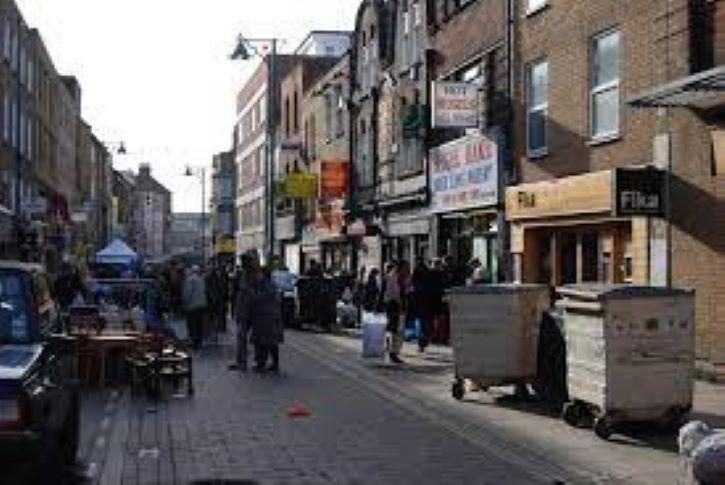
Brick Lane, which has existed since the 16th century, used to act as a field path outside of London. The lane is thought to get its name from brick and tile manufacturers that used the street to sell their products. The East London street is filled with shops, restaurants, and other unique storefronts that have been shaped by Bengali culture since the late 20th century (Oakley). Many believe that the peak of Brick Lane, or “Banglatown” as many native Londoners call it, was in the early 2000s (“Bengal Culture”). Viewing Brick Lane’s history through a nuanced lens that considers the role of Bengali culture in shaping it is vital to analyzing Brick Lane’s theme of the role of community.
After brick and tile manufacturers rose Brick Lane into prominence, many other cultures immigrated to the East London street over the centuries to flee persecution. Some of these immigrants included Jewish people fleeing persecution from both the Spanish Inquisition and Germany as well as Huguenot silk weavers escaping religious persecution in 17th-century France (“Making Home”). In addition, as early as the 17th century, seafarers from modern-day Bangladesh settled in East London. After World War II, more Commonwealth citizens from newly independent Pakistan and Bangladesh began to arrive in the community. This laid the groundwork for the majority Bengali community that occupied Brick Lane in the 2000s.
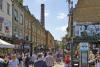
The immigration of Bengali people, specifically from the Sylhet region of Bangladesh, was due to more opportunities for work and cheap housing in the Tower Hamlets region (Khan). Many curry shops and other food stalls led to Brick Lane being known as the curry capital of the UK. In addition to this, an arch was erected in 1997 to note the entrance of Banglatown (Wikipedia). Today, gentrification has significantly diminished the prominent Bengali culture that has been present in Brick Lane for decades. Rising rent prices, lack of support from the government, and trouble attaining work visas for chefs have all contributed to 62 percent of Brick Lane’s curry shops closing (Khan).
In Brick Lane, the street acts as a familiar force that Nazneen is comfortable with. However, she also feels limited by the opportunities she is given in her community. The food outlets that were opened on Brick Lane, and the family migration that happened after, resulted in the workforce of the community being a large majority male (Wikipedia). As Nazneen resides in her Bengali community, she feels obligated to uphold the customs of her culture while surrounded by a London that sees her culture as a threat. This is especially apparent in Chapter 21 of the book in the over-policing of Brick Lane due to a group of “eight or ten boys… fighting themselves.” (“Brick Lane”) The predominant white culture of London is afraid of anything they view as a risk to their control.
The East London street of Brick Lane has acted as a refuge for leagues of cultures that have fled persecution and other hardships over the centuries. Over time, immigrants from Bangladesh made up a majority of the residents of the community. Many people today believe Banglatown peaked in the early 2000s, when Brick Lane is set. The traditional community of Brick Lane in the past upholds the role that Nazneen feels obligated to conform to but also challenges the predominant white culture that is apparent in surrounding London.
Works Cited
Ali, Monica. Brick Lane. Scribner, 2003.
Bombaert. “Tourists in Brick Lane on a busy sunny Sunday.” iStock, 18 Aug. 2015,
https://www.istockphoto.com/photo/tourists-in-brick-lane-on-a-busy-sunny-sunday-gm
484706904-71923499.
“Brick Lane.” Wikipedia, 1 Feb. 2024, https://en.wikipedia.org/wiki/Brick_Lane#Regeneration.
Fintoni, Laurent. “21 Days, 21 Memories: Day 18.” Medium, 11 Dec. 2014,
https://medium.com/21-days-21-memories/day-18-london-early-2000s-a16b01bfea08
Khan, Aina J. “Towers Rise Over London’s Brick Lane, Clouding Its Future.” The New York
Times, 15 Jan. 2022,
https://www.nytimes.com/2022/01/15/world/europe/bangladesh-london-brick-lane-ge
ntrification.html
“Making home: The world in Brick Lane.” Globe.
https://beyondbanglatown.org.uk/globe/making-home-the-world-in-brick-lane/.
Oakley, Malcolm. “Brick Lane, East London: A Vibrant and Historic Neighbourhood.” East
London History. https://www.eastlondonhistory.co.uk/brick-lane-east-london/.
“The Cultural Trail.” Tower Hamlets.
https://www.towerhamlets.gov.uk/lgnl/leisure_and_culture/local_attractions/cultural_tr
ail/cultural_trail.aspx#:~:text=Brick%20Lane%20was%20in%20existence,here%20by
%20early%20Flemish%20settlers.
Vaidyanathan, Raju. “Brick Lane Sunday market.” The Guardian, 1985,
https://www.theguardian.com/cities/2017/mar/06/brick-lane-in-the-80s-before-it-beca
Me-banglatown.