
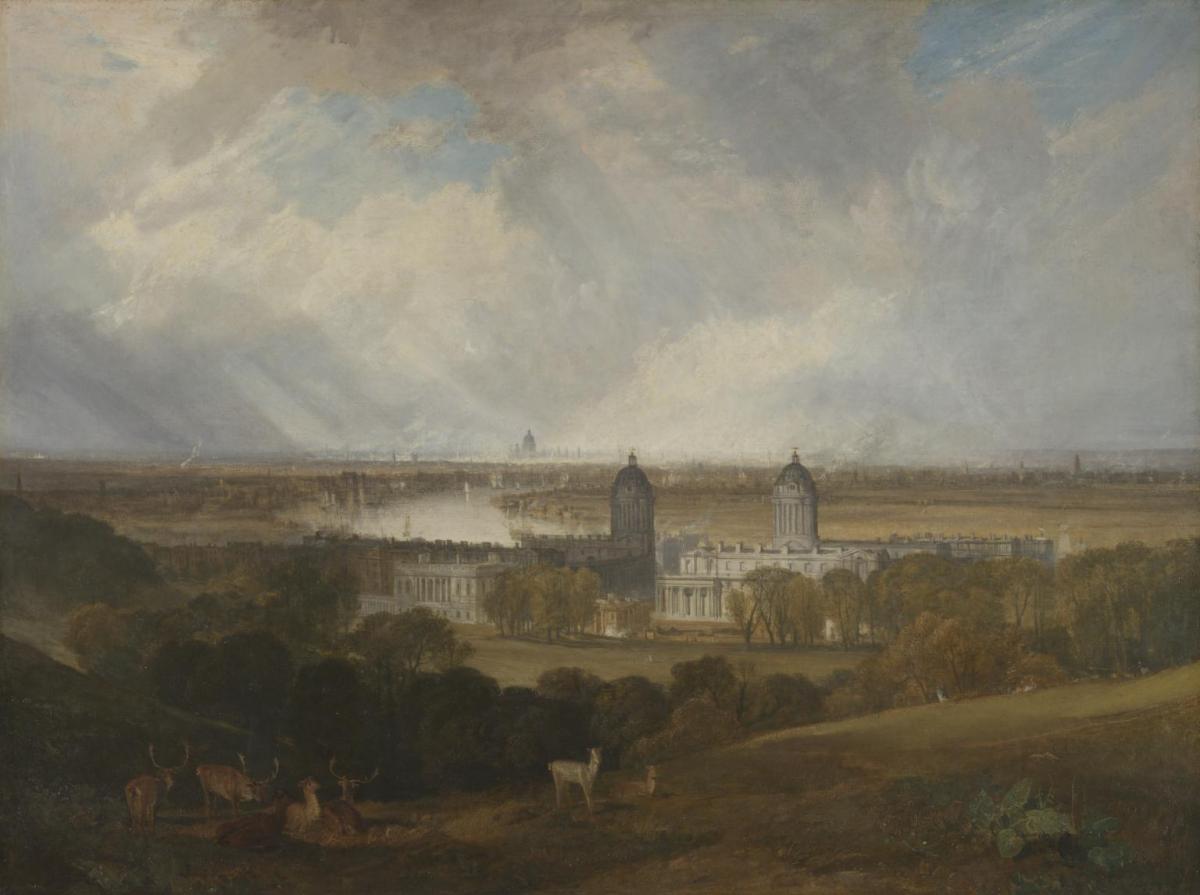
The final stop on the tour will focus on Greenwich, in which Charles Dickens wrote of as, “fog in the eyes and throats of ancient Greenwich pensioners, wheezing by the firesides of their wards”, in his novel Bleak House(Dickens, Ch. 1). While Dickens portrays Greenwich in a darker shade, Greenwich has become a popular tourist location known for its rich history and culture of royalty, seafaring, and scientific discovery(Visit Greenwich).
Greenwich has humble beginnings as a fishing and farm settlement– but it soon became known to royals. In the early 16th century Henry VII came to own a palace here, where his heir Henry VIII would be born. Continuing the royal trend was James I and his queen Anne of Denmark, creating what came to be known as the Queen’s House which was finished in 1637– still standing today, this was the first classical building in England. The Queen’s House would later become a naval orphanage school(Lambert, T.). Much of Dickens' work(including Bleak House) focused on the wealth disparity in England, and his choosing a spot plentiful in both royalty and the impoverished could be seen as a continuation of this.
A large part of Greenwich’s scientific accomplishment is the Royal Observatory established 1675-1676, furthering England's knowledge of astronomy, navigation, trade, and naval power, while also being Britain's first purpose-designed building for sciences. Scientific discovery continued with the establishment of schools, and the answering of the “longitude problem”, creating the modern Greenwich Meridian around a year before Bleak House. From the mid 1670s-1750s the Palace of Greenwich was remodeled to become the Royal Hospital for Seamen, a charitable home for injured seamen. In the mid 1800’s(around the time of Bleak House), the Royal Hospital for Seaman continued charity but began to cease being a residential home for seamen(the Greenwich pensioners)(Our History). This perhaps inadvertently lended to Dickens disdain.
Since its mention in Bleak House, Greenwich has flourished as a hub of remembering history, with the National Maritime Museum, Cutty Sark(a tea clipper dated from 1869), and statues such as King George II and King William IV(Monuments & Statues in Greenwich). Also popular with history lovers is visiting the Harrison Clocks, the Great Equatorial Telescope, and London’s only public planetarium, the Peter Harrison Planetarium(Our History).
Another aspect of Dickens is his religion, which is also a prevalent part of Greenwich. One such religious landmark is St Alfege Church, which is one of the churches built under the Fifty Churches act of 1711. The land remains sacred though, as a church has been present on the land for over 1000 years, dedicated to the martyr Alfege, the Archbishop of Canterbury in the year 1012(Lambert, T.). Also in Greenwich is the Chapel of St Peter and St Paul, The Royal Hospital Chapel, and the now ruined St George's Garrison church(Visit Greenwich).
Multiple aspects of the ever intricate Greenwich make it not only worthy for Dickens, but a worthy stop on our tour.
MLA Citing
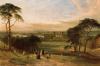
Dawson, H. (1869). London from Greenwich Hill [Greenwich, its buildings, and natural beauty are on display for onlooking people and wildlife.] Yale Center for British Art, 1080 Chapel St, New Haven. Royal Academy of Arts, London.
Dickens, C. (1853). Chapter 1: In Chancery. In Bleak House. novel.
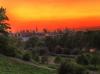
Gittos, A. (2017). Greenwich Park Sunset. flickr. Retrieved September 24, 2022, from https://www.flickr.com/photos/126736088@N08/34270576100.
Lambert, T. (2021, March 14). A History of Greenwich. Local Histories. Retrieved September 22, 2022, from https://localhistories.org/a-history-of-greenwich/
Monuments & Statues in Greenwich. TripAdvisor. (2022). Retrieved September 20, 2022, from https://www.tripadvisor.com/Attractions-g186338-Activities-c47-t26-zfn7…;
Our History. Maritime Greenwich. (2022). Retrieved September 20, 2022, from https://www.greenwichworldheritage.org/maritime-greenwich/our-history&n…;
Turner, J. M. W. (1809). London from Greenwich Park [A view from Greenwich Park looking towards the Queen's House, Greenwich Hospital, and St Paul’s Cathedral, with deer in the foreground.] Tate Britain, Millbank, London.
Visit Greenwich. (n.d.). Retrieved September 20, 2022, from https://www.visitgreenwich.org.uk/things-to-do/attractions/religious-la…;