
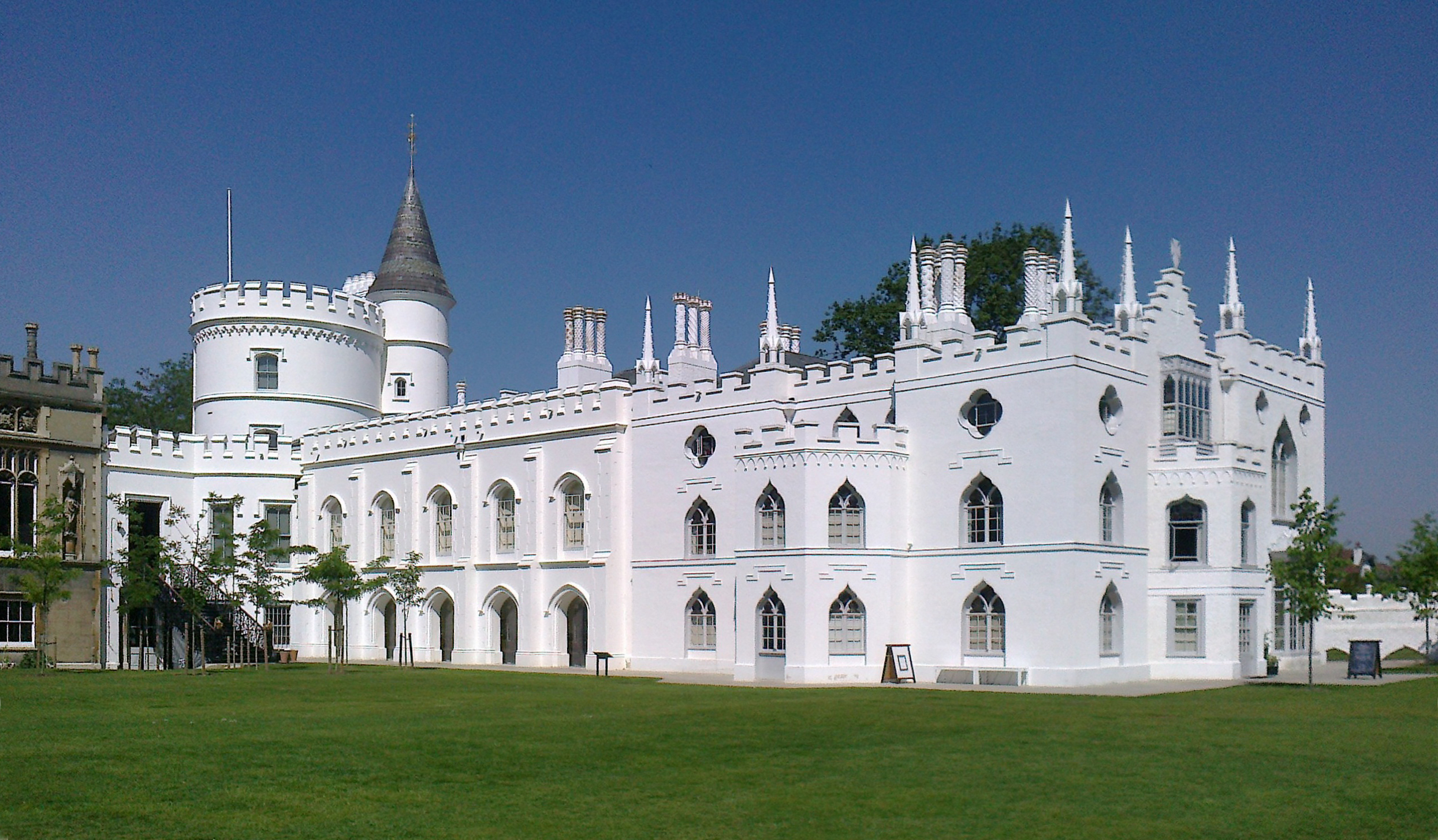
Strawberry Hill House (also known as Strawberry Hill) is located in Twickenham, London, and was originally built in 1698. Horace Walpole purchased it as one of the few remaining sites along the banks of Twickenham. What began as a few simple cottages would eventually turn into a massively historic gothic establishment. Built from wood, plaster, and paper mache this house is internationally famous as Britain's most exceptional example of Victorian Gothic revival architecture. The interior was beautifully lined with red walls, gold trim, and incredible stained glass. Featuring many gothic architectures and was a major contributor to the popularity of gothic themes that grew through the 18th and 19th centuries. The home gained its name from the wild strawberry vines that covered the hills. The home was purchased by Horace Walpole in 1749. Horace Walpole was an English writer and politician and is known for his short novel The Castle of Otranto. Shortly after many locals became enthused with the building and Walpole began to allow tours throughout the premises. Tours are still available even today, as the building continues to gain admiration from those who encounter it. Walpole’s death on March 2, 1797, was devastating–leading the home to be passed down to different owners for a lump sum of time. Several of the owners continued to pass the house to others, and one individual, in particular, promised to let the house fall into ruin. Lady Frances Waldegrave eventually gained possession of the home and continued the gothic architecture through expansion. Building onto Walpoles beautiful home, expanding the hall, adding an extra floor to the gallery, and creating a horseshoe entrance to the home. Lady Waldegrave would eventually add several rooms for herself and the home became a meeting place for many liberal establishments. Following the death of Lady Frances Waldegrave, the home eventually was purchased by St. Mary’s University. The University still owns the residence today. The house has since been restored to its original state and viewing to the public is possible.
No places have been added to this map.