
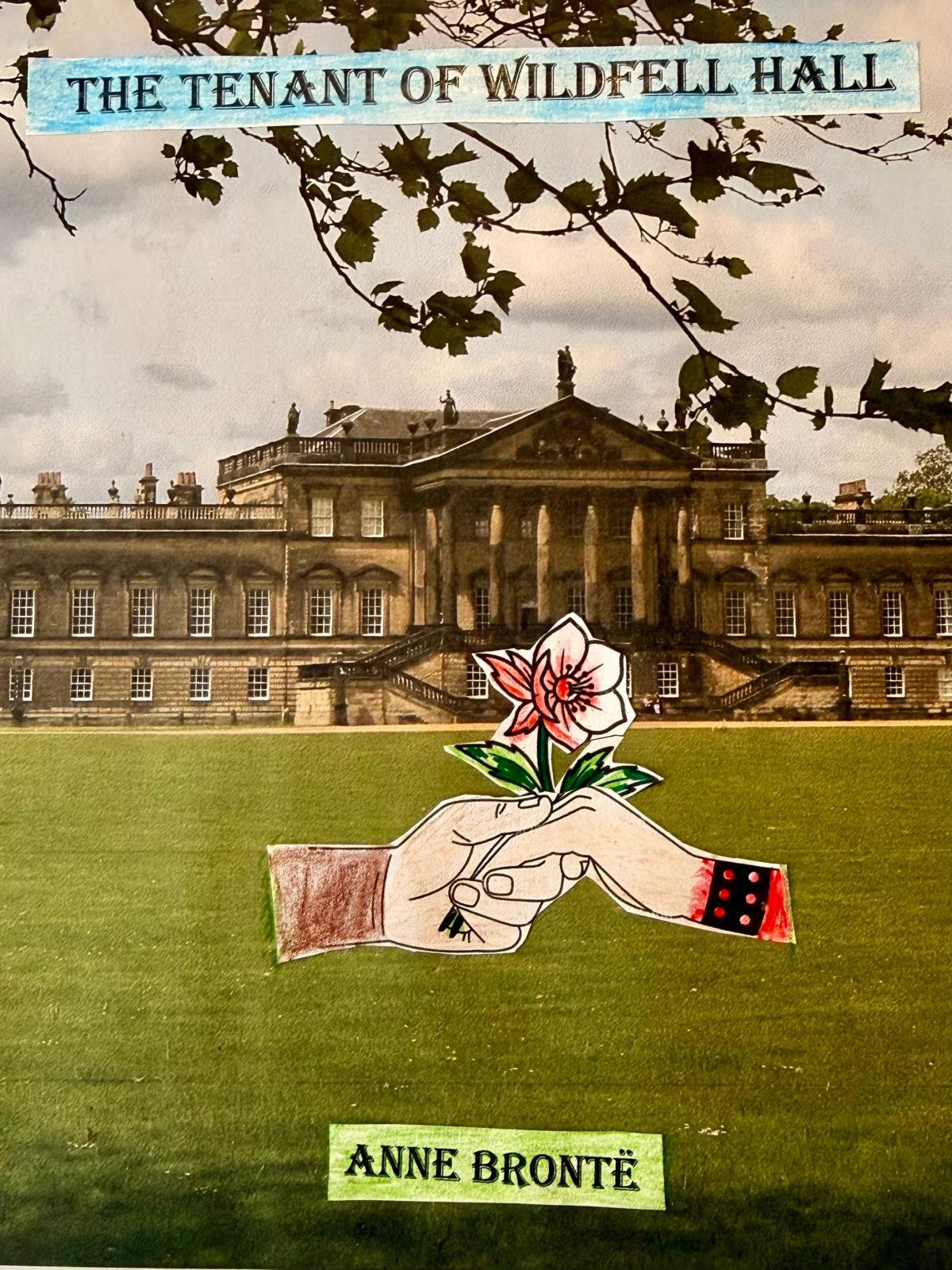

Anne Brontë names her novel after one of the grand homes where her protagonist, Helen Graham (nee Lawrence) lives. But the novel contains three grand homes—Staningley, where the novel begins and ends; Grassdale Manor, where Helen lives with her handsome but dissolute husband, Arthur Huntingdon; and Wildfell Hall, the abandoned mansion that Helen, posing as a widow, escapes to with her young son, Arthur, to hide from her abusive husband. At Wildfell Hall, Helen meets Gilbert Markham, a young farmer who falls in love with her. Helen hands Gilbert her diary where we learn of Helen’s tortuous married life with Arthur. After returning to Grassdale to nurse a dying Arthur, Helen returns to Staningley, now her own estate, where she meets Gilbert Markham by chance and reconciles with him. This book cover includes both a grand home and a close-up of two hands—symbolizing Arthur and Helen—and a Christmas rose, which Helen gives to Gilbert when they meet in Staningley. This book cover focuses in on Anne Brontë’s use of the Victorian language of the flowers to bring about a reconciliation between the estranged lovers: a Christmas rose means “tranquilize my anxiety.” The grand home in the background, signifies not only Staningley but also Grassdale Manor and Wildfell Hall, to signal the journey Helen will make among these settings to find love at last with Gilbert.