
Watergate
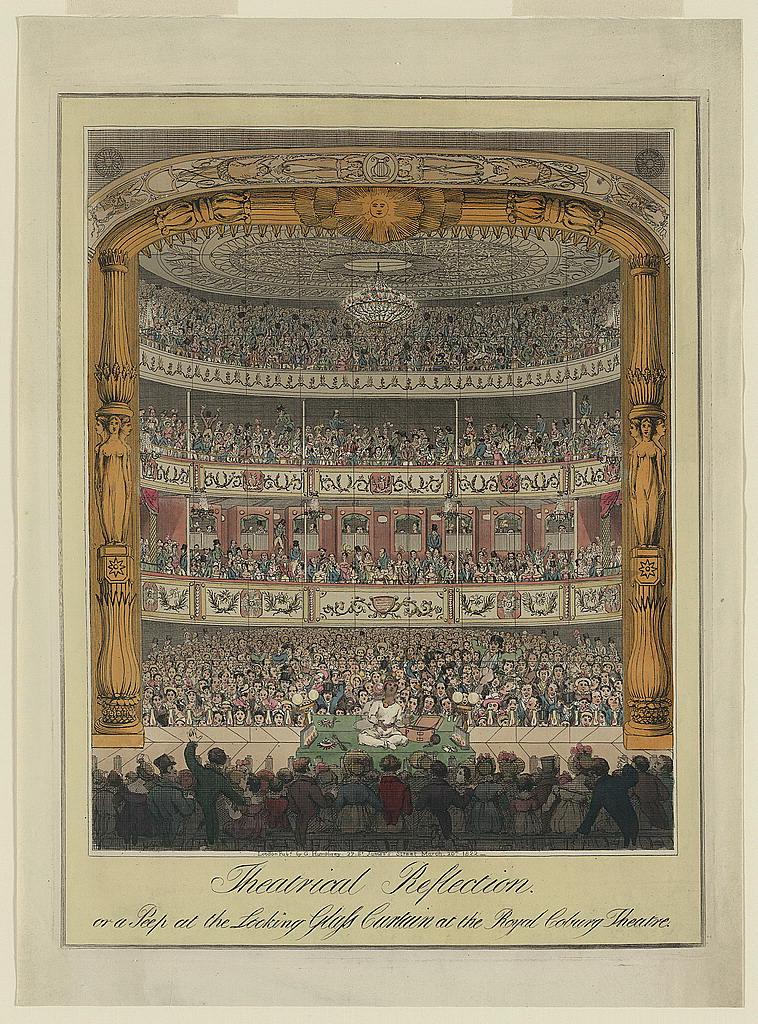
The theatre is a recreational endevour that has become most enjoyable to me as an art form. My proficiency in physiology has bestowed me with the opportunity to ingest such a pure display of emotion. Through it I have learned more than any other medium of the idea of love. The power of theatrical effect on one's conscious is powerful enough to evaluate their own life in a renewed way. My first theatrical play is few experiences I could not forget. Seeing such a profound monologue of Romeo's commitment to Juliet awoke a burning passion in myself that has not been extinguished since. And so when I saw this work sitting in a gallery I visited in London, I was undoubtedly certain that I had to have this work be constantly in my vision to remind me that art is the most powerful tool to bring out one's emotions. When I work and set eyes on it, I am reminded of why I work so hard; to be able to provide for and nourish the ones I hold dear. Through meeting Gertrude proceeding my wife's passing I have understood that love is so vast a concept that it cannot be limited to just one individual. I loved and cared for my first wife more than I thought I ever could. Gerty opened my eyes once more to the possibilities of love and how one can be so captivated for so long. A captivation so intense that since meeting her I have thought of no less than being united with her at last.
Editorial
When Lord Watergate's commonplace book found its way to my workspace, one would assume it would be filled with solely patient notes and various poems. It shocked me to find a physician so enthralled by artistry, not to mentioned so captivated by love. Watergate, a well established physiologist in the late nineteenth century, was noted to be a womanizer who enjoyed various mediums of art. His theatre piece depicts a play with an electric crowd. It may seem like it isn't romanticized, however it perfectly epitomizes how the female body captivated the theatre audience of Victorian England. Theatre was a large attraction during this time, and such high numbers of visitors was in part because of the artwork that inspired these shows. Specifically, tableux vivants, or living pictures, were a popular style of show in this period that often imitated how earlier playwriting masters portrayed the female body, as well as imitating nude paintings to create a more extreme synchronisation of the two, "Earlier in the century, Planché’s classical burlesques had prioritized erotic appeal by having women in short tunics and tights play young male roles. The Palace went a step further by revealing not just legs but the whole body, while looking to the Victorian canvas for both inspiration and legitimization." (Barrow 220) This form of crowd pleasing became a hot commodity for the Victorian theatre, and clearly in the case of Lord Watergate who could not get enough of the female form in his life. Even more so, the inspiration for such plays found their way into Watergate's home, albeit with not as much nudity so not as to disturb the women he spent time with.
Humphrey, G. Theatrical Reflection, or a Peep at the Looking Glass Curtain at the Royal Coburg Theatre. London, Mar 20 1822.
Barrow, Rosemary. "Toga Plays and Tableaux Vivants: Theatre and Painting on London’s Late-Victorian and Edwardian Popular Stage." Theatre Journal, vol. 62 no. 2, 2010, p. 209-226.