
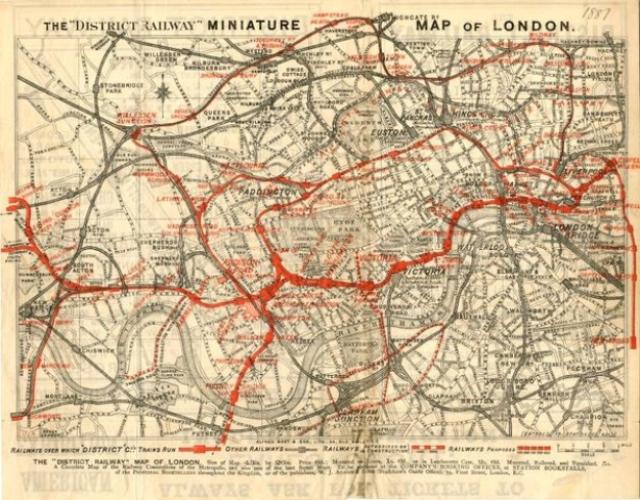

Character: May 30th, 1887
It has only been a week since I heard Georgina Weldon speak on lunancy laws and the patriarchy. I cannot seem to get her and my dear cousin out of my head. Maybe I do belong in the asylum. I do not know much, but I know she is right. This is wrong. Women have been treated poorly. I purchased a train ticket today. I had been saving the spare change I have been finding on the street on my way to the grocers, and on the floor of the laundrette by the clothes wringers. I have kept this money hidden from my drunkard husband. I do not know where I am going or what I will do there. All I know is I must go. I must leave. Not only for myself, but I ought to leave before I am forced to bring children into this world with this man who would rather drink than take care of his family. After hearing Georgina, I do not only want to leave, I am thinking of going to University. I will not be allowed to be more than just a mere teacher. But still, it will be something I do for me. For the first time in my life, I will do something for me. I plan on leaving at dusk, my husband will not so much as stir from his induced-slumber at that hour. I have my prized belongings packed, hidden under the stairs. He will never find it there. He just came home from work, demanding his usual drink. I have to go now, hopefully the next time I write, I will be a new woman.
Researcher:
The lunacy laws in the 1800s were an important topic as they focused on sending women who spoke up against patriarchical structures to mental asylums. Overall, they were looking to impede the the development of mental health treatment services (Parry-Jones, 7). During the late 1800s, leaving your husband was quite unheard of. Women would typically not have the resources to leave, and the courts were statistically not expected to be in her favor, which is another example of the patriarchal structures at the time. Lord Chancellor Cranworth's Marriage and Divorce Bill blurred the lines between property, double-standards in sex, and divorce (Shanley, 29). It is evident that the impact Georgina Weldon had on women at the time was profound. A prominent issue with divorce at this time, was also the right to be allowed to remarry. Typically, divorce with the privlege to remarry was only an option for wealthy men (Shanley, 37). Since this woman stated she "had been saving the spare change" she had been finding around town at the grocers and the launderette, we know that she is not a wealthy woman. Wealthy women at this time would have been able to afford help to do carry out these chores. This woman leaving did not only mean she was fine leaving this one marriage, but that it was worth never being married again at all. This shows the cruelty of the lunacy laws at this time. A life lived alone was seemingly better than a life under the patriarchy. Alternativelty even wanting to commit adultry, was still ruled over by the patriarchy. It was only valid under the law to sever a marriage if the wife committed adultry, not the husband (Shanley, 43). Therefore, not only was it an act of bravery given the patterns of history at the time, but a sacrifice by risk.
CITATIONS:
“Feminism, Marriage, and the Law in Victorian England.” Google Books, books.google.com/books?hl=en&lr=&id=pldVMWQf-p0C&oi=fnd&pg=PP11&dq=the+new+woman+victorian+era&ots=hMzHHePJzg&sig=Kho2fLUW6d4DohLchqfDBcGVlg8#v=onepage&q=the%20new%20woman%20victorian%20era&f=false.
Parry-Jones, William Ll. Trade in Lunacy: A Study of Private Madhouses in England in the Eighteenth and Nineteenth Centuries. Routledge, 2013.
London Transport Museum. “Map; the ‘District Railway’ Miniature Map of London, by W E Soar, 1887 | London Transport Museum.” London Transport Museum, www.ltmuseum.co.uk/collections/collections-online/maps/item/1984-51-756.