
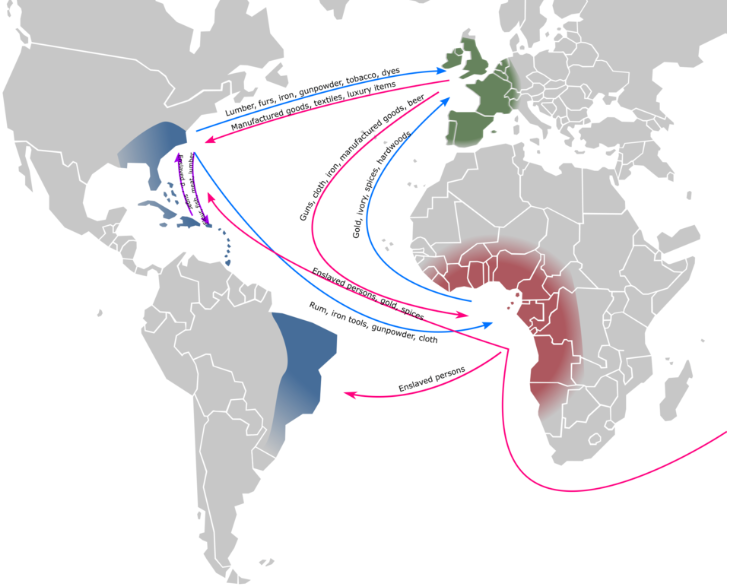
This image depicts triangular trade and the transatlantic slave trade as it was known in the 1500s through the 1800s. As seen in the picture, Europe exported Gold, ivory, and spices to the continent of Africa where those goods were bought in exchange for enslaved persons. Those people were then shipped off to the Americas where they were, again, sold for the exchange of goods such as lumber, iron, and tobacco that would eventually make its way back to Europe. As opposed to other depictions of triangular trade, this image does a good job of showing that the triangle isn’t just one-way. All three areas are both receiving and exporting goods. This system perpetuated the “otherness” in which enslaved persons were bought and sold like other commodities because of their appearance.
Archives, The National. “The National Archives - Homepage.” The National Archives, www.nationalarchives.gov.uk/help-with-your-research/research-guides/bri….
"Atlantic Triangular Trade, 1500-1800s" is licensed under CC BY-SA
