
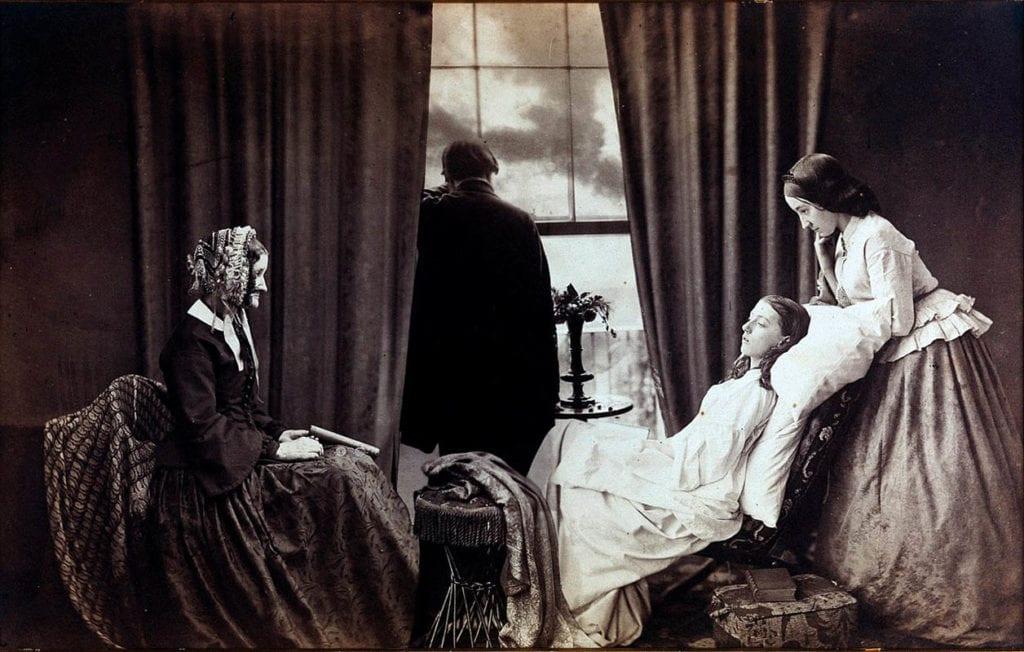

Tuberculosis is an infection that primarily affects the lungs also known as TB and Pulmonary Consumption. It has likely affected humans for over 3 million years. Between 1851 and 1910, 4 million people in England and Wales died from tuberculosis. In 1882, Robert Koch discovered Mycobacterium tuberculosis, the bacteria that causes TB, indicating that sanitation could help prevent TB. Until this discovery, many physicians thought that tuberculosis was a hereditary disease. This theory explains John Stuart Mill’s reference to TB as “the family disease” (page 181).
At the time, Tuberculosis was quite romanticized, especially by the poets it infected. It was seen as a flame of passion that consumed the body from the inside, an idea born out of Romanticism. This was somewhat caused by the typical look of TB patients: they were pale, incredibly thin, and “angelic” (Frith 2014). Tuberculosis had the reputation of being a good or interesting way to die. While it caused about 1 in 6 of the deaths of the upper class, it killed between a quarter and a third of poor laborers in 1838 and 1839.
Tuberculosis was ubiquitous during Mill’s life, infecting and killing millions. His wife and constant companion, Harriet Mill, died from TB after only seven years of marriage.
SOURCES
https://www.cdc.gov/tb/worldtbday/history.htm
https://www.pbs.org/wgbh/americanexperience/features/plague-gallery/
http://exhibits.hsl.virginia.edu/alav/tuberculosis/
https://jmvh.org/article/history-of-tuberculosis-part-1-phthisis-consumption-and-the-white-plague/
https://www.theguardian.com/cities/2018/nov/26/how-london-became-the-tuberculosis-capital-of-europe