

With the popularity of eBooks and Kindles, do you fear book covers are becoming extinct? Tim Kreider laments in “The Decline and Fall of the Book Cover” (published in The New Yorker, July 16, 2013), “soon enough, book covers, like album covers before them—like albums themselves, or sheet music for popular songs, or dance cards—will be a quaint, old-timey thing you have to explain to the uninterested young” (p. 4). However, Kreider qualifies in this same article, “For some reason children’s books, Y.A. literature, and genre fiction still have license to beguile their readers with gorgeous cover illustrations, but mature readers aren’t supposed to require such enticements” (p. 3). This assignment invites you to design one such “beguiling” book cover for one of the three Brontë works we are reading this semester—Jane Eyre, Wuthering Heights, or The Tenant of Wildfell Hall. In designing your cover, also consider novelist John Updike’s advice in “Deceptively Conceptual: Books and Their Covers” (New Yorker, October 10, 2005): “A good cover should be a bit recessive in its art, leading us past the cover into the book itself” (p. 2). The following covers created by students in EN 248 on "The Brontës" lead us “into the book itself” by highlighting symbols, themes, and characters essential to Wuthering Heights and The Tenant of Wildfell Hall.
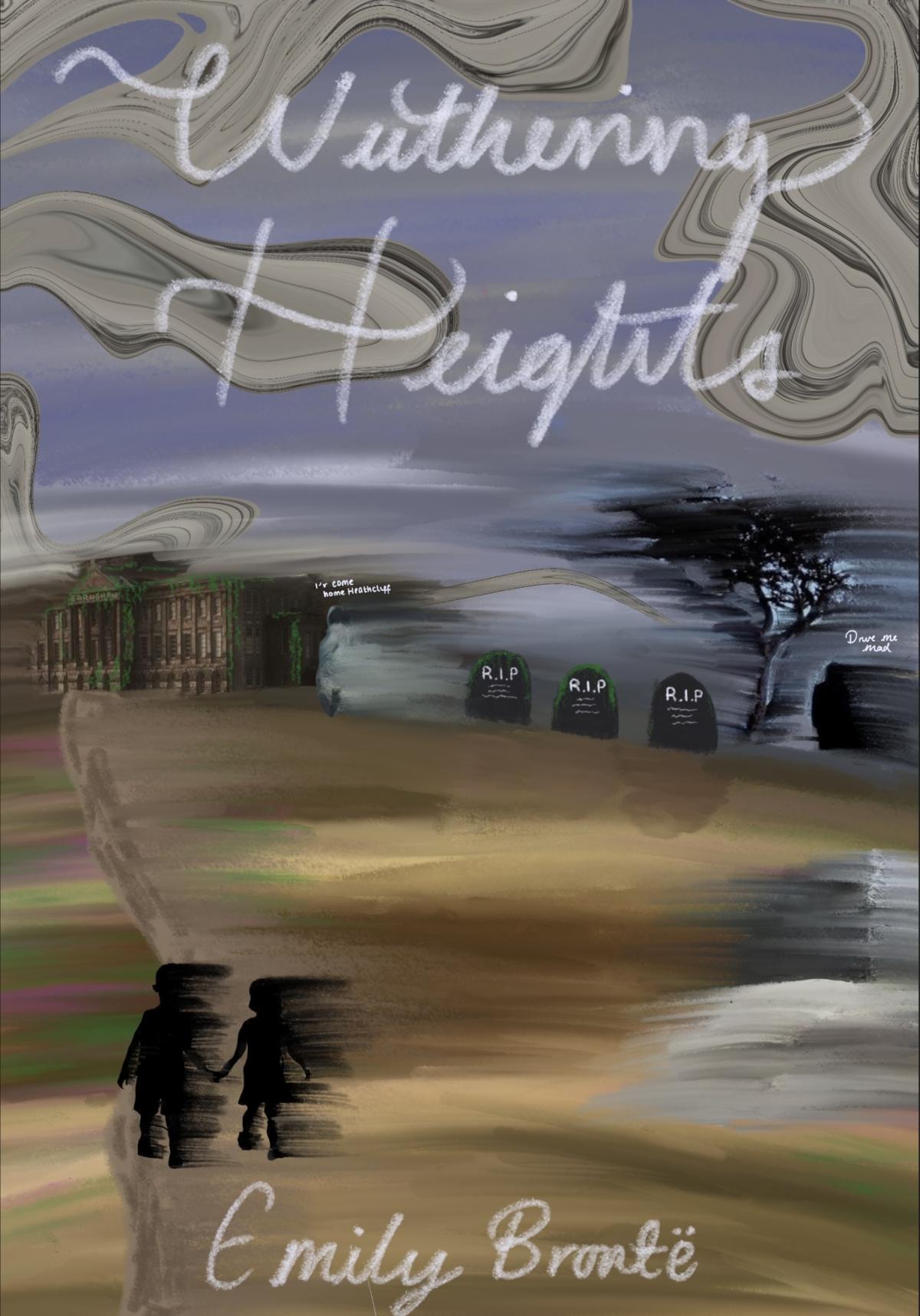
"When the Past Refuses to Die: Exploring the Tumultuous Themes of Wuthering Heights through Book Cover Design," Wuthering Heights Book Cover Created by Millie Everitt, 2026. With the rise of sleek, minimalist paperbacks, many modern covers of Wuthering Heights (1847) have softened the novel into a windswept romance set on the Yorkshire Moors. Yet Emily Brontë’s moors are not merely romantic; they are haunted landscapes where love becomes destructive, and the past refuses to stay in the past. My book cover resists the temptation to sentimentalize the novel’s central relationship of Catherine and Heathcliff to foreground an atmosphere of restless haunting. My design emphasizes that Wuthering Heights is governed not by tender love but the inescapable presence of the dead. By visually merging landscape with memory, the moors themselves warp and smear, allowing the cover to lead readers “into the book itself” as Kriedler notes in a New Yorker article on book covers (2013). Brontë entwines setting and psychology so completely that the natural world becomes a canvas for Catherine and Heathcliff’s obsession, love, and haunting revenge.
Wuthering Heights Book Cover Created by Kit Simpson, 2026.
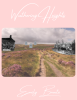
The Importance of Place in Emily Brontë’s Wuthering Heights," Book Cover Created by Paige Goodsell, 2026. When picking out books in the library or bookstore with no knowledge of its contents, one cannot help but judge a book by its cover. Even though “the important thing is to be different,” as William Krider notes in a New Yorker article on book covers, contemporary book covers are becoming bland, using the same fonts and designs. While many covers paint Emily Brontë’s Wuthering Heights (1847) as purely a romance novel between Catherine and Heathcliff, I wanted to avoid conformity by privileging the Yorkshire moors where Thrushcross Grange and Wuthering Heights are placed. As Tim Cresswell notes in Place: A Short Introduction, “When humans invest meaning in a portion of space and then become attached to it in some way (naming is one such way), it becomes a place” (10). Using place theory to explore the characterization of Wuthering Heights, my book cover uses the moors as a place that shapes the main characters
and exhibits their unspoken desires and emotions. Catherine’s love triangle with Heathcliff and Edgar is rooted in place, and her two love interests are tied deeply with the two different houses in the novel–Wuthering Heights and Thrushcross Grange. However, in the end, as my book cover reveals, all three characters end up buried side by side in their true home of the moors.