
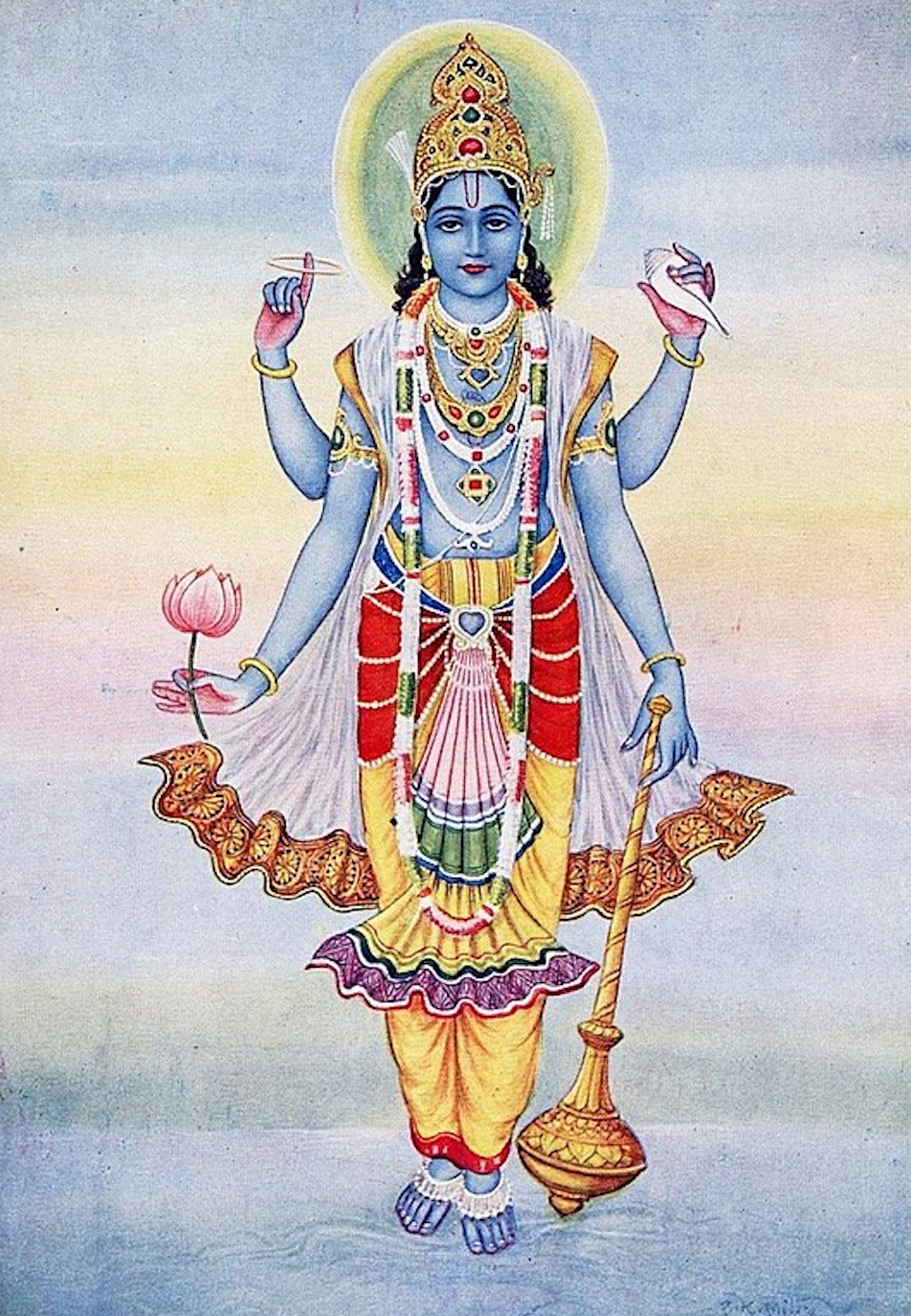

Vaishnavism is a major denomination of Hindu, along with Shaivism, Shaktism, and Smartism. Of these denominations, Vaishnavism is currently the largest, and around 68% of Hindus are Vaishnavas. The denomination claims to have existed for millions of years. Vaishnavism is characterized by devotion to the god Vishnu as the supreme being in all his incarnations, especially the incarnations of Krishna and Rama, the most popular of these. Vaishnavas believe that Vishnu defends traditional righteousness in keeping with moral law (dharma). Most Vaishnavas hope to spend the afterlife in Vishnu’s presence after they have died. There are many different sects of Vaishnavism, and these groups often differ in their interpretations and beliefs.
When first explaining her family history, Haimabati Sen introduces her great-great-great-grandfather by saying, “Radhakanta Ghosh, was also devout and extremely virtuous. Although Radhakanta Ghosh’s family worshipped Sakti, the Mother Goddess, he belonged to the Vaishnava sect and worshipped Krishna. Radhakanta Ghosh was like Prahlad, the mythological devotee of Lord Krishna who was born in a family of Krishna-hating demons” (3). Sen describes Radhakanta Ghosh as being devout and dedicated to his faith despite the fact that his family did not share in it. Her description-- and the fact that she compares his family to “Krishna-hating demons” -- shows her sympathy with him and his faith.
Sources:
“Vaishnavism.” Encyclopædia Britannica, Encyclopædia Britannica, Inc., www.britannica.com/topic/Vaishnavism.
“Vaishnavism.” Heart Of Hinduism, iskconeducationalservices.org/HoH/tradition/movements-and-leaders/vaishnavism/.
“Vaishnavism.” ReligionFacts, 28 Jan. 2021, religionfacts.com/vaishnavism.