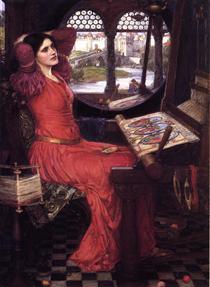
The Lady of ShalottA timeline for the Victorian period.

Timeline


Table of Events


Date Event Created by
2 Mar 1815

Corn Law Act

On 23 March 1815, parliament passed the Corn Law Act of 1815. Image: the Royal coat of arms of the United Kingdom of Great Britain and Northern Ireland.

The Corn Law Act of 1815 prohibited the importation of grain when the prices in the domestic market were high. The Act was repealed on 25 June 1846.

Articles

Ayse Çelikkol, "On the Repeal of the Corn Laws, 1846"

David Rettenmaier
1828

The Fairy Mythology by Thomas Keightly

1828, Thomas Keightley publishes The Fairy Mythology. It explores the parallels between the myth of a nation to the religions and mythology of other regions. Much like the work of the brothers Grimm, Keightley attempted to trace fairy myth to Gothic and Teutonic roots. Keighlty included an anthology of European legends that was read by the Rossetti children. Keightley's work inspired Christina Rossett's fantasy setting for "Goblin Market".

Dafne Calderon
9 May 1828

Sacramental Test Act

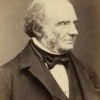
Portrait of John RussellSacramental Test Act passed on 9 May 1828. Image: John Jabez Edwin Mayall, Portrait of Lord John Russell. This image is in the public domain in the United States because its copyright has expired.

Introduced by Lord John Russell and passed in 1828, the Sacramental Test Act repealed the Corporation Act of 1661 and the Test Act of 1673. Those Acts had required individuals who held municipal, civil, or military office to take communion in the Church of England and to declare that they did not believe in transubstantiation. Initially aimed at keeping Catholics out of public office, these Acts ended up restricting Protestants who were not Anglicans. However, in the century and a half following the passage of the Test and Corporation Acts, the growing social power of Dissenting religions in England gradually eased those strictures.

Articles

Elsie B. Michie, "On the Sacramental Test Act, the Catholic Relief Act, the Slavery Abolition Act, and the Factory Act"

David Rettenmaier
1 Apr 1829

Roman Catholic Relief Act

British Coat of ArmsRoman Catholic Relief Act received the Royal Assent on 13 April 1829 (sometimes called the Catholic Emancipation Act). Image: the Royal coat of arms of the United Kingdom of Great Britain and Northern Ireland.

The Catholic Relief Act of 1829 allowed Catholics to become Members of Parliament and to hold public offices, but it also raised the property qualifications that allowed individuals in Ireland to vote. The passage of the Catholic Relief Act marked a shift in English political power from the House of Lords to the House of Commons. The Act was led by the Duke of Wellington and passed despite initially serious opposition from both the House of Lords and King George IV.

Articles

Elsie B. Michie, "On the Sacramental Test Act, the Catholic Relief Act, the Slavery Abolition Act, and the Factory Act"

Related Articles

Carolyn Vellenga Berman, “On the Reform Act of 1832″

Sean Grass, “On the Death of the Duke of Wellington, 14 September 1852″

David Rettenmaier
1830

Prostitution During the 18th Century

There was a big surge of women who were involved in prostitution. Within Britain, it was one of the biggest problems within society, which went against the morals of the societal expectations of women. "Fallen women" were individuals who had completely disregarded the values of chastity, purity, and grace. The reason behind most females turning to this field of work was because of social and economic issues, which hindered their progress through society. While others joined out of pure enjoyment or curiosity, which is why some women have been given the label of  "fallen women." This affected many within society because it gave temptation to many women to sell their bodies in order to make a living. Rossetti speaks on the issues of prostitution and how it derives through her poem, "The Goblin Market" which depicts that dominating and exploiting men were the reason behind this evil.

Elizabeth Castelan
16 Nov 1830

Wellington resigns as Prime Minister

portrait of the Duke of WellingtonOn 16 November 1830, Wellington resigned as Prime Minister. Having angered many in his own party with his backing of the Catholic Emancipation and many in the public with his staunch opposition to parliamentary reform, Wellington is forced out of office by a vote of no confidence, an action that prepared the way for passage of the 1832 Reform Act. Image: Sir Thomas Lawrence, Portrait of Arthur Wellesley, 1st Duke of Wellington (1814). This image is in the public domain in the United States because its copyright has expired.

Articles

Sean Grass, “On the Death of the Duke of Wellington, 14 September 1852″

David Rettenmaier
29 Aug 1833

Factory Act

British Coat of ArmsAct to Regulate the Labour of Children and Young Persons in the Mills and Factories of the United Kingdom passed on 29 August 1833. Image: the Royal coat of arms of the United Kingdom of Great Britain and Northern Ireland.

Articles

Elsie B. Michie, "On the Sacramental Test Act, the Catholic Relief Act, the Slavery Abolition Act, and the Factory Act"

Related Articles

Peter Capuano, “On Sir Charles Bell’s The Hand, 1833″

David Rettenmaier
29 Aug 1833

Slavery Abolition Act

British Coat of ArmsThe Slavery Abolition Act of 1833 received the Royal Assent (which means it became law) on 29 August 1833. The Act outlawed slavery throughout the British Empire; Britain’s colonial slaves were officially emancipated on 1 August 1834 when the law came into force, although most entered a form of obligatory apprenticeship that ended in 1840. Image: The Royal coat of arms of the United Kingdom of Great Britain and Northern Ireland. Image: the Royal coat of arms of the United Kingdom of Great Britain and Northern Ireland.

Articles

Elsie B. Michie, "On the Sacramental Test Act, the Catholic Relief Act, the Slavery Abolition Act, and the Factory Act"

Sarah Winter, “On the Morant Bay Rebellion in Jamaica and the Governor Eyre-George William Gordon Controversy, 1865-70″

David Rettenmaier
9 Sep 1833 to 25 Jan 1841


Tracts for the Times: 1833-1841

Between 1833 and 1841, members of the Oxford Movement (including John Henry Newman, John Keble, Edward Pusey, Hurrell Froude, Benjamin Harrison, and others) published 90 pamphlets in defense of Anglo-Catholic doctrine. The Tracts for the Times were vital in disseminating and consolidating the principles of the Oxford Movement, or Tractarianism as it was henceforth known. Image: This image is in the public domain in the United States.

Articles

Kimberly J. Stern, "The Publication of John Pentland Mahaffy's The Decay of Modern Preaching (1882)"

Related Articles

Laura Mooneyham White, "On Pusey's Oxford Sermon on the Eucharist, 24 May 1843"

Miriam Burstein, "The 'Papal Aggression' Controversy, 1850-52"

Barbara Charlesworth Gelpi, "14 July 1833: John Keble's Assize Sermon, National Apostasy"

David Rettenmaier
14 May 1842

The Illustrated London News launched

Masthead, Illustrated London NewsOn May 14 1842, The Illustrated London News, a mass-circulation periodical, was launched. Image: Masthead of the Illustrated London News. This image is in the public domain in the United States because its copyright has expired.

Articles

Lorraine Janzen Kooistra, “The Moxon Tennyson as Textual Event: 1857, Wood Engraving, and Visual Culture”

David Rettenmaier
9 Oct 1845 to 9 Oct 1845


John Henry Cardinal Newman’s conversion to Catholicism

On 9 October 1845, Newman was formally received into the Catholic Church in Littlemore, where he had resided for approximately three years. Image: John Henry Newman by John Everett Millais. This image is in the public domain in the United States because its copyright has expired. Courtesy of Wikimedia Commons.

Articles

Kimberly J. Stern, "The Publication of John Pentland Mahaff's The Decay of Modern Preaching (1882)"

David Rettenmaier
25 Jun 1846

Repeal of Corn Laws

British Coat of ArmsThe repeal of the Corn Laws on 25 June 1846. Reversing decades of protectionism, the repeal of the Corn Laws lifted restrictions on the importation of foreign grain. Image: the Royal coat of arms of the United Kingdom of Great Britain and Northern Ireland.

Articles

Ayse Çelikkol, "On the Repeal of the Corn Laws, 1846"

Related Articles

Peter Melville Logan, “On Culture: Matthew Arnold’s Culture and Anarchy, 1869″

Robert O’Kell, “On Young England”

David Rettenmaier
Sep 1848

Pre-Raphaelite Brotherhood founded

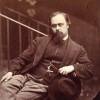
photo of DG RossettiIn September 1848, the Pre-Raphaelite Brotherhood was founded by William Holman Hunt, John Everett Millais and Dante Gabriel Rossetti. The brotherhood reacts, in part, against the use of bitumen, a transparent brown used for depicting exaggerated shadows, aiming instead to reproduce the sharp, brilliant colors found in fifteenth-century art. Image: Portrait of Dante Gabriel Rossetti: albumen print. This photograph, from 7 October 1863, was reproduced as the frontispiece of: Rossetti, William Michael, Dante Gabriel Rossetti as Designer and Writer. London: Cassell and Company, 1898.

Related Articles

Elizabeth Helsinger, “Lyric Poetry and the Event of Poems, 1870″

Lorraine Janzen Kooistra, “The Moxon Tennyson as Textual Event: 1857, Wood Engraving, and Visual Culture”

Morna O’Neill, “On Walter Crane and the Aims of Decorative Art”

Linda M. Shires, "On Color Theory, 1835: George Field’s Chromatography"

Linda M. Shires, “Color Theory—Charles Lock Eastlake’s 1840 Translation of Johann Wolfgang von Goethe’s Zur Farbenlehre (Theory of Colours)”

David Rettenmaier
1854

A Peep at the Pixies by Anna Eliza Bray

Bray'A Peep at the Pixies or Legends of the West retells some of Bray's stories of pixies for a younger audience. Christina Rossetti was heavily influenced by this work for her poem "Goblin Market". Christina Rossett originally titled the poem "A Peep at the Goblins" as it was an "imitation of my cousin Mrs. Bary's 'A Peep at the Pixies'". However, before publication, the poem was retitled. Bray's work includes a tale titled "The Lady of the Silver Bell", a young girl Serena of Tintagel is enchanted by a handsome man and his music that prevents her from completing her devotions. Serena is enchanted by the music and longs to hear it again. In hopes of getting rid of the pixie's curse, Serena seeks a wizard who will help her get rid of it with a spell. She is instructed to say the spell at the top of the waterfall and before she can complete it, she falls and dies. This tale has a sad ending while "Goblin Market" ends on a brighter and positive note. 

"The Lady of the Silver Bell"

Dafne Calderon
2 May 1857

Opening of Reading Room of the British Library

British Library reading roomOpening of the Reading Room at the British Library on 2 May 1857. For a week, a curious public streamed in for a special open viewing of its domed ceiling, elevated stacks of gilt-spined books, and blue leather reading tables radiating out from its central core of power and knowledge, the librarian’s desk. After this spectacle, the doors closed to all except those holding Readers Tickets, who could access, open, and read books deposited in the National Library. Image: Exterior of the Reading Room viewed from the Great Court of the British Museum. This image is in the public domain in the United States because its copyright has expired.

Related Articles

Lorraine Janzen Kooistra, “The Moxon Tennyson as Textual Event: 1857, Wood Engraving, and Visual Culture”

David Rettenmaier
25 May 1857 to 25 Jun 1857

Pre-Raphaelite Art Exhibit

photo of DG RossettiPre-Raphaelite Art Exhibit, Russell Square, London, from 25 May to 25 June 1857. This was the first exhibition devoted solely to the work of the Pre-Raphaelites. Image: Portrait of Dante Gabriel Rossetti: albumen print. This photograph, from 7 October 1863, was reproduced as the frontispiece of: Rossetti, William Michael, Dante Gabriel Rossetti as Designer and Writer. London: Cassell and Company, 1898. This image is in the public domain in the United States because its copyright has expired.

Related Articles

Lorraine Janzen Kooistra, “The Moxon Tennyson as Textual Event: 1857, Wood Engraving, and Visual Culture”

David Rettenmaier
28 Aug 1857

Matrimonial Causes Act of 1857

British Coat of ArmsOn 28 August 1857, passage of the Matrimonial Causes Act of 1857. The Act legalized divorce and protected a divorced woman’s property and future earnings. The grounds for divorce for men was adultery (in legal terms, criminal conversation), for women adultery combined with bigamy, incest, bestiality, sodomy, desertion, cruelty, or rape. Image: The Royal coat of arms of the United Kingdom of Great Britain and Northern Ireland.

Articles

Kelly Hager, “Chipping Away at Coverture: The Matrimonial Causes Act of 1857″

Related Articles

Rachel Ablow, “‘One Flesh,’ One Person, and the 1870 Married Women’s Property Act”

Lorraine Janzen Kooistra, “The Moxon Tennyson as Textual Event: 1857, Wood Engraving, and Visual Culture”

Jill Rappoport, “Wives and Sons: Coverture, Primogeniture, and Married Women’s Property”

David Rettenmaier
1859 to 1870

Rossetti Volunteers at St. Mary Magdalene's Penitentiary

In 1859, Christina Rossetti volunteered at St. Mary Magdalene’s Penitentiary, which was located in Highgate, London. The place was a refuge for “fallen women” who were considered female prostitutes or women who had intercourse out of wedlock. They provided shelter, and work, and taught them the ways in which they can go back to living within society. The women strived to achieve the rehabilitation that they needed in order to be socially acceptable once again. It is significant because it was rumored that this was the time in which she wrote the Goblin’s Market, which depicts the sense of being redeemed for the aspects that women have committed in their life.

Elizabeth Castelan
1 Feb 1859

Adam Bede

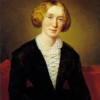
Portrait of George EliotIn February 1859, publication of George Eliot’s Adam Bede. Image: Alexandre-Louis-François d'Albert-Durade, Portrait of George Eliot. Source: University of Adelaide. This image is in the public domain in the United States because its copyright has expired.

Related Articles

Jonathan Farina, “On David Masson’s British Novelists and their Styles (1859) and the Establishment of Novels as an Object of Academic Study”

David Rettenmaier
1871 to 1872

George Eliot Published Middlemarch

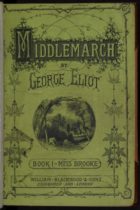
Cover Image for Eliot's MiddlemarchImage: Cover to Book 1 of Middlemarch published 1871. This image is in the public domain in the United States because its copyright is expired. Courtesy of the British Library Collections

George Eliot's Middlemarch: A Study in Provincial Life published in 8 installments, 1871-72.


Articles

Jules Law, “Victorian Virtual Reality”

David Rettenmaier
14 Aug 1885

Criminal Law Amendment Act

British Coat of ArmsCriminal Law Amendment Act passed on 14 August 1885. The Act raised the age of consent for girls from 13 to 16 and introduced the misdemeanor of “gross indecency” to criminalize sexual acts between men in public or private. Image: The Royal coat of arms of the United Kingdom of Great Britain and Northern Ireland.

Related Articles

Mary Jean Corbett, “On Crawford v. Crawford and Dilke, 1886″

Andrew Elfenbein, “On the Trials of Oscar Wilde: Myths and Realities”

David Rettenmaier
Apr 1895 to May 1895

Trials of Oscar Wilde

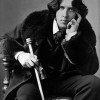
photo of WildeThe trials of Oscar Wilde, which occurred in April and May of 1895, have become legendary as a turning-point in the history of public awareness of homosexuality. By their close, Wilde had gone from being a triumphantly successful playwright to a ruined man, condemned to two years of hard labor for gross indecency. They garnered extensive coverage first in the London press and then in newspapers around the world; the story of the trials continues to be retold in ways that have persistent relevance for contemporary queer culture. Image: Photograph of Oscar Wilde, by Napoleon Sarony. This image is in the public domain in the United States because its copyright has expired.

Articles

Andrew Elfenbein, “On the Trials of Oscar Wilde: Myths and Realities”

David Rettenmaier
30 Nov 1900

Death of Wilde

photo of Wilde30 November 1900 was the day Oscar Wilde died (in the Latin Quarter, Paris). Image: Photograph of Oscar Wilde. This image is in the public domain in the United States because its copyright has expired.

Articles

Ellen Crowell, “Oscar Wilde’s Tomb: Silence and the Aesthetics of Queer Memorial”

Related Articles

Andrew Elfenbein, “On the Trials of Oscar Wilde: Myths and Realities”

David Rettenmaier

Part of Group