
Character Commentary:
Gerty would never allow it. However, this is work for our business; an offer is an offer! I can not let this opportunity slip away can I? He charms me and tells me about my beauty. He insists that l be the medium for his new painting. It must do well, Sidney Darrell is the artist after all.
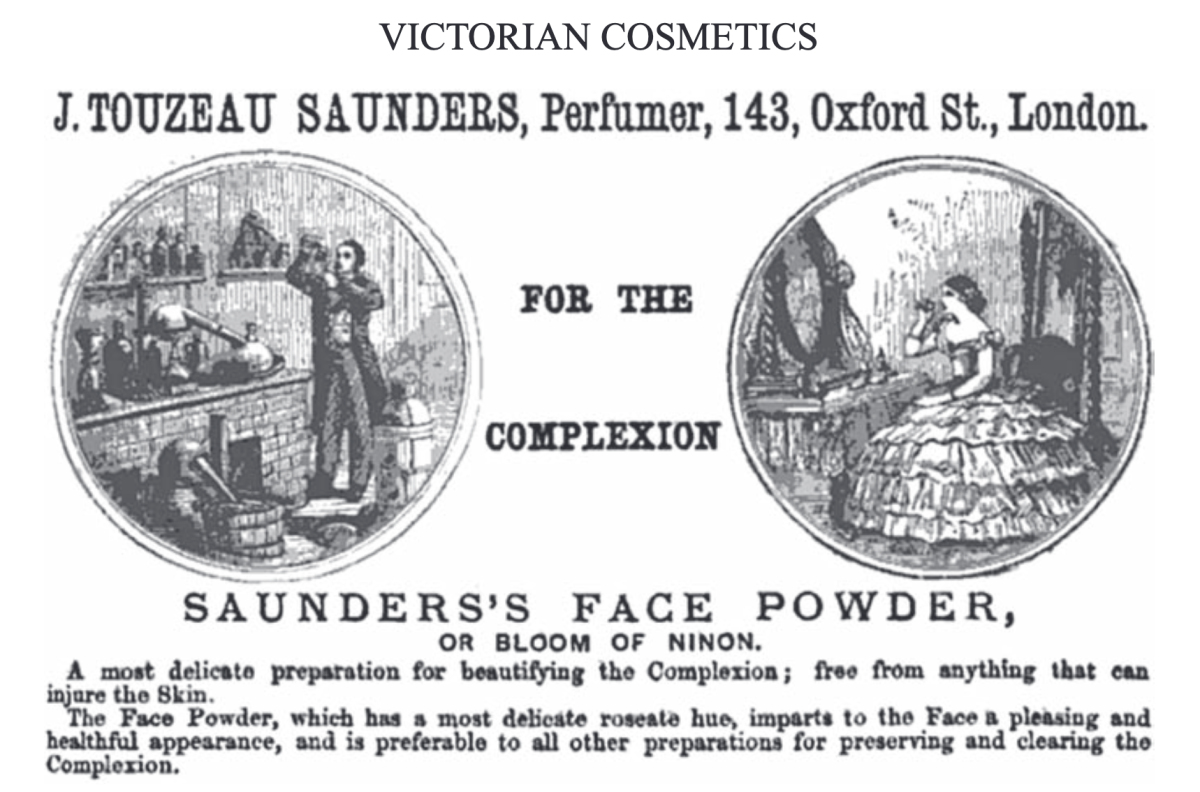
I keep thinking about the way he charms me and I flaunt expensively. As I model for Darrell I must prepare myself. Flipping through the papers of this week I stumble upon multiple advertisements. A dressmaker's shop with a slim black dress, some hair shine, and face powder. I take a stare in the mirror and notice my complexion is troubled. I must be presentable for my new husband. I do have some competition after all with his first. Oh, what would my sisters think! Lucy, and especially Gertude, would be unforgiving. He is a married man for heaven's sake!
I must leave in secret. It'll hurt leaving them but I have been feeling only bitterness and a longing for a change. I am longing for a heart. My heart aches for something or because of something.
I made up my mind. I'll take the train to Oxford Street the next morning after I leave my letter. I must prepare myself to model and for Darrell. I'll dress in my favorite afternoon gown and be on my way before my sisters wake. I'm quite certain Darrell will also prepare my attire for the session since he told me to just bring my beauty. The least I could do is go get some Saunders's face powder. Then, I will be off to Darrell's studio.
Editorial Commentary:
British society in the Victorian Era was heavily based on a class and status system. One way the stratification of the society was expressed had been through one's attire. In this era, the popularity of balls led to high demands from the dressmaking and millinery industries (Jameson). Thus, the importance of vanity and beauty came along with social status. According to a personal journal from the 19th century written by Phyllis Lorimer, there is an apparent attentiveness for one's appearance. From previous entries, Lorimer seemed to be born into a wealthy family but unfortunately, had to make a means with her sisters after their father had passed away. They started a photography business and a difficult moment of her life is captured through her journal. Due to her fall in class, we see that her physical appearance allows her to continue to associate herself with people of a higher social circle. For instance, a famous artist in the late 1800s, Sidney Darrell, is mentioned in Lorimer's journal. He seems to have offered her a modeling job for his painting and showed romantic interest. Furthermore, the book Consumptive Chic by Carolyn Day, discusses how artists and their images of fair skin contributed to beauty standards, making women desire a pale complexion. It was considered the "feminine ideal that represented youth, purity, and virtue" (Day). This "clean" look made women of this period more respectable within society as a darker skin color was associated with intensive labor in the fields. Similarly in the article "Vanity in the Victorian Era", in order for one to fit into a class, "you had to look the part". If women were pale and thin, it represented that they were wealthy and did not have to work; it showed one's position and place within society. This is how ghostly pale cosmetics played a significant role in gaining respect for women in society. Additionally, Lormier includes details about being unwell due to a life without love. Yet, she also states that she is bothered by physical pain in her chest, suggesting that she had tuberculosis during a time when one in four deaths were due to TB by the early 19th century (Glaziou). An interesting relation is that tuberculosis "was believed to enhance the beauty of its predestined victims, forming a discourse between illness and romanticism" (Black). Symptoms like being unhealthily pale, skeletal thin, red cheeks and lips, are all examples of symptoms also being beauty standards.
Works Cited:
Black, Ashleigh. “Even in death she is beautiful: Confronting tuberculosis in art, literature and medicine.” Granite Journal, 2022.
Day, Carolyn A. Consumptive Chic: A History of Beauty, Fashion, and Disease. Bloomsbury Visual Arts, 2019.
Glaziou, Philippe, et al. “Trends in Tuberculosis in the UK.” National Library of Medicine, www.ncbi.nlm.nih.gov/pmc/articles/PMC6204963/. Accessed 12 Oct. 2023.
Jameson, Anna. "The Milliners." 1843. COVE, 2023.
Latajvanity. “Vanity in the Victorian Era.” Latajvanity, 13 Apr. 2012, latajvanity.wordpress.com/2012/04/12/vanity-in-the-victorian-era/.
Matthews, Mimi. Victorian Lady’s Guide to Fashion and Beauty. Pen & Sword History, 2021.