
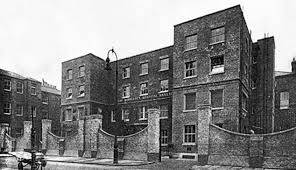
The Workhouses written in Oliver Twist played a HUGE part of Charles Dickens. These workhouses were more than just fictional pieces in a novel. They were real and played a vital role when it came to Dickens writing about his opinion and view on poverty and political contexts.
What is a workhouse?
A workhouse was a place where people went if they couldn't financially support themselves. One would think that this was a place where you worked and earned your way through, but that was far from the truth. Little boys and girls grew up in these homes almost like an orphanage, except rather than being treated with some sort or respect and dignity, these people were scared and fearful and bullied. Dickens, when he was 12 years old, was sent to a Workhouse where he thought he would never accomplish his dreams. When he asked for more food, he was punished by being beaten and bruised and shoved in the darks for days on end.
The New Law
Because of these workhouses, The New Poor Law of 1834 was created. This law, initially intended to help the elderly and the poor and refuges, it was instead used as a way to get the homeless off of the streets. The workhouses received no funding fnancially whatsoever. Of course no one liked these workhouses or their ways or what they came with. People did everything in their power to stay away from being sucked into them, but no one is perfect so that didn't always work.
An example of just how bad society saw those who were placed in the workhouses were, a line from the novel Oliver Twist says "But now that he was enveloped in the old calico robes which had grown yellow in the same service, he was badged and ticketed, and fell into his place at once--a parish child--the orphan of a workhouse--the humble, half-starved drudge--to be cuffed and buffeted through the world--despised by all, and pitied by none." (Dickens, 6). This line shows the audience that society thought very little of those who suffered in the workhouses. Back then, if you weren't rich, then you weren't important.
I think the fact that Dickens was once in this position of not being known or cared for shows a lot about his character. He proved everyone wrong. He had a vision at a young age and he knew what he wanted his life to be and he made that happen, despite his circumstances.
Works Cited:
Discovering Literature...https://www.bl.uk/romantics-and-victorians/articles/oliver-twist-and-th…
Charles Dickens, Oliver Twist