


Introduction:
Florence Nightingale is most famously known for her service as a nurse during the Crimean War. Women were still bound to domesticity, therefore her actions as a nurse broke the stereotypes imposed on women in this time period. She took up writing and authored Cassandra, a novella denouncing the Victorian expectations of idleness women were subjected to, which is the central text to this series. Instead of utilizing a gentle approach, Nightingale tears apart the arbitrary societal expectations women and men were forced to follow. Her ideals are aligned with much of the basis for the Women’s Emancipation Movement in Victorian England. In Cassandra, Nightingale asks why it is acceptable for women to perform mundane tasks like embroidery, cleaning, and even enjoying alone time in the drawing room, but it is unacceptable for a man to do the same. She also questions why women are punished for doing “men’s work.” Research into other views of women’s rights in this time period shows that Florence Nightingale was not alone in her thoughts.
Author Chieko Ichikawa claimed Florence Nightingale’s efforts in the field of public health became the backbone of her reason to fight for women’s rights, and eventually the Women’s Emancipation Movement, in her piece “Writing as Female National and Imperial Responsibility: Florence Nightingale’s Scheme For Social and Cultural Reforms in England and India.” She states that,“Nightingale evidently perceived “every woman” as a collaborator in her attempts to improve the health of the nation,” and that “unsanitary dwellings caused social unrest,” (Ichikawa 3, 4). Through her connection of public health and Cassandra, Chieko Ichikawa makes an intriguing argument for the necessity of women’s emancipation in the Victorian era and how it was perceived in various media platforms.
Through the four images below of various newspapers and pieces of artwork, multiple perspectives of the British Women’s Emancipation Movement will be touched upon in order to visualize the effects and contexts of these important historical moments . Today, visuals of historic feminist and civil rights movements are still relevant in current fights for equality between every subgroup in society, however, this gallery will focus on visual representation from the late 19th century and early 20th century and how it may have affected the movement.
Work Cited:
Ichikawa, Chieko. “WRITING AS FEMALE NATIONAL AND IMPERIAL RESPONSIBILITY: FLORENCE NIGHTINGALE’S SCHEME FOR SOCIAL AND CULTURAL REFORMS IN ENGLAND AND INDIA.” Victorian Literature and Culture, vol. 39, no. 1, Cambridge University Press, 2011, pp. 87–105, http://www.jstor.org/stable/41307852.
Images in the Series
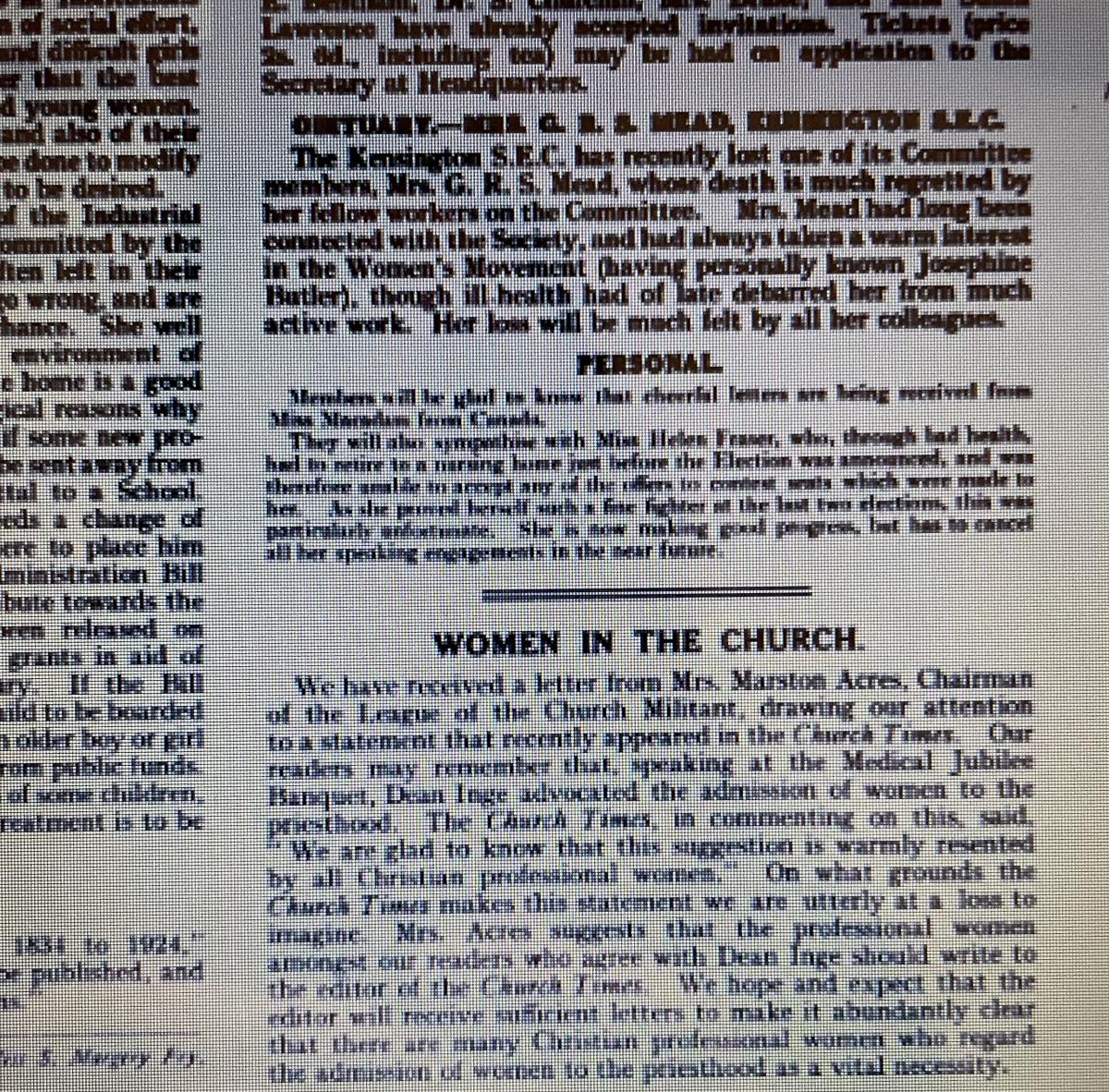
Fig. 1: Archive, The British Newspaper. “Common Cause.” Common Cause in British Newspaper Archive, An Unknown Publisher, 28 Feb. 2018, https://www.britishnewspaperarchive.co.uk/titles/common-cause.
The Common Cause was a newspaper related to the fight for women’s rights in Victorian England. It began publication in 1909, and ceased in 1920 when it became known as The Women’s Leader. Throughout its run, it brought attention to numerous injustices involving the equality of women in the early 20th century. Pictured here, is an argument from a page in one of the earlier editions supporting women in priesthood in British churches. It brings light to both sides of the argument, beginning with The Church Times stating that all “Christian professional women” were not in favor of female priests. Yet, it goes on to say that readers of “The Common Cause” should write to the editor of The Church Times to show how supported the idea of women in priesthood actually is. Most historical texts and even current pieces of activist literature do not touch on the subject of women in positions of authority in the church. Here, it is clear that there was a desire for women to participate in the governmental aspects of the church, a piece of society that is heavily male dominated. Even now it is not common to see female priests in the church, if at all.
Fig. 2: Archive, The British Newspaper. “Suffragist.” Suffragist in British Newspaper Archive, An Unknown Publisher, 1 Mar. 2018, https://www.britishnewspaperarchive.co.uk/titles/suffragist.
Pictured is a cartoon from the magazine, “The Suffragist” in a publication from 1909. This political cartoon is entitled “Tightening The Grip,” a play on how women were “tightening” their metaphorical grip on the vote due to the surge in support in this time period. This image depicts the suffrage movement as more aggressive, as seen through the anger in the woman’s face and the fear in the parrot’s face. The bottom text states “Say votes for women then,” in an aggressive manner, a way of vilifying the women participating in this movement. If looking closely, the viewer can see that the parrot has a face resembling that of a man, which means the artist was trying to show how vicious the fight for women’s rights was becoming, as this appears to show men being ‘assaulted’ and controlled, something men do not wish to be victims of despite their similar actions with women. This seems to lean towards the opposition of women’s suffrage, typically the male point of view. Perhaps this was included in “The Suffragist” to show how demeaning the opposing perspective was, as this newspaper was in support of the right to vote for women.
Fig. 3: Unknown. Character Sketches at the Women's Suffrage Meeting at St. James' Hall. Wikimedia Commons, 1884, People's History Museum, Manchester, England.
Pictured above is a sketch of female suffragist characters during a Women’s Suffrage meeting in 1884 at St. James’ Hall in London. The historical context given by Wikimedia Commons states that Elizabeth Garret Anderson chaired the meeting, while speakers such as Lydia Becker and Alice Scatcherd were present in support for the inclusion of women’s suffrage in the Reform Bill proposed by William Gladstone. The banners shown are representative of specific suffrage societies throughout England. Here, we can see the waves of female support this movement was receiving at this time, even when they would not get the right to vote for at least another 20 years. The faces of the characters are stoic and serious, lacking the enthusiasm necessary for change to be considered. This creates a sense that this sketch was made from the male perspective, specifically the side of disapproval of women’s rights. However, the clear presence of multiple women in this meeting shows that woman's suffrage was gaining traction among the wives of the husbands who sought control over women.
Fig. 4: De Morgan, Evelyn. Cassandra. Wikimedia Commons, 1898, Public Domain, Unknown.
The above image depicts the character of Cassandra from Florence Nightingale’s Cassandra, the titular literature of this gallery. Cassandra is shown as a strong, powerful figure here; the way women want to be seen. This image shows women as more than just a submissive human, and more as an almost sort of ethereal being. Women were often painted as motherly figures in works of art from the Victorian Era and beyond, but this breaks that stereotype. The woman, Cassandra, is free of the shackles of motherhood; no children are present, as well as an absence of typical "female" activties like sewing, cooking, and cleaning. This brings Nightingale’s argument of women needing to free themselves from the bonds of domesticity to life, as that is exactly what seems to have occurred in this image. It is evident that the artist of this image was in favor of women’s suffrage, as they would not have depicted a woman in such a powerful way as seen in this visual.