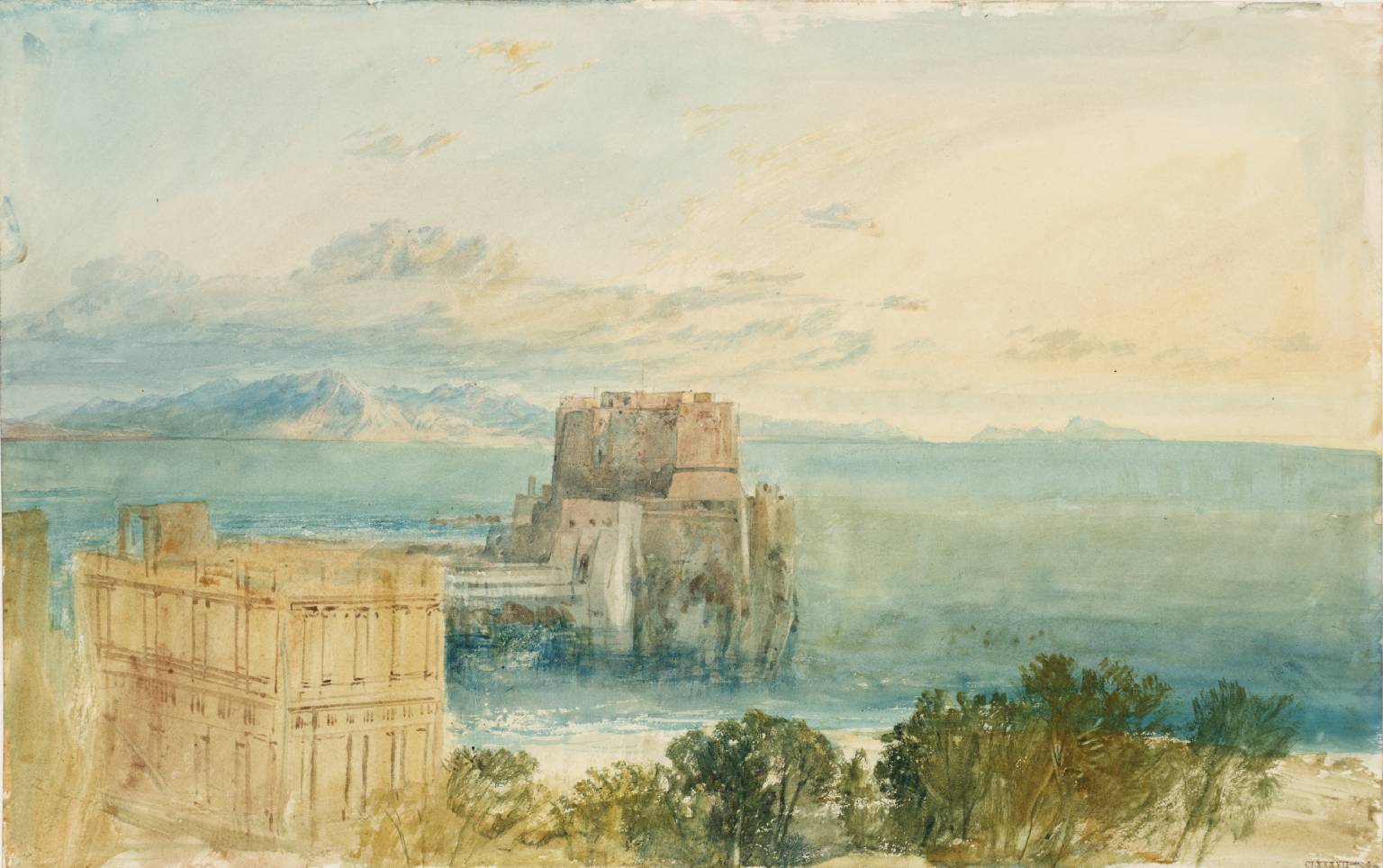
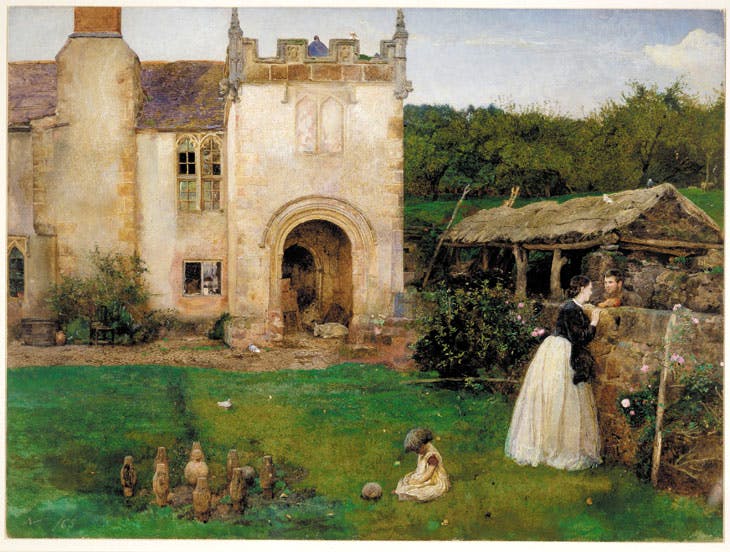
The Victorian era is said to have been the peak for the use of watercolor paints as an artistic medium in Britain. In the mid-1800s, watercolors simultaneously reached the zenith of both their institutional and amateur popularity. This prominence led to the creation of multiple watercolor societies in Britain. Art exhibitions across England found greater success on the heels of the popularity of amateur watercolor painting. The amateur unfinished watercolor sketch was appreciated as a spontaneous and sincere form of art and was the ideal vehicle to best display the strengths of the watercolor medium.
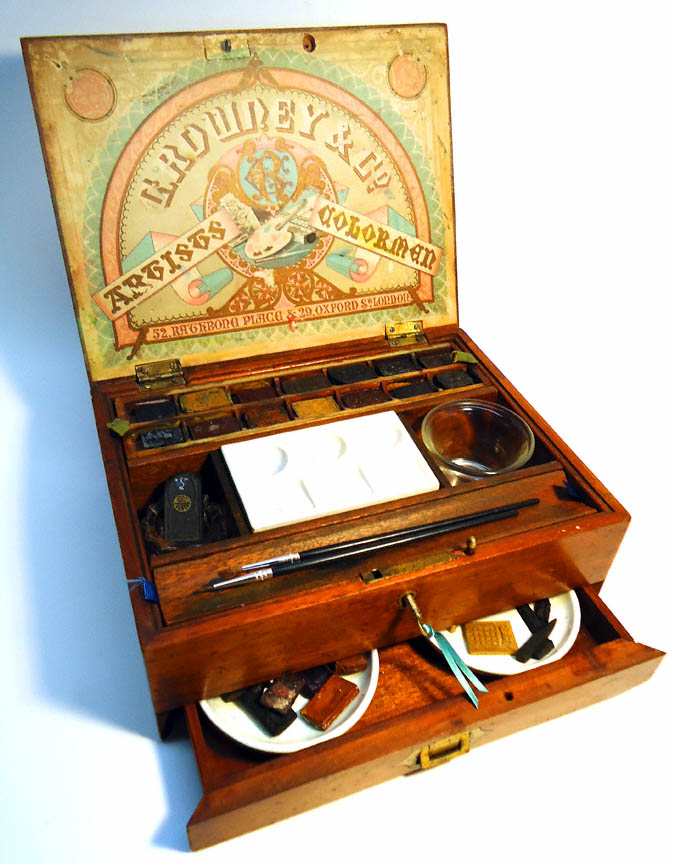
The success and prominence of watercolor during the era were dependent on advancements in the art tools available. James Whatman produced custom watercolor papers that allowed watercolor works to reach a greater size so as to compete with their oil-paint rivals. In 1834, artists Winsor and Newton produced zinc white to be used as a reflective underpainting to make watercolor pigments more opaque and appear less washed out amongst other paintings in galleries.
The rise of the journalistic art critic during the time significantly increased the prices for watercolor paintings by respected artists. Of course, the success of watercolors was met with pushback, as Victorian society's preoccupation with tradition in opposition to progress and experimentation manifested in divides amongst the artistic community when it came to the medium.
Bibliography
“Provincial Exhibitions.” Leeds Intelligencer, 24 Aug. 1833.
This source is an issue of the Leeds Intelligencer published in Leeds England on August 24th, 1833. In an article entitled “Provincial Exhibitions,” the authors describe a collection of watercolor drawings available for sale at Leeds as “vile beyond all conception,” complaining that the pieces are tawdry and vulgar. Despite this, the article states that upwards of £700 worth of paintings had been sold.
Reynolds, Graham. Watercolours: A Concise History. Thames and Hudson, 1988.
In addition to contextualizing Victorian-era watercolor painting within the history of the medium, Reynolds goes into detail on the debate between watercolor and other mediums that were often preferred at the time, such as the more traditionally respected oil paint.
Hardie, Martin, et al. Water-Colour Painting in Britain. B.T. Batsford, 1979.
Hardie provides a thematic if not somewhat subjective interpretation of the thematic implications of the use of watercolor within the context of the Victorian era, during which the medium is widely said to have peaked. He addresses the importance of status and tradition which was an obstacle to watercolor gaining respect as a medium, as well as the idea of finish versus sketch art with watercolor being limited to use as a sketch medium within some circles.
Fenwick, Simon, and Greg Smith. The Business of Watercolour: A Guide to the Archives of the Royal Watercolour Society. Ashgate, 1997.
This book explores the business considerations that influenced watercolor and its use as a medium. In particular, it details the shift of the use of watercolor into the “private domain.” The text goes into detail on where watercolor as a medium existed within the cultural context. In the introduction to the text's section on watercolor in the private domain, the book discusses the fact that many watercolors produced in the Victorian era were produced for the portfolio as opposed to for display in galleries. In particular, the text describes how many watercolors from the era were intended to be held and closely observed by an individual viewer who was free to tilt the drawing and observe it from all angles.
Barker, Elizabeth E. “Watercolor Painting in Britain, 1750–1850.” In Heilbrunn Timeline of Art History. New York: The Metropolitan Museum of Art, 2000.
This source focuses heavily on watercolors as a physical medium through the lens of the artist's perspective. It describes the chemical composition and historical developments that make up watercolors themselves, including the introduction of the patented zinc oxide pigment "Chinese white" in 1834 which popularized the use of the medium for outdoor sketching in the mid-1800s.