
Introduction
‘Dulce et Decorum Est’ is a Latin phrase that translates to ‘it is sweet and fitting to die for one’s country.’ Wilfred Owen has chosen this line for his 1920 literary work with the intent to reject this idea. As someone who had experienced the horrors of trench war and a gas attack, Owen understands how war is far from sweet and not fitting to die for one’s country. In ‘Dulce et Decorum Est,” he focuses only on one scene, the moment of the platoon of soldiers getting attacked with chlorine gas, to show the terrifying truth and expose the fallacy in the belief of war being an act of heroism or patriotic. Wilfred Owen’s work contains detailed explicit imageries that give a lot of insight however, other interesting WWI representations are worth exploring. With the start of the Great War, there was a shift of attitudes towards war, especially with the multitudes of circulating arts and literature from those partaking in the war or returning from it. The common pre-war attitude of patriotism, heroism, or honorable is shifted to a more realistic perspective represented in Dulce et Decorum Est. Such views are from famous works like Blood and Iron (1916), The Great Sacrifice (1914), Gassed (1919), and even Lord Kitchener Wants You poster (1914). They are from artists who are involved in the war and interestingly they all have their own opinions on the topic. Each artists’ representation of war showed views that are quite contrary to Wilfred Owens. Let’s explore where the view varies.
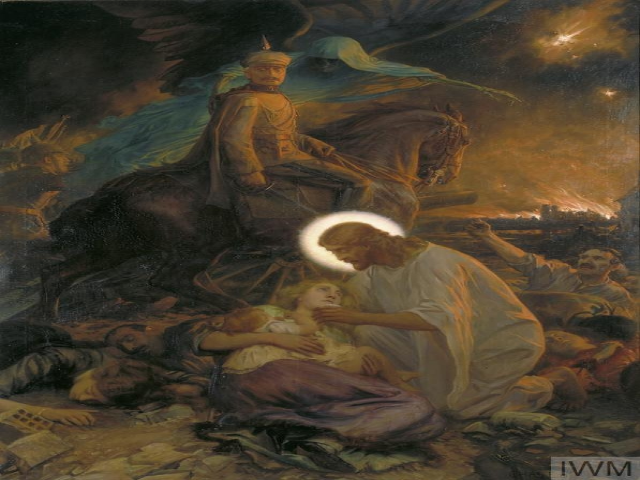
Fig. 1. Butler, Charles Ernest. Blood and Iron. 1916. Imperial War Museum London, https://artuk.org/discover/artworks/blood-and-iron-6948.
Blood and Iron (1916) by Charles Ernest Butler from St. Leonards on Sea, England.
This pro-war piece produced during the First World War is famed among the religious, especially among the front-line British soldiers. The title alone fortifies the idea of Germans as warmongers by alluding to the words of Count von Bismarck who in 1862, made a shocking speech on unifying Germany through the means of Blood and Iron. The piece showcases the war as an underlying struggle between good and evil and it has Kaiser Wilhelm II depicted on his horseback, followed by his army. The German Emperor is shown looking indifferently at the civilians at his feet with the Angel of Death hovering behind him, urging him along his path of ruin. In the background, a city that is presumed to be Louvain in Belgium is burned to the ground. And in the forefront, Christ is seen tending to an innocent woman and her child; showing compassion that is completely lacking from the German Emperor or also known as the King of Prussia.
Blood and Iron show the excessive extent of Germany’s unlawfulness and brutality in invading Belgium. It is overt in its propagandist means to encourage men to enlist through the persuasion of posing war as a necessary or an inevitable evil to preserve peace. And by posing Germany as the evil that brings sufferings to the innocent and destruction to the world, it poses the idea that war is the only solution, and that in this case, it is justified. War is the only way to preserve peace. However, this is contrary to Wilfred Owen’s opinion on the war. After partaking in the senseless brutality of fighting and witnessing the death of his peers, Owen described War in Dulce et Decorum Est as for “children ardent for some desperate glory.” To him, the idea of war is a meaningless child play that is not worth the glory or honor to die for. Dulce et Decorum explicitly described the excruciating pain of a soldier under a gas attack to show the uglies of war and to draw out sympathy for the lives of soldiers wasted on the battlefield. And the description of this soldier’s death should be a warning against the danger of seeing war as the only solution to problems. War only results in more suffering, and it should be a priority to prevent shedding more blood by finding solutions other than the route of war.
Fig. 2. Clark, James. The Great Sacrifice. 1914. The Victorian Web, https://victorianweb.org/painting/clark/paintings/1.html
The Great Sacrifice (1914) by James Clark from West Hartlepool, North-east England.
This is a beloved painting that brought comfort to many who has lost their ones in battle. This painting was purchased by Queen Mary for Princess Beatrice, who had lost her lost son at the front line in 1914. The piece shows a dead soldier lying at the feet of Christ on the cross. The figure of Christ is transparent, and the soldier’s right hand is seen placed on the feet of the apparition. This subtle detail suggests the invisible presence of Christ comforting the soldier while acknowledging the struggle and sacrifice of the fallen through the connectedness of touch. The acknowledgment from Christ, recognizing the soldier as the sacrificial lamb for his country is the core element of this painting that allowed many who are in mourning to feel that the death of their loved ones was not in vain. However, on further observation, it is worth noting that death in this piece is represented with much restraint. The soldier is seen lying peacefully with no blood and apparent wound. All the ugly details of war have been left out, leaving the focus on only the soldier’s selfless and brave sacrifice.
This is not the case for Dulce et Decorum Est. Wilfred Owen made sure that the readers can visualize the sound of “gargling from the froth-corrupted lungs,” to even feel, the “incurable sores on innocent tongues.” Only through elicit depiction, without leaving out details, Owen can cultivate a true understanding of the realities of war from his readers. And the truth is, there is nothing honorable or brave about war as James Clark has made it out to be in The Great Sacrifice.
Fig. 3. Sargent, John Singer. Gassed. 1919. Imperial War Museum London, https://www.iwm.org.uk/collections/item/object/23722
Gassed (1919) by John Singer Sargent from Florence, Italy.
John Singer Sargent was a famous American artist who was commissioned by the British Government in 1918 to contribute to the war as a front-line painter. The final piece, Gassed, was inspired by a small village of Bailleulval where Sargent saw several British soldiers receiving treatment after being blinded by a mustard gas attack. The scene showcases a line of blindfolded soldiers stumbling after one another while being superintended by a medical orderly. And on either side of them, there is a continuous number of soldiers piling on top of one another to show the never-ending victims or suffering from war.
The sense of dread and hopelessness is obvious from this painting but there is also an ironic juxtaposition that the majority often missed out on when observing for the first time. In the background, a group of men can be seen enjoying a football match, impervious to the surrounding sufferings. This is an appalling detail, and it is present to demonstrate how the horror of war can exist alongside the normality of life. Sargent shows how soldiers are exposed to suffering so often that they have come to accept it as a normal occurrence of war.
In relation to Dulce et Decorum Est, it is arguable that John Sargent shares the same view as Wilfred Owen about the realities of war. There is nothing sweet about war because as shown in Gassed, the aftermath is costly. However, the difference lies in the perception of suffering as a normal occurrence of war. Suffering is to be expected in war, but it would be wrong to normalize. To Owen, one’s life is not worth sacrificing in a war.
John Sargent is not completely anti-war like Wilfred Owen, there is a triumphal aspect about his depiction of war. His work puts the focus on the line of soldiers and the group in the back to draw out a positive feeling amid all the suffering. There is a component of posing the soldiers as brave for their endurance to keep going despite their plight. The group is to be seen as commendable for finding joy in a place where it is lacking. These values of bravery or commandability are all contradictory to Dulce et Decorum Est where life’s value is emphasized.
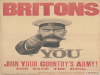
Fig. 4. Leets, Alfred. Lord Kitchener wants You. 1914. British Library, https://www.bl.uk/collection-items/your-country-needs-you
Britons: Lord Kitchener wants You (1914) by Alfred Leets from Northamptonshire, England.
Recruitment posters such as Lord Kitchener wants you is an iconic WWI image. It depicts the British Field Marshal, Lord Kitchener, with his finger pointing at the readers, saying “Britons wants You.” It encourages men to enlist in the name of saving the King of the country. Such posters like this were common and it is full of pre-war idealisms such as patriotism and honor. The poster is the epitome of war propaganda, and it was quite successful at persuading men to enlist. In Dulce et Decorum Est, no amount of Patriotism or honor can atone for the number of sufferings or life wasted in battle. Owen describes war as for “children ardent for some desperate glory.” This translates to how only the naïve will go into battle for childish values like glory, honor, or patriotism. They are childish values that are not sacrificing lives.