
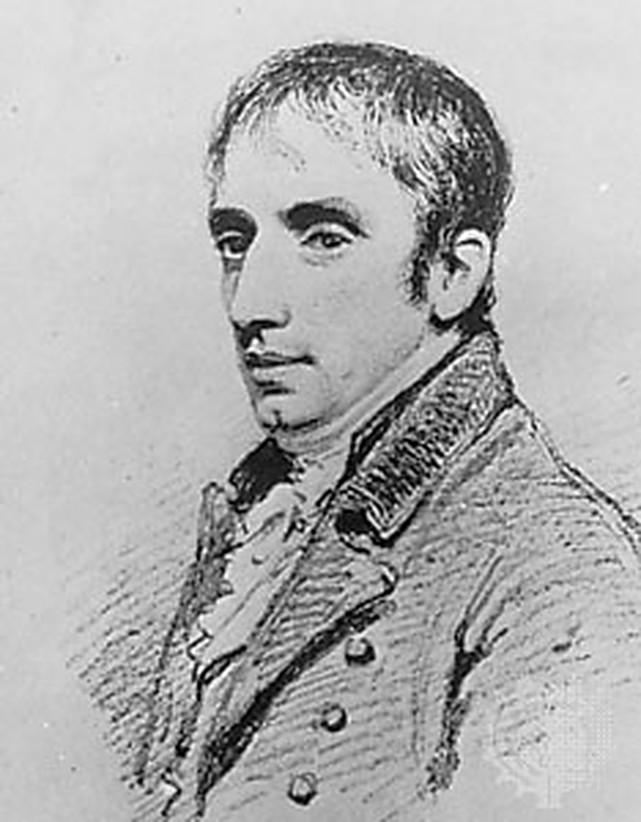
William Wordsworth (1770-1850) was an English poet. One important aspect of Wordsworth’s poetry and pertinent to John Stuart Mill’s autobiography is the depiction of nature. As a young boy, Wordsworth attended Hawkshead grammar school. During this time, he spent a great amount of time outside and taking in the scenery of the English lakes. In his poem, Tinturn Abbey, Wordsworth seems to reveal his appreciation for nature declaring that “nature never did betray the heart that loved her.” Mill notes that part of what makes Wordsworth’s poetry so comforting to him during his period of despair is the depiction of nature.
Besides the depiction of nature, Wordsworth’s expression of states of feeling help alleviate Mill’s despair. Wordsworth was a central figure in the English Romantic Revolution of poetry, which saw an increase in the emphasis of feeling. Imagination and a child’s understanding of the world were also emphasized features of poetry from the Romantic movement and a prominent feature of Wordsworth’s poetry. It is precisely the understanding of childhood and understanding of feelings that gives relief to Mill’s absence of feeling that so troubled him. Mill notes that the he sees himself in Wordsworth’s poem “Ode: Intimations of Morality” when he realizes that Wordsworth “also had felt that the first freshness of youthful enjoyment of life was not lasting; but that he (Wordsworth) had sought compensation, and found it, in the way in which he was now teaching me to find it” (122).
Mill’s father’s strict adherence to analysis rather than feelings was troublesome, and it was the Romantic features in Wordsworth’s “Ode: Intimations of Morality” that helped Mill recover from this despair. Mill declares that due to reading the ode, he “completely emerged from my habitual depression, and was never subject to it again” (122).
Sources:
“William Wordsworth -- Britannica Academic.” Accessed February 13, 2021. https://academic-eb-com.proxy.uchicago.edu/levels/collegiate/article/William-Wordsworth/77470.
“English Literature -- Britannica Academic.” Accessed February 23, 2021. https://academic-eb-com.proxy.uchicago.edu/levels/collegiate/article/English-literature/106051.
Foundation, Poetry. “Lines Composed a Few Miles above Tintern Abbey, On Revisiting the Banks of the Wye during a Tour. July 13, 1798 by William Wordsworth.” Text/html. Poetry Foundation. Poetry Foundation, February 23, 2021. Https://www.poetryfoundation.org/. https://www.poetryfoundation.org/poems/45527/lines-composed-a-few-miles-above-tintern-abbey-on-revisiting-the-banks-of-the-wye-during-a-tour-july-13-1798.
Mill, John. Autobiography. Edited by John M. Robson. London: Penguin Books, 1989.