
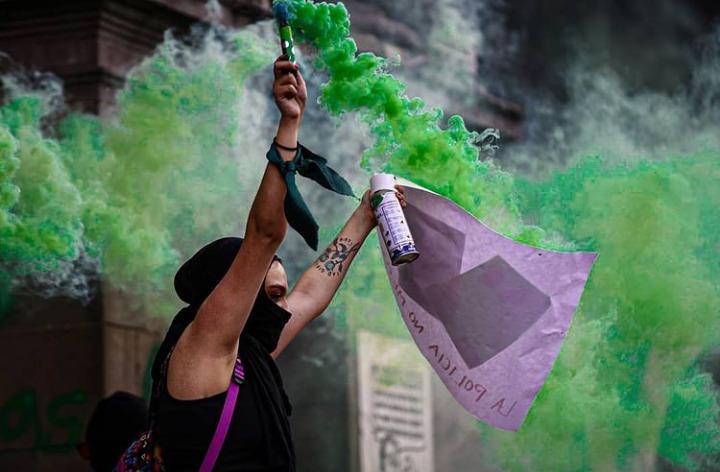
In recent decades, feminist movements across Latin America have increasingly used the web as a space for organization, advocacy, education, and collective action. Websites, blogs, digital campaigns, and online repositories have become essential tools for documenting experiences, mobilizing communities, and making visible issues that are often excluded from official narratives.
Yet these digital traces are remarkably fragile!
Websites disappear. Organizations redesign their pages. Domains expire. Entire histories of activism can vanish with a server shutdown or a change in institutional priorities. Unlike traditional archives, which preserve selected documents in physical repositories, much of contemporary social and political life is born digital and remains vulnerable to loss.
The Activismos feministas en América Latina collection was created in 2022 in response to this challenge. Developed through Archive-It as part of the broader Huellas Incómodas initiative, the collection seeks to preserve websites produced by feminist organizations, networks, and advocacy groups across Latin America. Its objective is not only to save webpages from disappearance, but also to document the digital presence of movements that have played a significant role in shaping public debates on gender, violence, reproductive rights, human rights, and social justice.
The project emerged from a broader reflection on the inequalities that characterize digital memory. While major memory institutions have developed extensive web archiving programs, many regions of the Global South remain underrepresented in these collections. As a result, the digital histories of social movements in Latin America are often difficult to discover, analyze, and preserve. Web archiving offers one way to address this imbalance by creating collections that reflect local priorities, languages, and experiences.
From this perspective, the collection can be understood as a form of digital counterarchive. Rather than reproducing official narratives, it seeks to preserve traces of voices, experiences, and forms of activism that have frequently been marginalized within traditional systems of documentation. The archive records not only organizational information, but also the ways feminist groups represent themselves, communicate with their communities, and respond to social and political events.
The Activismos feministas en América Latina collection invites visitors to explore these preserved traces and to reflect on broader questions about memory, visibility, and preservation in the digital age. What stories are remembered? Which voices become part of the historical record? Who decides what is worth preserving?
These questions are particularly important for feminist movements, whose histories have often been fragmented, dispersed, or overlooked. By preserving their digital presence, web archives contribute not only to future research, but also to the ongoing work of documenting struggles, building collective memory, and ensuring that these histories remain accessible to future generations.
The collection is available through Archive-It and continues to demonstrate the value of web archiving as a tool for preserving the diverse and evolving landscape of feminist activism in Latin America.
Explore the collection:
https://archive-it.org/collections/20068