
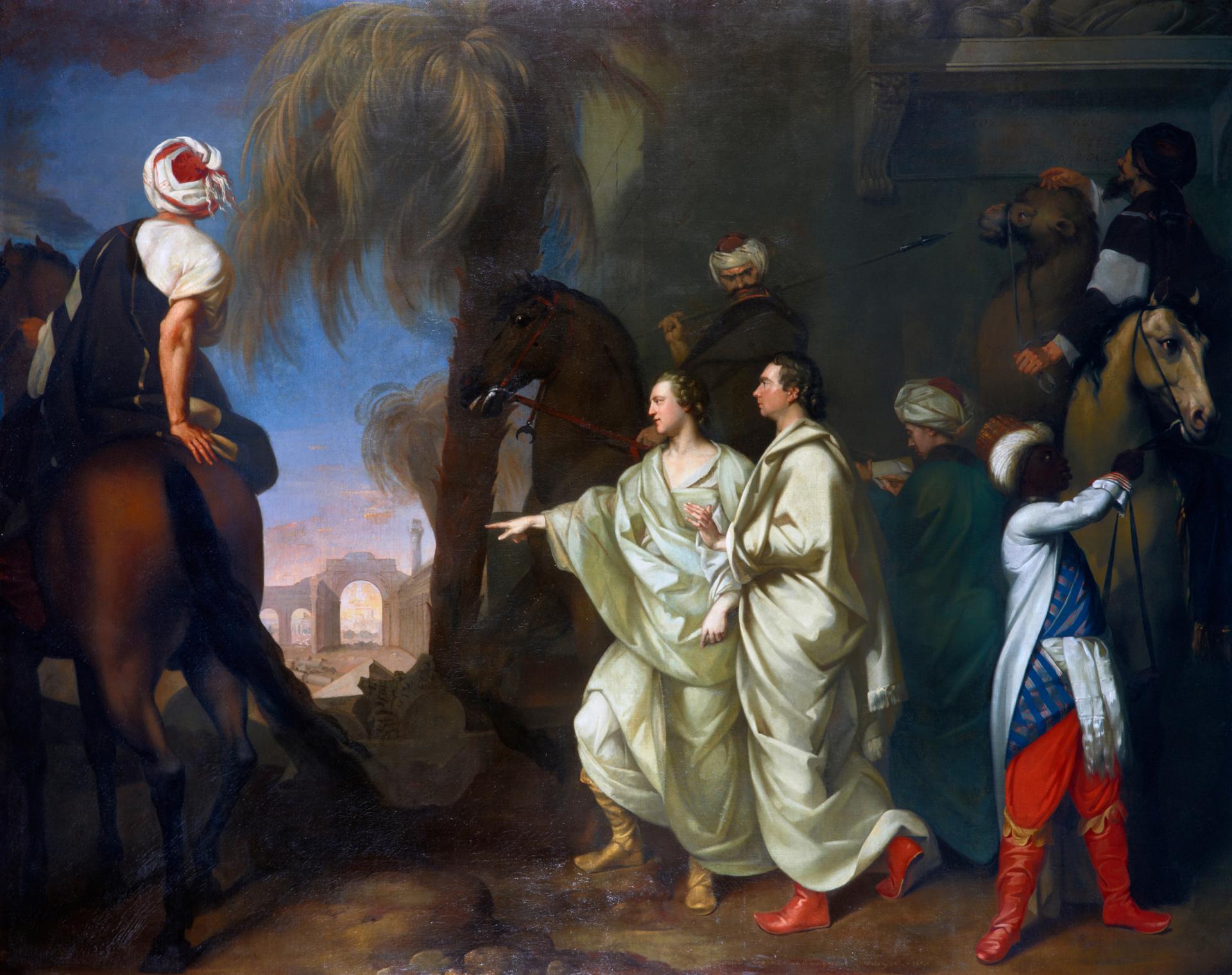
Gavin Hamilton (1723-1798) was a Scottish painter, dealer, and archaeologist who took a systemic study of classical antiques during the 1750s and 1760s. In 1748, he arrived in Rome to study portrait painting. While in Rome two architects James Scott and Nicolas Revette encouraged him to visit Herculaneum and view the recently discovered site of Pompeii. These freshly discovered ruins in Athens, Naples, Palmyra, and Dalmatian coast were disseminated throughout Europe in treatises with detailed descriptions, picturesque landscape views, reproduction of frescoes, and attributes the great, beautiful, strange imagination in the middle of sense.
In 1751 Scotland, he painted a full length portrait of Elizabeth Gunning Duchess of Hamilton in a conventional style from Van Dyck. Whilst then choosing to return to Rome and stay there for life in 1752. During his stay, he encouraged and got to know all British artists in Rome during the second half of the 18th century.
In 1755, Hamilton met Raphael Mengs and Johann Winckelmann who were the leading theorists on Neoclassicism. Neoclassicism was the effort to revive the glories of lost civilizations. Winckelmann's book on Neoclassicism in the 1740's was about moving the model of classicism from Rome to Greek. The neoclassical movement was intensified for Hamilton after his discoveries of Greek Civilization artifacts during his time as a dealer and belief that 'the ancients have surpassed the moderns, both in painting and sculpture.' With Winckelmann's influence, his push for a newer thought of classical nobility made trouble for political parties as it sent a message to the oligarchs and challenged their rulings.