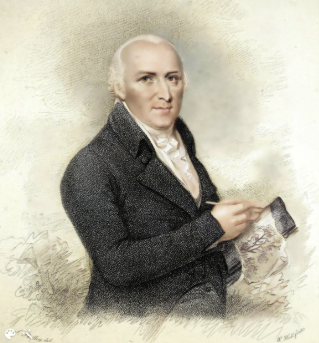
Humphry Repton (1752-1818) was among the foremost—and last—great designers of the classical tradition in English landscape gardening. Repton was educated at a grammar school in Bury St Edmunds and Norwich, and, anticipating a career in mercantilism, was sent abroad to the Netherlands to continue his schooling. It was the connections he made while abroad that taught him the finer points of mixing with high society. Repton famously tried his hand at various careers before turning to landscape gardening—including trade, farming, and even journalism, all of which were said to have contributed a great deal to his later successes. Working during a transitional moment in taste, he balanced the naturalistic style of the earlier Georgian landscape with emerging picturesque and more formal revival elements. Despite early success and a wide clientele among Britain’s landed elite, financial difficulties and declining health marked his later years. Nonetheless he remains one of the most influential figures in the history of English landscape design.
Unlike some of his well-regarded predecessors, Repton didn’t involve himself with executing the plans he mapped out, but rather worked exclusively as a designer. He would carefully document his proposals in illustrated presentation books known as Red Books—so-called for having been expertly bound in distinctive red morocco leather—which combined practical plans with watercolor overlays to show before-and-after views of estates. While Repton claims to have made roughly four hundred Red Books, only about one hundred still extant.
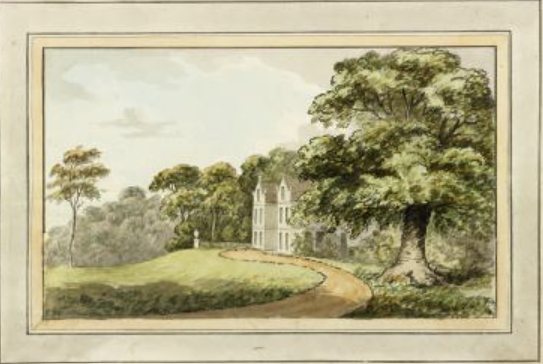
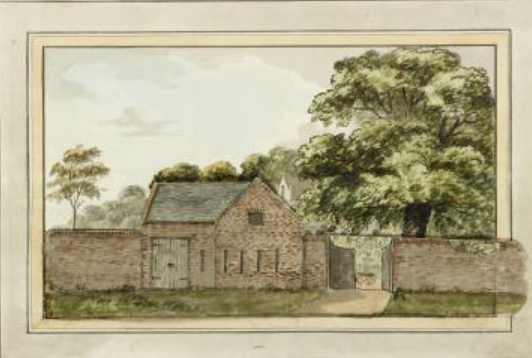
Two of these Red Books are housed at The Morgan Library, in New York City. They are the Red Book of Ferney Hall and of Hatchlands in Surrey. Repton's process consisted mostly of him visiting a specific client, touring the grounds of the estate, interacting with the client and discussing expectations the client might have, and then compiling all his cumulated notes and drawings together into a single proposal. The proposals were often pretty elaborate, and would include expectations Repton had, different views of the property and the surrounding country, and a conclusion, in which Repton would praise the client's excellent taste and, at the same time, urge them to spend a large amount of capital in improving the appearance of their estate.
Regarding the Ferney Hall estate, Repton was commissioned by Samuel Phipps, a prosperous attorney, who in 1787 sought to improve the state of his newly acquired home. This was an early endeavor of Repton’s, and as such he was still perfecting the format of the Red Book. Repton focused primarily on establishing his practical expertise, picturesque sensibilities, and cultivated taste, traits which would no doubt impress an individual as elite as Phipps.
Repton died at the age of 65, and his body currently resides in the graveyard of the Church of St Michael, Aylsham, Norfolk.
Below is an example of an overlay picture as seen in the Red Book of Ferney Hall. The left image is with the overlay up, and the right is with the overlay down. The following link will connect you with a video on the Morgan Library site where they discuss, in detail, the history of the Red Book. https://www.themorgan.org/videos/humphrey-reptons-red-books