
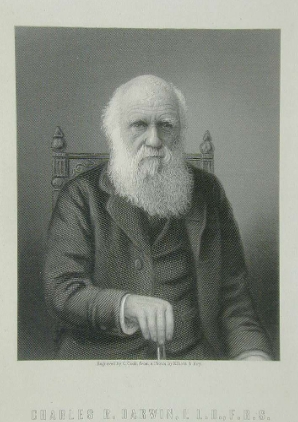
This student’s blog post breaks down the character archetype of the “mad scientist” and how it relates to cultural anxiety in the Victorian era. Many people were attached to traditional “moral and spiritual boundaries” that authors in this time period had little issue with crossing. Darwin, for example, was viewed by many as “playing God” for questioning what they were told was God’s intentions. However, this very same idea is depicted in fiction literature as well. The first one she notes that comes to mind is The Strange Case of Dr. Jekyll and Mr. Hide– questioning the limits to ethics and scientific discovery. She also acknowledges that this is exactly the case to be made for Mary Shelley’s Frankenstein. Though Shelley’s work was originally published in 1818, as Cairns points out, people seemed to become even more drawn to it during the Victorian age where science and ethics were on the forefront of people’s minds. This piece has definitely made me view Frankenstein in a different light and makes me eager to read Dr. Jekyll and Mr. Hide here soon. I will definitely keep this article in the back of my mind while I read it!
Cairns, Jasmine . “The Figure of the “Mad Scientist” and Victorian Attitudes to Science and Religion – Students as Researchers.” Lboro.ac.uk, 2025, blog.lboro.ac.uk/irph-students/2025/04/16/the-figure-of-the-mad-scientist-and-victorian-attitudes-to-science-and-religion/.
"Charles Darwin Engraving" by C Cook after Elliot & Fry, 1899 is licensed under Public Domain