
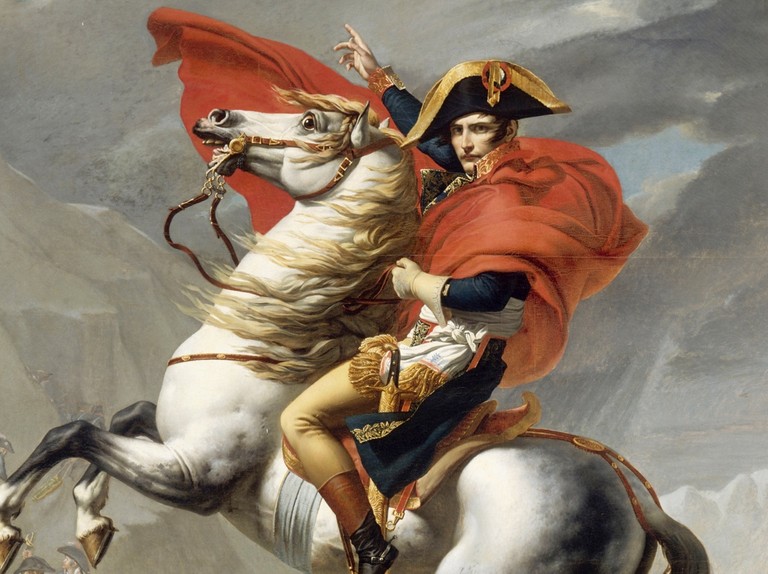
Born on the island of Corsica in 1769, Napoleon Bonaparte fought during the French Revolution of 1789, rose quickly through the military, and had established himself high within the French military hierarchy by the end of the eighteenth century. He declared himself emperor of France in 1804, and enacted many politically and socially influential reforms. Lord Byron eagerly followed and supported Napoleon’s many military and political successes despite the ill feelings between France and England. Following a failed invasion of Russia, Napoleon abdicated on April 11, 1814 and, as arranged in the Treaty of Fontainebleau, was banished to the island of Elba. In reaction to what Byron viewed as a monumental failure on Napoleon’s part, he immediately writes Ode to Napoleon Buonaparte, where he rages against Napoleon, declaring him an “ill-minded man” and a “nameless thing”, among many harsher sentiments, contrasting his past idolization to his current downfall. Byron wishes death upon Napoleon rather than abdication. However, later in Childe Harold Pilgrimage Canto III, Napoleon’s final defeat at the battle of Waterloo influences Byron’s analysis of the battlefield, and he retains clinical appreciation of Napoleon’s brilliance and effects on Europe’s definition of liberty as he compares him to other intellectual figures from the time, even incorporating Bonaparte’s status as a fallen champion into his Byronic hero.
Byron was not the only Romantic poet influenced by Napoleon; Wordsworth, Coleridge, and others admired Bonaparte throughout his revolutionary efforts, but respected him much less when he joined governmental leadership and declared himself emperor. Byron, however, remained constant in his esteem for Napoleon even during his failures until Bonaparte’s 1814 abdication. Part of Byron’s passionate feelings toward Napoleon could lie in their similarities; many literary historians note the resemblance between the two, their major successes in the nineteenth century in military and poetry, respectively. Both have been observed as egotistical, overly ambitious, and risk-taking; perhaps so much of Byron’s frustration with Napoleon’s abdication lies in how much of himself he saw reflected within the former emperor. Napoleon Bonaparte’s revolutionary efforts throughout the end of the eighteenth century and beginning of the nineteenth century greatly influenced Lord Byron’s understanding of leadership, liberty, and contributed to his cultivation of the Byronic hero.
Sources:
Childe Harolde and Waterloo Analysis