


INSTALLATION DESCRIPTION:
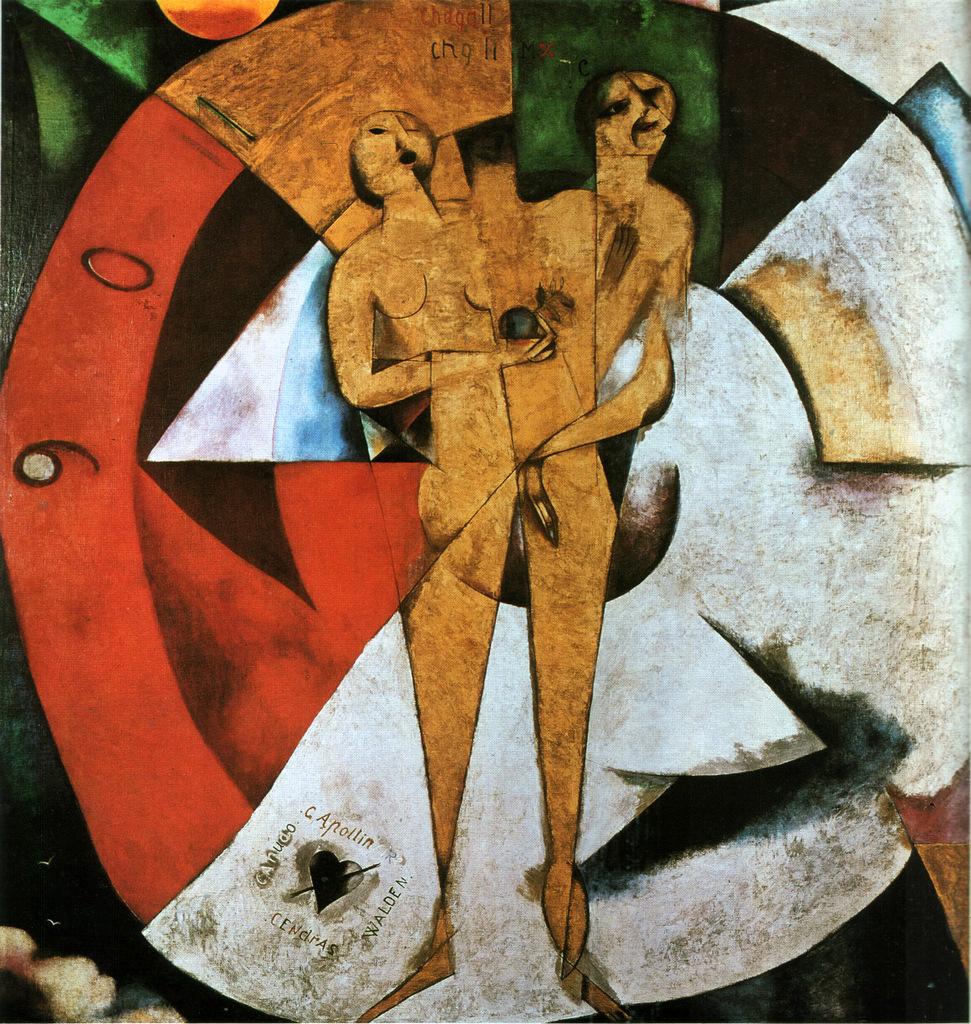
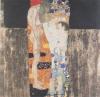
The installation will be displayed in a hallway, spacious enough for each portrait to be suspended in the middle of the pathway, around ten feet wall to wall as the biggest painting, Homage to Apollinaire/ Adam and Eve, is around two feet wide and will not become narrower. The dimensions of the three pieces are 180 x 180 cm(The Three Stages of Woman), 200x 189.9 cm( Adam and Eve), and 196.5 x 129 cm(La Vie). The hallway, walls, and ceilings will be an eggshell white to match the various skin tones present in the pieces. To reach the installation, the viewer must enter through a golden doorway, but the door will be propped open. This entrance serves as a palate cleanser to previous exhibits and to prepare the viewer for the themes in the installation. The golden door is symbolic of the staircase to heaven often paired with death and painted gold. The hallway itself can also be interpreted as the time between life and death which adds to the uneasy nature of the installation and paintings. Upon entrance to the installation, the viewer will immediately be greeted with a golden clock pendulum, hanging at eye level, around 5.5 ft above ground. As the door is propped open, the pendulum can be viewed from the outside as well. This creates an unsettling air of time, as the viewer chooses to enter the hallway, they are experiencing the deaths that occur in these pieces. The pendulum will is still which is symbolic of the metaphorical deaths that each of these pieces contains. The time on the clock will be accurate to the time zone that the paintings are showcased in. The order of the paintings following the clock pendulum will be Adam and Eve, La Vie, and The Three Stages of Woman. The order represents the various deaths that occur in the paintings concerning the history of each piece. Respectively, the deaths are spiritual death, lover’s death, and death of vanity. The viewer can also make the connection between the biblical deadly sins, since the doorway is symbolic of the other side, of lust, envy, and pride. But overall, the story of the life and death of a Temptress is told. This connection can also be noted in the alternative title for Marc Chagall’s piece, Adam and Eve. Each of these paintings will be hung from the ceiling, level with the pendulum, with a golden chain. The chain links will be thick, but smooth. Since they are in alignment with the original clock pendulum, the viewers will carry the sense of time and finality with them throughout the installation. The distance between each of the paintings will be twenty feet, as the viewer will have time to reflect on the previous painting before reaching the next. After reaching The Three Stages of Woman, the viewer must exit through another golden door that is propped open, as they are unable to exit the way they came through, once again, symbolizing death and life as the metaphorical entrances and exits of existence.
INSTALLATION NOTE:
The women painted used their bodies for temptation, power, and love. These fatal women lead the men, or women, to each of their respective deaths. In the presentation order previously stated, a collective story of the life of a Temptress emerges. Beginning with the first Temptress of mankind, Eve, and ending with the death of a Temptress’s sexuality. Each of the paintings carries emotions of grief, rather than ones of sexuality. This story is told from the Temptress's perspective, rather than man's.
When looking at Adam and Eve by Marc Chagall, the two bodies, a man and a woman, share the same pair of legs despite having separate torsos. This separation is symbolic of the lust that the biblical Eve tempts Adam with. Adam inevitably gives in to Eve’s temptation and thus, the separation between God and man is created, by the hands of Eve. This is foreshadowed in the deconstruction of the background and between the separation at the torso, it feels mournful and reminiscent of times of unity between Adam and Eve, as if both parties are equally faulty and equally splintered. Adam’s hand is painted phallically which contrasts the fruit in Eve’s hand, which could indicate female sexuality as inherently deviant, rather than sexual. For Adam and man, his sexuality is expected to be uncontrollable, as he was only giving into temptation. The clock in the background highlights this expected cycle of temptation, lust, and relief. Through Eve’s seduction, the spiritual death of Adam occurs. But what happens to Eve afterward? Although both are punished for their deviance, Eve is told, by God, that ‘in pain you will give birth to children.’ Thus, the sexuality of woman, and Temptress, is separated after childbirth through pain. Her seduction will always result in the pain of childbirth.
The Temptress nature of woman is additionally seen in La Vie. The suicide of Casagemas, a known friend of Picasso, is portrayed as lust-driven in this painting. The blueness of this painting is deep but unmistakably mournful as it represents Picasso’s period of grieving over his friend’s suicide. Focusing on the background silhouettes, Casagemas is painted in a fetal position twice. The above silhouette features Casagemas mothered by a feminine figure, while the below is without. With respect to historical context, Casagemas’s suicide occurred after the rejection of a former lover. The instability of this relationship between love and life is apparent. The woman at Casagemas’s hip is stepping between his legs, halfway immersing herself in Casagemas’s life, and holding him away from the maternal figure also in the painting. Her face is tilted towards the ground, symbolic of the refusal to look at the maternal figure, or her inevitable future, in her eyes. While the maternal body is robed, the youthful one is noticeably nude, which further indicates the Temptress nature of the youthful woman. The former lover rejects Casagmeas and unable to deal with heartbreak, he kills himself. The Temptress’s regret and guilt are shown in the blueness of the canvas, as well through the eyes of the feminine figure in the background.
Gustav Klimt’s piece, The Three Stages of Woman, depicts infancy, oldness, and youth femininely as life stages of women. The colors behind the youthful and infancy are cool-toned blues, purples, and deep greens, while the colors behind the elderly woman are warm-toned reds, oranges, and yellows. There is some intermixing of the two separate color palettes, more so in the youthful side of the portrait. This could be indicative of the loss of womanliness in the form of sexuality and femininity in old age. Although female sexuality does not carry an expiration date, the ability to bear children does. The inability of men to separate between a woman’s ability to have offspring and her sexuality and erotic-ness directly relates to both previous images. Thus, the last piece of the installation showcases the death of the Temptress, as what tempting could an old body promote? The youthful woman is in her so-called prime and notably beautiful and without the signs of aging, however, the older woman is covered with signs of aging. Her face is masked by her unkept hair and hand covering her side profile. She is ugly and devoid of sex. As the final painting in the installation, the concluding story the Temptress tells here is parallel to God’s final message to Eve. Only this time, the Temptress is reflecting on her youthful self, unable to live in youthful ignorance.
Chagall, Marc. Hommage to Apollinaire. https://www.freeart.com/gallery/c/chagall/chagall1.html. 1911. Accessed 15 Feb, 2023. Links to an external site.