
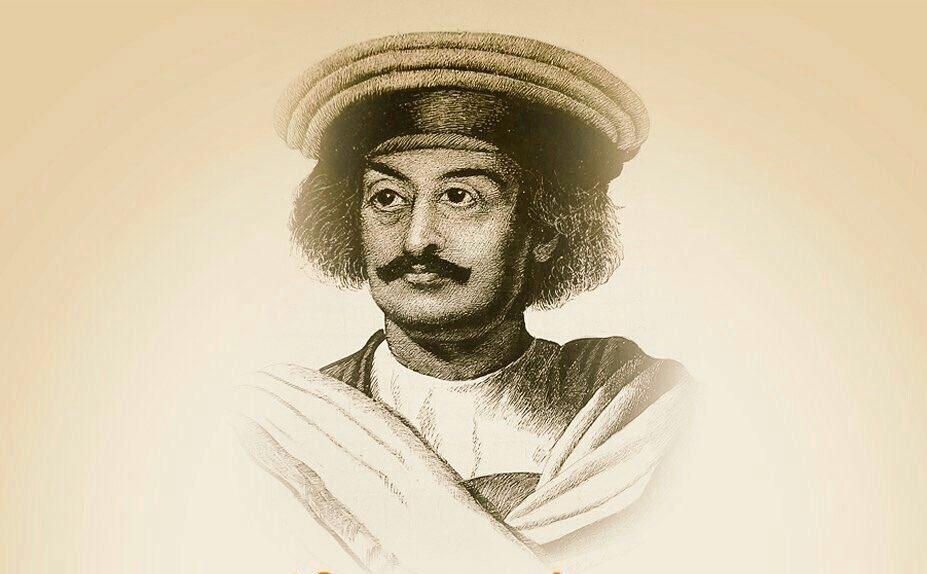
The Brahmo Samaj was a religious sect that emerged in Bengal in the early nineteenth century. It was founded by Rammohun Roy who had become a monotheist after studying the Abrahamic religions. While it maintained elements of Hinduism, the Brahmo Samaj was monotheistic and viewed certain Hindu practices as superstitious. It also preached a non-sectarianism and respect for all religions. Outside theology, it supported progressive social causes, such as greater gender equality and educational reform, and was critical of the caste system. In certain cases, these causes aligned with the colonial government’s preoccupations and attitudes. For example, Roy’s advocacy against sati contributed to the official outlawing of the practice.
Haimabati Sen joined the Brahmo Samaj, and the influence of its philosophy can be seen throughout her autobiography. For example, she opens her autobiography with an invocation, saying “Oh Lord, my God, I received this insignificant life through your infinite mercy.” (1) This reveals her monotheistic conception of God. In another characteristic episode, Sen uses a Siva lingam to prop up her bed and mocks the woman who accuses her of sacrilege. Sen’s resistance to what she considers to be Hindu superstition is typical of Brahmo Samaj attitudes. Further, the woman whom Sen mocks says “I do not want to listen to your Christian views.” (72). This illustrates that she sees members of the Brahmo Samaj as indistinguishable from Christians, and perhaps the Brahmo Samaj, with its monotheism and criticism of traditional Hindu society, as a foreign, Western movement.
Citations:
Kumar, K.S.. Rammohun Roy. Brahmo Samaj, 1998, doi:10.4324/9780415249126-F077-1. Routledge Encyclopedia of Philosophy, Taylor and Francis, https://www.rep.routledge.com/articles/thematic/brahmo-samaj/v-1/sectio….