
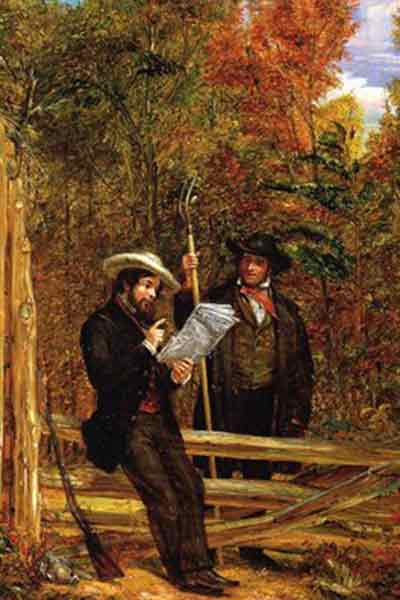
“My problem, of course, is that my readers have been dead for almost two hundred years, so one can hardly interview them to reconstruct an early American interpretive community.” (Davidson 62)
In her essay, Davidson speculates on the role of the reader in the historical context a book was written in. “It is simply too easy to perpetuate assumptions about the reader that neglect the inescapable fact that readers, as much as texts, operate within historical contexts,” she writes (Davidson 61). Our readings of Fall River come from a modern perspective where the role of Avery as a preacher is not so drastically consequential; we have heard tales like this before (many of us may have read The Scarlet Letter, for instance.) This complicates our current reading, as it removes some of the shock and social complication, and it removes the implications made when Cornell’s character is questioned during the trial. (In my reading, questioning the character of the victim seemed completely unreasonable, but evidently this would have held enough merit at the time to be permitted.)
Image citation: Mount, William Sidney. The Herald in the Country. 1853.